What to Avoid in Pretend Play Toys: A Guide to Nurturing Healthy Imagination
Pretend play is a cornerstone of childhood development. Through make-believe, children explore social roles, practice language, process emotions, and build cognitive flexibility. The toys we provide can either fuel this rich inner world or inadvertently stifle it. While the market is flooded with options marketed as “interactive” or “educational,” many common pretend play toys come with hidden pitfalls. Knowing what to avoid is just as important as knowing what to choose. Below, I outline the key categories of pretend play toys that parents, educators, and caregivers should steer clear of, along with explanations of why they can hinder rather than help a child’s development.
1. Overly Prescriptive Toys That Leave No Room for Interpretation
One of the greatest enemies of authentic pretend play is the toy that dictates exactly what must happen. When a toy comes with a fixed storyline, a single button that produces a predetermined sound or phrase, or a limited set of actions that can be performed, it becomes a script rather than a stage. Consider a plastic cash register that only says “Beep! Thank you for shopping!” when you press a specific button, or a toy kitchen that makes cooking sounds only when you place a specific plastic food item in a specific spot. These toys teach children to follow instructions rather than to imagine.
The problem: Such toys reduce pretend play to a mechanical sequence. Instead of inventing a scenario where the cashier is grumpy, or the food is for a dragon, the child is locked into a manufacturer’s vision. Research in early childhood education shows that open-ended toys—like blocks, fabric pieces, or plain wooden figures—promote higher levels of creative thinking because they can become anything. Overly prescriptive toys, by contrast, can actually shorten play sessions and reduce language diversity.
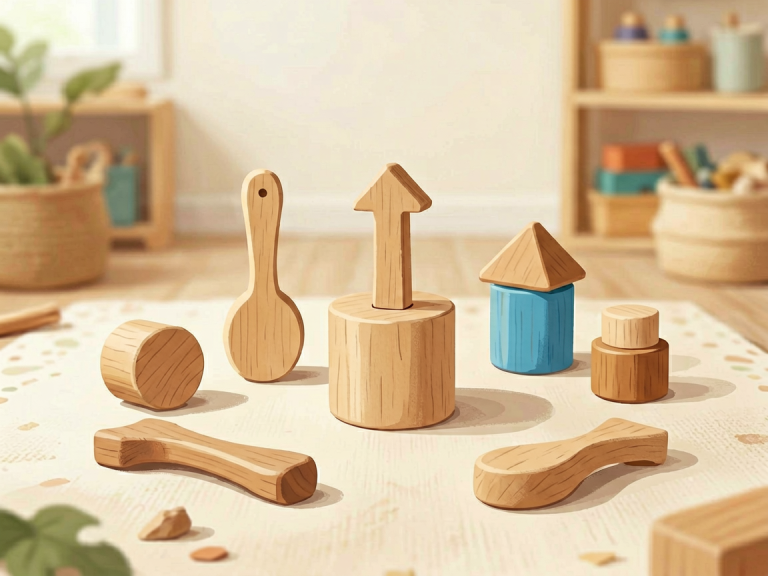
What to choose instead: Look for toys that are “loose parts”—simple, adaptable items that can be repurposed. A set of plain wooden bowls, a length of rope, a few scarves—these invite children to decide what they are.
2. Gender-Stereotyped Playsets That Limit Role Exploration
Pretend play is a critical arena for children to experiment with identities and professions. Yet many toys are aggressively marketed along gender lines, often with colors, themes, and messages that reinforce narrow stereotypes. Pink princess castles with only tiara-wearing figures, and blue tool sets with only male construction workers, send subtle but powerful messages about who can do what.
The problem: When a toy set includes only female nurses or only male firefighters, it discourages children from exploring roles outside of culturally prescribed norms. A boy who wants to play with a doll stroller may be shamed by the packaging itself; a girl who dreams of being a pilot may not see herself in the toy airplane set. This not only limits imaginative range but can also affect self-concept and career aspirations later in life. Studies have shown that children as young as three begin to internalize gender-based toy preferences, which can restrict their social and cognitive development.
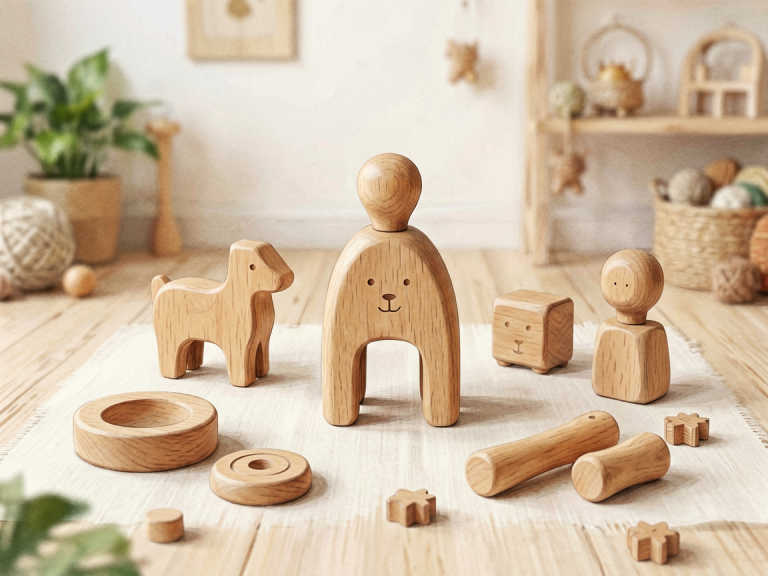
What to choose instead: Opt for gender-neutral or inclusive playsets. Look for sets that show both men and women in varied roles. Even better, choose figure sets that are simple enough for children to assign their own identities—plain wooden people or animal figurines that can be doctors, drivers, or dancers as the child wishes.
3. Toys That Normalize Violence or Fear-Based Play Without Context
Not all pretend play involving conflict is harmful—children naturally explore good versus evil, power dynamics, and scary situations as a way to master anxiety. The trouble arises when toys are designed to glorify violence or come with built-in aggression scripts. Examples include toy weapons that make realistic gun sounds, action figures that only have attack poses, or playsets based on horror or gore themes for young children.
The problem: While superhero play is common and can be healthy when guided, toys that are solely focused on destruction or fear can overwhelm a child’s ability to integrate these themes positively. A toy that loudly simulates a bomb explosion, for instance, may trigger more adrenaline than imagination. Children need to be the ones directing the play—they should decide when a character is hurt, not the toy’s fixed programming. Furthermore, repeated exposure to violent pretend play without adult facilitation can normalize aggression and reduce empathy.
What to choose instead: If a child is drawn to conflict play, provide non-realistic props like pool noodles (as light sabers), or soft cloth “swords” that require negotiation. Encourage storytelling where conflict is resolved, not just enacted. Avoid toys that graphically simulate real weapons or gore.
4. Over-Technology Toys That Replace Imagination with Screens and Sounds
Many modern pretend play toys are essentially mini-tablets disguised as kitchens, dollhouses, or tool benches. They feature touchscreens, pre-recorded dialogues, and flashing lights that respond to specific inputs. While these may seem engaging, they often hijack the child’s attention rather than cultivate it.
The problem: The American Academy of Pediatrics has long warned that passive screen time and interactive electronic toys can reduce the quality of back-and-forth conversation between child and adult. In pretend play, the child should be the one inventing the dialogue: “Now I’m the mommy, and I say it’s time for dinner!” When a toy says this for the child, the imaginative muscle atrophies. Moreover, the toy’s feedback is predictable, so the child quickly loses interest. Studies have found that electronic talking toys actually decrease the number of words children speak during play, compared to the same toy in non-electronic form.
What to choose instead: Classic, battery-free versions of the same items. A wooden play kitchen with knobs that turn but do nothing else, a simple plastic telephone with no bells, a dollhouse with rooms but no fixed furniture arrangement. These allow the child to supply all the sound effects and dialogue, which is far more beneficial for language development.
5. Single-Purpose Toys That Lack Flexibility
A toy that can only be one thing—a plastic fire truck that only looks like a fire truck and does nothing else—is a dead end for imagination. Once the child has driven it across the carpet a dozen times, it loses its appeal. Single-purpose toys are the opposite of “open-ended” playthings.
The problem: These toys do not encourage divergent thinking. They teach one right way to play. In contrast, a simple cardboard box can become a spaceship, a cave, a boat, or a castle. A set of wooden blocks can be a grocery store counter, a bridge, or a prison tower. Single-purpose toys limit the child’s ability to see the potential in everyday objects—a skill that correlates strongly with problem-solving and creativity in later life.
What to choose instead: Invest in modular and versatile toys. Building blocks, magnetic tiles, loose parts (buttons, fabric, natural items like pinecones), and generic dolls or animal figures that can be used across many scenarios. A set of plastic cups can be used for stacking, sorting, filling, and pretending to cook.
6. Toxic Materials and Unsafe Design in Cheap Imports
This is a practical but critical point: many pretend play toys, especially budget-friendly ones from unregulated sources, contain harmful chemicals like phthalates, lead, or BPA. They may have small parts that pose choking hazards, sharp edges, or strings that can become strangulation risks. While this may seem obvious, the allure of a discounted playset can sometimes overshadow safety.
The problem: Young children often put toys in their mouths. If a toy kitchen set has cheap plastic that leaches toxins, or if a doll’s hair contains lead-based dye, the health risks are serious. Additionally, poorly constructed toys may break easily, creating sharp pieces. The pretend play environment should be a safe space, not a source of hidden danger.
What to choose instead: Look for safety certifications such as ASTM (American Society for Testing and Materials) or EN71 (European standard). Favor natural materials like solid wood, organic cotton, and non-toxic paints. Avoid strong chemical smells. When in doubt, buy from reputable brands that prioritize safety.
7. Toys That Encourage Messy Play Without Clear Boundaries
Messy pretend play—like mud kitchens, water tables, or paint explorations—is wonderful for sensory development. However, some toys are designed in a way that makes cleanup nearly impossible for a child, leading to frustration or parental bans. For example, a pretend food set that includes “slime” filling that permanently stains fabric, or a toy tea set with tiny pieces that get lost in the grass.
The problem: When the toy’s design creates more mess than the child can manage, the adult may intervene constantly with restrictions, which disrupts the flow of play. The child then learns that pretend play leads to conflict rather than joy. The toy itself becomes a source of stress.
What to choose instead: Look for messy play toys that come with clear storage solutions, washable materials, and a limited number of pieces. Set up a designated area for messy play (like a tray on the kitchen floor) so that the child knows boundaries. Choose non-toxic, washable items that can be easily rinsed.
Conclusion: Less Is More for Authentic Pretend Play
The best pretend play toys are those that fade into the background, acting as humble tools for the child’s own narrative. A cardboard box with a drawn-on steering wheel can provide hours of driving adventures. A simple set of nesting bowls can become a drum set, a treasure chest, or a series of hidden jewel caves. When we avoid toys that are overly prescriptive, stereotyped, violent, electronic, single-purpose, unsafe, or messy by poor design, we preserve the sacred space where a child’s mind can roam free. The goal is not to fill the playroom with expensive gadgets but to empty it of distractions. Let the child be the director, the scriptwriter, and the star. That is where the real magic of pretend play lives.