The Ultimate Guide to Choosing Screen-Free Toys: What Every Parent Should Know
In an era dominated by glowing screens, endless notifications, and digital distractions, many parents are rediscovering the profound value of screen-free toys. From wooden blocks to art supplies, from simple puzzles to imaginative playsets, these analog alternatives offer a precious antidote to the hyper-stimulated world our children inhabit. But not all screen-free toys are created equal. Walking into a toy store—or scrolling through an online shop—can be overwhelming: there are stacks of plastic gadgets, flashy battery-operated contraptions, and an endless sea of licensed character merchandise. So what should you really know before you make your next purchase? Choosing screen-free toys wisely is not just about avoiding screens; it is about intentionally selecting tools that nurture your child’s cognitive, emotional, social, and physical development. This guide will walk you through the essential considerations, helping you become a more mindful and empowered parent in the toy aisle.
—
Why Screen-Free Toys Matter More Than Ever
Before diving into the practical tips, it is vital to understand the “why” behind the movement. Screen-free toys are not simply a nostalgic rejection of technology. They are grounded in developmental science. Research consistently shows that open-ended, hands-on play builds executive function skills—such as problem-solving, self-regulation, and flexible thinking—far more effectively than passive screen time. When a child builds a tower with wooden blocks, she is learning physics, spatial reasoning, patience, and even frustration tolerance. When she dresses up and pretends to run a grocery store, she is developing language, social negotiation, and empathy.
Moreover, screen-free toys offer a sensory richness that digital alternatives cannot replicate. The weight of a clay pot, the texture of a wool felt ball, the sound of a rattle, the smell of beeswax crayons—these tactile experiences wire the brain in ways that a flat touchscreen never can. In an age of rising rates of childhood anxiety, attention difficulties, and sensory processing issues, providing opportunities for slow, absorbed, physical play is more important than ever. Choosing screen-free toys, therefore, is an investment in your child’s holistic well-being. But it must be done with intention, not just as a reaction against screens.
—
The Key Principles of Choosing Screen-Free Toys
1. Open-Ended vs. Closed-Ended Play: Why “Less is More”
The single most important concept to grasp is the difference between open-ended and closed-ended toys. Closed-ended toys have a single, predetermined outcome. Think of a puzzle (you put the pieces in one way), a shape sorter (the triangle only fits the triangle hole), or a board game with fixed rules. These are not bad—they teach specific skills and can be satisfying—but they are limited in how they engage a child’s imagination.
Open-ended toys, by contrast, have no fixed purpose. A set of wooden blocks can become a castle, a spaceship, a bridge, a birthday cake, or a bed for a sick teddy bear. A plain cotton scarf can be a superhero cape, a river, a picnic blanket, or a ghost costume. A collection of gem-shaped glass beads can be treasure, counting manipulatives, or decorations for a fairy garden. The magic of open-ended toys is that they grow with the child: a two-year-old will stack blocks differently than a six-year-old, who might build intricate structures with engineering principles in mind.
When selecting screen-free toys, prioritize open-ended options. They offer the highest “play value” over time and encourage divergent thinking—the ability to see many possible solutions to a problem. This is a skill that predicts creativity and success in adulthood far more than rote memorization. Look for toys that invite children to ask “What can I do with this?” rather than “What does this do?”
2. Age Appropriateness and Developmental Stages
A fatal mistake many parents make is buying toys that are either too advanced or too simplistic. A toy that is beyond a child’s current developmental stage will frustrate them; a toy that is too easy will bore them and fail to challenge their growing mind. To choose wisely, you must understand the typical milestones of early childhood.
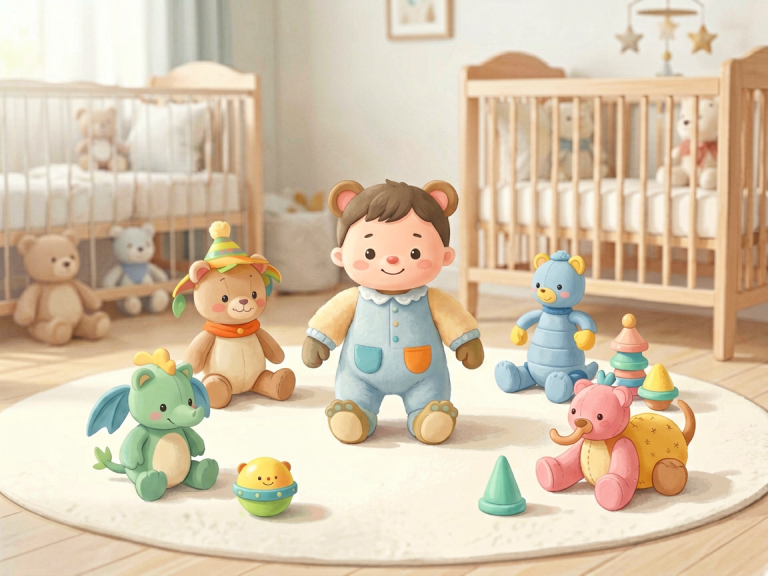
- Infants (0–12 months): At this stage, babies learn through their senses and their bodies. They need toys that are safe to mouth, easy to grasp, and visually or auditorily stimulating. Simple rattles, soft fabric balls, textured teethers, and black-and-white contrast cards are excellent choices. Avoid anything with small parts or long strings.
- Toddlers (1–3 years): This is the age of exploration and early problem-solving. Toddlers love cause-and-effect toys, like a wooden hammering bench or a simple pull-along animal. They also benefit from stacking cups, large wooden beads for threading, and basic shape sorters. However, even at this age, open-ended options like a set of cardboard bricks or a simple doll can spark rich pretend play.
- Preschoolers (3–5 years): Imagination blossoms. Now is the time for dramatic play props—play kitchens, tool benches, doctor kits, dress-up clothes, puppets. Building sets like Duplo or larger wooden blocks are perfect. Simple board games that teach turn-taking (like Candy Land or first cooperative games) are also valuable. Art supplies should be generous: non-toxic crayons, washable markers, playdough, scissors, and glue.
- School-age children (5+): More complex construction sets (LEGO, magnetic tiles, marble runs), strategy board games, science kits, art and craft projects, and books are ideal. They may also enjoy collections like marbles, rocks, or trading cards, which encourage sorting, categorization, and social exchange.
Always check the manufacturer’s age recommendation, but also use your intuition. A “3+” label might indicate a choking hazard, but it might also indicate that the toy’s complexity is too high for an average three-year-old. Observe your child’s interests and abilities, and don’t be afraid to offer something slightly more advanced if they seem ready, or to hold onto simpler toys longer if they are still engaging.
3. Material Safety and Durability: The Hidden Costs of Cheap Toys
Screen-free does not automatically mean safe. In fact, some of the most toxic toys on the market are made from cheap plastics laden with phthalates, bisphenols, and heavy metals. Before you choose a toy, consider what it is made of. Wood is generally a superior material: it is natural, durable, and if finished with a non-toxic oil or water-based paint, safe for mouthing. Look for FSC-certified wood (Forest Stewardship Council) when possible, which ensures responsible forestry.
Avoid toys with a strong chemical smell, which often indicates volatile organic compounds (VOCs). For plastic toys, look for those labeled BPA-free, phthalate-free, and PVC-free. However, a better rule of thumb is to reduce plastic overall. Metal toys—like tin cars, cast-iron trains, or stainless steel kitchen tools—are also excellent choices for durability and safety.
Another consideration is longevity. A cheap plastic toy that breaks within a week is not only frustrating but also contributes to the massive global toy waste crisis. Screen-free toys, when chosen well, can last for years and then be passed down to younger siblings or friends. Consider buying second-hand: wooden blocks from garage sales or thrift stores are often in excellent condition and have already off-gassed any initial chemicals. Wash them thoroughly and they are good as new.
4. Encouraging Imagination and Creativity: The Anti-Character Toy Argument
One of the biggest traps in the screen-free toy market is the over-reliance on licensed characters. Paw Patrol figures, Peppa Pig playsets, Disney princess dolls—these toys are designed to sell a franchise, not to foster creativity. They come with a fixed narrative: the child is expected to re-enact the stories they’ve seen on screen rather than invent their own. While a few beloved character toys can be comforting, an entire collection of them can actually inhibit imaginative play.
Instead, choose generic toys that allow your child to project their own ideas. Plain wooden animals (a set of 12 simple, unpainted horses or cows) can be farm animals, wild beasts, or pets. A collection of silk scarves in rainbow colors can become anything. Dolls with neutral expressions (like Waldorf-style dolls) are more open-ended than dolls with fixed smiles and painted-on emotions. The rule of thumb: the more details a toy already has, the less room there is for a child’s imagination to fill in the gaps.
Similarly, avoid toys that make noise or move on their own. A battery-operated talking bus that drives across the room might entertain a child for five minutes, but it is a passive experience. In contrast, a simple wooden bus with little pegs and removable people invites hours of active storytelling. The child must push it, make the engine sounds, decide who gets on and off, and create dialogue. That is where deep learning happens.
5. Social and Emotional Learning: The Power of Cooperative Play
Many screen-free toys are solitary by nature—a puzzle, a drawing pad, a building set. But humans are social beings, and some of the most valuable play moments involve interaction with others. When choosing toys, consider their potential for social and emotional learning.
Cooperative board games, where all players work together toward a common goal (like “Hoot Owl Hoot!” or “Peaceable Kingdom” games), are fantastic for teaching teamwork, empathy, and resilience in the face of shared failure. Large playsets—like a big train table or a dollhouse—naturally draw multiple children into negotiation, sharing, and role-playing. Even simple items like a bouncy ball or a jump rope can encourage cooperative physical play.
Also think about toys that help children process emotions. A set of emotion cards, a sand tray for sensory calm, or a pair of soft weighted stuffed animals can support emotional regulation. Musical instruments—simple drums, xylophones, shakers—allow children to express feelings nonverbally and to practice turn-taking in a group. The best screen-free toys do not just occupy a child; they connect them to others and to themselves.
—
Common Pitfalls to Avoid
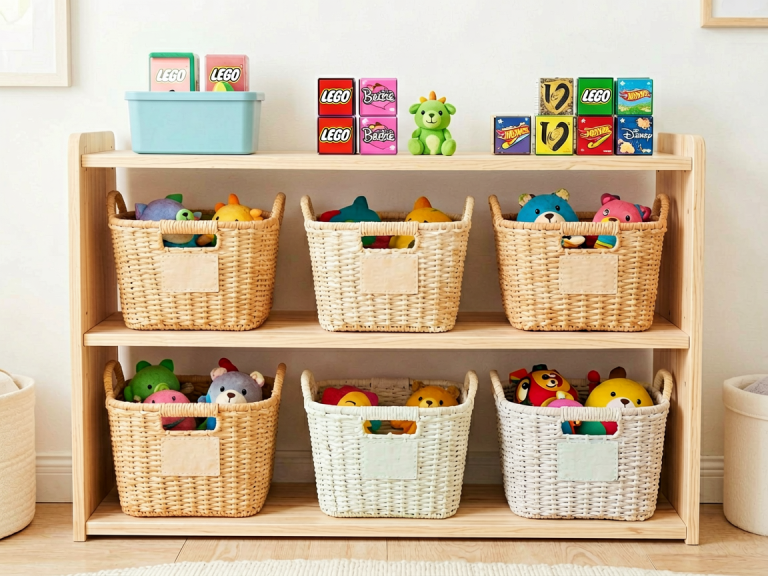
Even with good intentions, parents often fall into familiar traps. First is the “more is better” mindset. A playroom overflowing with toys can actually overwhelm children, reducing the depth of their engagement. Instead of having 50 toys, a curated collection of 15–20 high-quality, open-ended pieces often yields richer play. Rotate toys every few weeks to keep them fresh.
Second is ignoring the child’s genuine interests. If your child is obsessed with dinosaurs, a set of realistic plastic dinosaurs will engage them far more than a generic wooden block set, even if the block set is “better” in theory. The key is to find open-ended versions of their passions: dinosaur figurines, fossil excavation kits, or books about paleontology, rather than a pre-scripted dinosaur video game.
Third is buying “educational” toys that are actually drills. Beware of flashcards, electronic learning mats, or toys that claim to teach Korean or calculus before preschool. True learning through play happens when the child is an active participant, not a passive recipient of information. A toy that reads letters aloud may teach letter recognition, but it does so in a way that bypasses the child’s agency. A set of magnetic alphabet letters that the child can touch, arrange, and sing about with a caregiver is far more effective.
—
How to Build a Screen-Free Toy Collection: A Practical Framework
Instead of buying random toys, approach your collection like a capsule wardrobe. Start with the “core” items that offer the highest versatility:
- A set of wooden unit blocks (about 50–100 pieces)
- A collection of natural loose parts (pinecones, pebbles, shells, fabric scraps)
- Art supplies (good paper, beeswax crayons, watercolors, playdough)
- A set of simple animal or human figures (neutral, non-character)
- One or two large dramatic play props (a play kitchen or a tool bench)
Then, add specialized toys based on your child’s evolving interests: a marble run, a magnifying glass for nature walks, a set of musical instruments. Prioritize toys that can be used in multiple seasons and for multiple ages. Remember that the most powerful “toy” in your child’s life is you—your presence, your attention, your willingness to get down on the floor and play. Screen-free toys are simply the medium through which that connection can flourish.
In conclusion, choosing screen-free toys is not about rigid rules or guilt. It is about slowing down, asking thoughtful questions, and remembering the profound beauty of unstructured, analog play. The right toy does not entertain your child—it invites them to discover their own creativity, solve their own problems, and build their own worlds. And in a world that so often tries to do those things for them, that invitation is the greatest gift you can give.
Start with the complete guide: Beyond the Screen: Why Screen-Free Toys Are Winning the Battle for Child Development.