The Hidden Pitfalls of Pretend Play Toys: Common Problems Parents Should Know
Introduction
Pretend play is often celebrated as one of the most valuable developmental activities for young children. Through imaginative play, children explore social roles, experiment with language, develop problem-solving skills, and learn to navigate emotional landscapes. Toy manufacturers have responded enthusiastically, flooding the market with pretend play toys ranging from miniature kitchen sets and doctor kits to elaborate dollhouses and costume trunks. While these toys can indeed enrich a child's world, they are not without their drawbacks. Beneath the brightly colored packaging and cheerful marketing lies a series of common problems that can subtly undermine the very benefits pretend play is supposed to offer. From stifling creativity to reinforcing harmful stereotypes, many pretend play toys come with hidden costs that parents and educators should understand. This article examines the most prevalent issues associated with these toys, offering a balanced perspective on how to choose wisely and use them effectively.
1. Over-Structuring: When Toys Dictate, Not Inspire
One of the most ironic problems with many pretend play toys is that they are too prescriptive. Instead of leaving room for open-ended imagination, they come with fixed scripts, specific accessories, and predetermined outcomes. For instance, a toy cash register that only accepts certain pretend coins, makes electronic sounds, and lights up when the "right" button is pressed, leaves little room for a child to invent their own game. The toy becomes a rigid tool rather than a flexible prop.
This over-structuring often stems from manufacturers' desire to create "educational" toys that teach specific concepts—like counting, color recognition, or vocabulary. But in doing so, they inadvertently limit the child’s ability to reimagine the object in different contexts. A cardboard box can become a rocket ship, a castle, or a time machine. A plastic cash register that only says "That will be five dollars!" cannot. Many children quickly lose interest in such toys because they offer no surprises or opportunities for creative deviation. The problem is not just boredom; it is the loss of the exploratory, nonlinear thinking that pretend play should cultivate.
2. Reinforcing Gender Stereotypes
Despite significant progress in gender awareness, many pretend play toys continue to reinforce narrow, outdated gender roles. Dolls, kitchen sets, and beauty salon kits are marketed overwhelmingly to girls, while action figures, tool sets, and construction vehicles are aimed at boys. This binary division not only restricts children's choices but also shapes their perception of what they can become. A boy who wants to play with a toy stroller may be teased or feel that it is "not for him"; a girl who wants a firefighter helmet might find that the only options are pink and glittery, implying that her play is less "authentic."
The problem extends beyond marketing. The content of the toys themselves often encodes gendered expectations. A "doctor kit" for girls might come with a pink stethoscope and a focus on taking care of cute stuffed animals, while a boys' version might include more technical tools and emphasize action-oriented scenarios like saving someone from a fire. Such subtle differences teach children that caregiving is feminine and heroism is masculine. This limits the depth and variety of pretend play, preventing children from exploring the full spectrum of human roles and emotions.
3. Noise, Lights, and Batteries: The Electronic Overload
In an age of screen-based entertainment, many pretend play toys have been digitized in ways that paradoxically reduce the quality of pretend play. A toy phone that rings and plays prerecorded messages, a pizza oven that sings when you slide in a fake pizza, or a cash register that calculates change automatically—these are common examples. While they might seem more engaging at first, electronic features often dominate the play experience. The toy "tells" the child what to do, rather than the child inventing the scenario.
This electronic overload can lead to shorter attention spans and reduced imaginative output. When the toy does all the work, the child becomes a passive consumer of sounds and lights rather than an active creator of narratives. Moreover, the constant beeping and flashing can be overstimulating for young children, leading to frustration or even meltdowns. Research in early childhood development consistently shows that simpler, low-tech toys—like blocks, dolls, and dress-up clothes—promote deeper, more sustained pretend play. The battery-powered alternatives often fail to deliver the same cognitive and emotional benefits.
4. Safety and Quality Concerns
Pretend play toys are subject to the same safety regulations as other children's products, but they also present unique hazards that are sometimes overlooked. Because these toys are designed for role-playing, they often include small accessories that can become choking hazards—tiny plastic food items, miniature tools, or detachable parts. Additionally, many cheaply made pretend play toys contain phthalates, lead, or other harmful chemicals in paints and plastics. Children frequently put these toys in their mouths, especially during imaginative scenarios (imagine a toddler "cooking" with plastic vegetables and then chewing on them).
Another safety issue is the tendency for pretend play toys to mimic real objects that can cause injury. Toy stoves that heat up (or are marketed with pretend flames), toy tools with sharp edges, or toy medical kits that include plastic syringes with needles (even if blunted) can inadvertently teach unsafe behaviors. Children may mimic what they see on these toys without understanding the real-world dangers. Furthermore, the durability of many pretend play toys is poor; they break easily, creating sharp edges or loose parts that can cause cuts or ingestion.
5. Over-Commercialization and the Pressure to "Collect"
The pretend play toy market is heavily driven by licensed characters from movies, TV shows, and video games. A child who wants to play "princess" is often pushed toward a specific Disney princess costume from a specific movie, complete with a matching tiara, wand, and plastic shoes. A child who wants to play "superhero" may feel they need the latest action figure from a blockbuster film. This commercialization turns pretend play into a consumer activity, where the focus shifts from imagination to acquisition. Children feel pressure to collect all the pieces, and their play becomes a scripted reenactment of media plots rather than a freeform creation of their own stories.
This problem is compounded by marketing tactics that encourage "collectible" sets with limited-edition items, fostering anxiety and envy among peers. Instead of using a simple blanket as a cape, a child now requires the officially licensed cape that matches the hero's costume exactly. The play becomes about getting the right toy, not about having the right idea. This undermines the core value of pretend play: that a child's mind is the most powerful toy of all.
6. Lack of Social Interaction and Collaborative Play
Many modern pretend play toys are designed for solo use. A toy kitchen that lights up and makes sounds can occupy a child alone for hours, but it does not naturally invite cooperation. Similarly, electronic tablets with "pretend" apps that simulate cooking or doctor visits keep children glued to a screen, interacting with a digital interface rather than with siblings or friends. This shift toward solitary, tech-mediated play reduces opportunities for social negotiation, turn-taking, and joint storytelling.
Furthermore, some pretend play toys are so detailed that they leave little room for children to negotiate roles. In open-ended pretend play, children might argue about who gets to be the parent, the doctor, or the patient, and in the process, they learn conflict resolution and empathy. When a toy comes with a fixed set of roles (e.g., a "customer" and "cashier" that are predetermined by the toy's design), these valuable social dynamics are diminished. Children may also become possessive over specific toys, leading to fights rather than cooperative play.
7. Cost and Waste: The Financial Burden
Pretend play toys can be surprisingly expensive, especially when they are part of a themed series or involve electronics. A fully equipped play kitchen with accessories, lights, and sounds can cost hundreds of dollars. A collection of realistic dollhouse furniture, food sets, and miniature people can add up quickly. Many families feel pressured to buy the "complete" set to avoid disappointing their child, but the reality is that children often lose interest in these toys after a few weeks. The result is not just a financial strain but also an environmental one: these toys often end up in landfills, made of non-recyclable plastics.
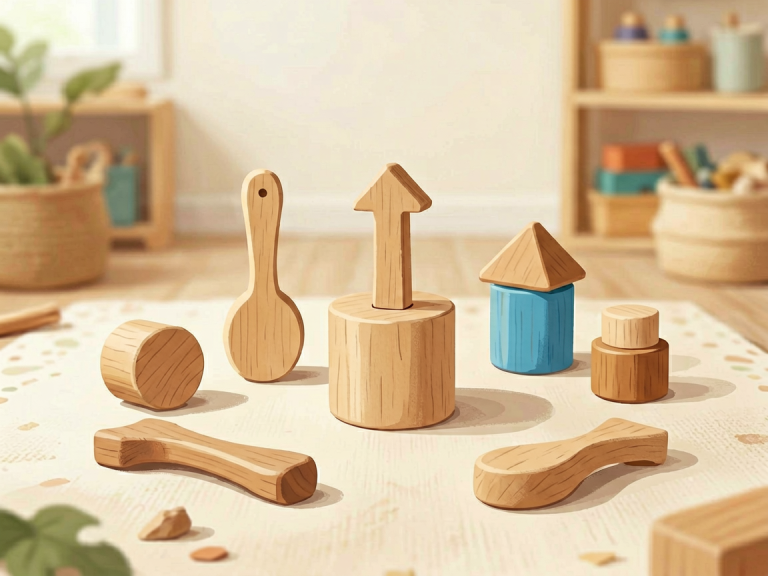
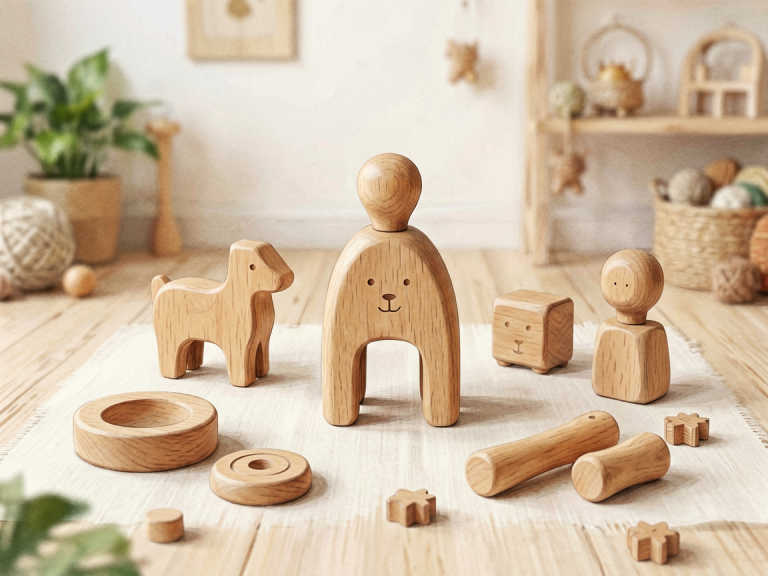
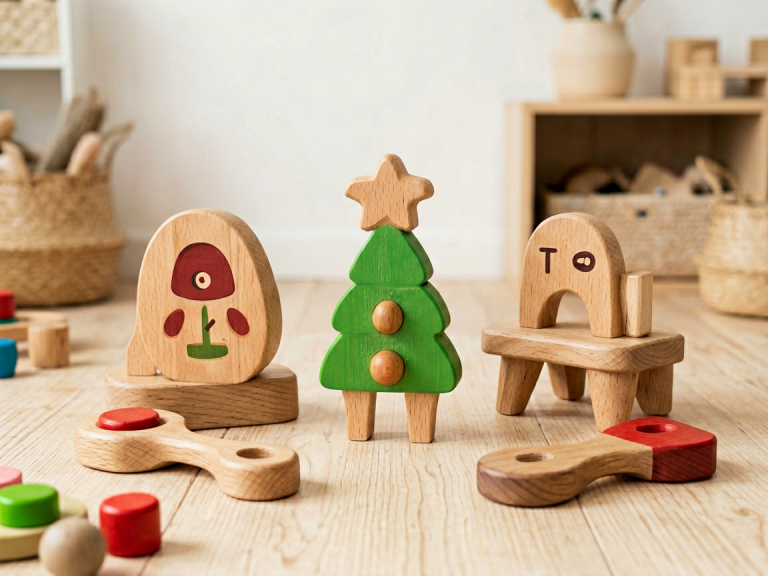
Moreover, the rapid obsolescence of themed toys (a child outgrows a specific movie or TV show within a year) means that parents must constantly buy new ones to keep up with a child's shifting interests. This creates a cycle of consumption that is wasteful and unsustainable. In contrast, a simple set of plain wooden blocks or fabric scarves can provide years of open-ended pretend play without the need for replacement.
8. Encouraging Passive Consumption Over Active Creation
Perhaps the most insidious problem with many pretend play toys is that they train children to be consumers rather than creators. When a toy comes with a specific, pre-designed universe (e.g., a play set that depicts a pizza restaurant with pre-printed menus, plastic pizzas, and a fixed layout), the child's role is limited to "operating" the toy. They are not inventing a pizza restaurant; they are following a script written by the toy's designers. Over time, children may become less confident in their own imaginative abilities, relying instead on external prompts to guide their play.
This is in stark contrast to traditional pretend play with natural objects—sticks, stones, leaves, and blankets—where children must actively transform the world around them. The ability to see a stick as a magic wand or a blanket as a tent is a hallmark of cognitive flexibility. When toys do all the transforming, children lose the opportunity to practice this crucial skill. They become passive recipients of manufactured experiences, and their play becomes shallow and repetitive.
Conclusion
Pretend play toys are not inherently bad; they can be wonderful tools for learning and fun. However, the common problems outlined above—over-structuring, gender stereotyping, electronic overload, safety concerns, commercialization, lack of social interaction, financial waste, and the promotion of passive consumption—deserve serious consideration. The best pretend play toys are those that are simple, open-ended, non-electronic, and free from rigid narratives. A plain set of wooden blocks, a collection of fabric dress-up clothes, a doll with minimal accessories, or a basket of natural objects all offer far richer opportunities for imaginative play than the most technologically advanced play set on the market.
Parents and educators can mitigate these problems by being selective, prioritizing toys that invite rather than dictate. They can also encourage children to use everyday objects as props, to invent their own stories, and to engage in cooperative play with peers. Ultimately, the goal of pretend play is not to entertain but to empower—to give children the confidence that their own minds can create worlds worth exploring. By understanding the common pitfalls of pretend play toys, we can make choices that nurture, rather than limit, this precious capacity.