The Thoughtful Classroom: A Guide to Choosing Toys That Inspire and Educate
Introduction
Selecting toys for a classroom is far more than a simple shopping errand. In the hands of skilled educators, toys become tools for cognitive development, social bonding, emotional regulation, and creative exploration. The right toy can transform a quiet corner into a bustling laboratory of discovery, while a poorly chosen one may lead to distraction, frustration, or even safety hazards. This article provides a comprehensive framework for choosing classroom toys—balancing educational purpose, safety, age-appropriateness, inclusivity, and long-term durability. With careful consideration, every toy can become a catalyst for meaningful learning.
1. Prioritizing Educational Value
The primary reason to introduce toys into a classroom is to support learning objectives. Unlike toys meant solely for entertainment at home, classroom toys should target specific developmental or academic skills.
First, look for toys that promote open-ended play. Blocks, loose parts, art materials, and construction sets allow children to create, experiment, and adapt. These toys do not prescribe a single outcome; instead, they encourage problem-solving, imagination, and perseverance. For example, a set of wooden unit blocks can teach geometry, balance, cooperation, and storytelling all at once.
Second, consider toys that strengthen foundational academic skills. For early literacy, alphabet magnets, puzzles with letter-sound correspondence, and storytelling puppets can make language acquisition tactile. For numeracy, counting bears, pattern blocks, and simple board games with number recognition help children grasp abstract concepts through concrete manipulation. Science can be introduced via magnifying glasses, magnets, simple scales, and life-cycle puzzles.
Third, evaluate toys that foster executive function skills. Games requiring turn-taking, memory, planning, and impulse control—such as matching games, “Simon Says” style activities, or simple strategy games—are invaluable. They teach children how to self-regulate, follow rules, and handle both winning and losing gracefully.
It is also wise to avoid toys that are too prescriptive or electronic. Electronic toys with flashing lights and pre-recorded sounds often limit creativity because the toy “does the work” for the child. Instead, choose quiet, manipulative toys that require active engagement. Finally, ensure that the toy aligns with your curriculum themes. If the class is studying ocean animals, a set of sea creature figures and a water table can extend that learning into play.
2. Ensuring Safety and Durability
Classroom toys face intense usage—they are dropped, chewed, thrown, and shared by many little hands. Safety and durability are non-negotiable.
Start by checking for materials and construction. Solid wood (without splinters or toxic paints), food-grade silicone, and heavy-duty plastics (BPA-free, phthalate-free) are ideal. Avoid toys with small parts for children under three, and always check age recommendations from reputable manufacturers. For classrooms with mixed ages, a “no small parts” rule for all communal toys can prevent choking hazards.
Examine the toy for sharp edges, pinch points, and loose components. Even seemingly safe items like plastic dinosaurs can have brittle spikes that break off. Give each toy a physical inspection before purchase. Additionally, consider the toy’s ability to be cleaned and sanitized. Soft fabric toys that cannot be machine-washed may harbor germs and are not ideal for communal use. Instead, choose smooth plastic or wood surfaces that can be wiped down with child-safe disinfectants.
Durability also means the toy should survive heavy use without falling apart. Check the quality of joints (for dollhouses or vehicles), the thickness of cardboard (for puzzles and games), and the sturdiness of hinges and fasteners. Warranties or replacement parts are a bonus for high-cost items. Remember, the initial price may be higher for quality toys, but they will outlast cheaper alternatives and save money over time.
3. Age-Appropriateness and Developmental Stages
A toy that delights a four-year-old may frustrate or bore a seven-year-old. Matching toys to children’s developmental levels ensures they are challenged but not overwhelmed.
For preschoolers (ages 3–5) , focus on sensory exploration, gross motor skills, and cause-and-effect. Sand and water tables, large floor puzzles, ride-on toys, dramatic play sets (kitchens, dress-up), and simple musical instruments work well. These children are learning to share and take turns, so toys with multiple pieces (like a set of train tracks) are excellent for parallel and cooperative play.
For kindergarten to second grade (ages 5–8) , children develop more complex language, logic, and social skills. Board games with simple rules, building sets (LEGO, magnetic tiles), science kits focusing on observation, and art materials that allow for detailed expression are suitable. This age also enjoys strategy and logic puzzles—such as tangrams, mazes, and single-player brain teasers—which reinforce persistence and spatial reasoning.
For upper elementary (ages 8–12) , toys should challenge higher-order thinking. Engineering kits (like marble runs or simple robotics), strategy board games (checkers, chess, Settlers of Catan Junior), and collaborative problem-solving games (like escape room puzzles) become appropriate. These children also benefit from specialized equipment for hobbies: microscopes, coding tools, or sewing kits.
Always consider the range of abilities within your classroom. Some children may be advanced in one area but need extra support in another. Having a variety of toys at different difficulty levels—and labeling them by challenge level instead of age—can help all children choose appropriately without stigma.
4. Encouraging Social Interaction and Cooperation
Classrooms are inherently social environments, and toys should encourage children to play together, not isolate themselves. Prioritize toys that require cooperation, communication, and negotiation.
Multi-player board games, for example, teach turn-taking, patience, and grace in losing. Building sets with a common goal—like constructing a city out of blocks as a group—promote teamwork. Dramatic play props (markets, post offices, doctor’s kits) invite children to assign roles, share narratives, and resolve conflicts as they play out real-world scenarios.
Look for toys that are designed for multiple users. A single marble run track can be built by three children working together; a seesaw or wagon requires two. Avoid highly individualistic toys (such as single-use electronic games or solitary puzzles) unless they serve a specific therapeutic or quiet-time purpose. Even puzzles can be made social by having children work on the same puzzle in parallel or cooperatively—but choose large floor puzzles for that purpose.
It is also important to teach and model cooperative play. Introduce a new game slowly, explicitly discussing how to share pieces, listen to others’ ideas, and handle disagreements. Over time, children internalize these norms. Toys that explicitly reward cooperation—like a cooperative board game where everyone wins or loses together—can be particularly powerful for building empathy and group identity.
5. Considering Diversity and Inclusivity
Every child in the classroom should see themselves reflected in the toys—and also see the beauty of others. This means selecting toys that represent a wide range of cultures, abilities, family structures, and genders.
Dolls and action figures should include different skin tones, hair textures, and body types. Consider dolls with wheelchairs, hearing aids, or other adaptive devices. Play food sets can include dishes from various cuisines (tacos, sushi, dumplings, pasta) rather than only “Western” items. Puzzles and books should depict children wearing glasses, wearing hijabs, or using sign language.
Moreover, avoid gender-stereotyping toys. A toy kitchen is not just for girls; a tool bench is not just for boys. Label toys neutrally and rotate them so all children feel free to explore. In addition, be sensitive to neurodivergent learners. Some children may be overwhelmed by bright flashy toys or loud sounds; provide quiet calming options like weighted stuffed animals, sensory bottles, or simple fidget tools.
Check the language and images on packaging. Avoid toys that use stereotypes (e.g., an “Indian chief” costume with a headdress) or that present only one type of family. When possible, involve the children themselves in choosing or requesting toys, and listen to their voices about what they find relevant and respectful.
6. Storage, Rotation, and Maintenance
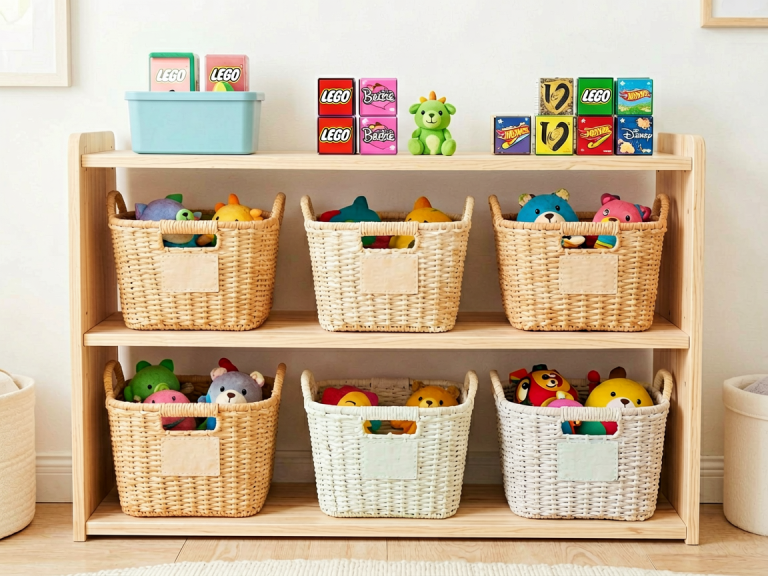
Even the best-chosen toys can lose their appeal if they sit in a messy bin for weeks. Think about storage and organization before purchasing. Toys with many small pieces (like LEGO or beads) should have clearly labeled containers; otherwise, pieces will be lost and frustration ensues. Invest in open shelving that allows children to see and access toys independently, and use low baskets or trays to limit the number of pieces available at one time.
Classroom toy rotation is a powerful strategy. Instead of putting all toys out every day, keep a portion in storage and swap them every two to four weeks. This keeps interest high and prevents overstimulation. Rotate toys by skill category (fine motor, dramatic play, science, etc.) so that all areas are covered. When rotating, observe which toys are most and least used, and adjust future purchases accordingly.
Finally, establish a maintenance routine. Assign a weekly “toy check” for broken pieces, missing parts, or soiled items. Repair or discard damaged toys immediately for safety. Teach children to care for the toys by having a clean-up system—perhaps with a “toy doctor” job that helps inventory small parts. This fosters responsibility and respect for materials.
Conclusion
Choosing toys for a classroom is an act of intentional design. Each toy carries the potential to spark curiosity, bridge social gaps, and reinforce learning goals. By prioritizing educational value, safety, age-appropriateness, social interaction, diversity, and practical organization, educators can create a play environment that is both joyful and rigorous. The best classroom is one where toys are not just played with, but are treated as serious instruments for growth—worthy of careful selection and thoughtful use. When we invest in the right toys, we invest in the whole child.