Common Problems with Science Toys: Why Educational Gifts Often Miss the Mark
Science toys are often touted as the perfect gateway to STEM education—colorful chemistry sets, build-your-own robots, digital microscopes, and crystal-growing kits all promise to turn playtime into a lifelong love of discovery. Yet for every child who assembles a working motor, there are countless others whose enthusiasm fades after the first failed experiment or broken gadget. Beneath the glossy packaging and grand claims, science toys face a host of recurring problems that undermine their educational potential and frustrate both children and parents. Understanding these pitfalls is essential for educators, manufacturers, and families who want to make play genuinely scientific—not just superficially "smart."
Misleading Scientific Concepts and Oversimplification
One of the most pervasive problems with science toys is the gap between the toy's premise and actual scientific reality. Many kits promise to teach complex principles like DNA replication, quantum mechanics, or chemical stoichiometry, but in practice they deliver only shallow demonstrations that often contain outright inaccuracies. For example, a popular "volcano" science kit typically uses baking soda and vinegar to produce a fizzy eruption, yet the instructions rarely explain the chemistry involved—acid-base reaction, gas formation, or the stoichiometric ratio—leaving children with the impression that "science" is just colored foam. Worse, some toys deliberately distort facts to make them more "fun": a toy microscope might claim to show living cells when the slide actually contains plastic beads, or a "magnetic" toy might use non-magnetic metal pieces coated with a ferromagnetic paint, teaching children the wrong concept of magnetism.
This oversimplification does more than waste money; it can foster misconceptions that persist for years. A child who grows up believing that all chemical reactions produce smoke and loud noises, or that scientists always wear lab coats and safety goggles while mixing colorful liquids, may struggle later to appreciate the quiet, patient, and often less dramatic nature of real scientific investigation. When the toy's "science" fails to match what they later learn in school, children may feel betrayed—or worse, conclude that real science is boring compared to the exaggerated versions they played with.
Poor Durability and Build Quality
Science toys often fall apart faster than traditional toys, and this is not accidental. Many are designed with cheap plastic gears, flimsy connectors, and fragile components that cannot withstand the repeated handling and exploratory behavior that children inevitably engage in. A chemistry set might come with thin glass test tubes that crack on the first drop; a construction kit might include plastic joints that snap when twisted; an electronic kit's wires may have poor insulation that frays after just a few uses. The result is not just frustration, but a lost learning opportunity—children who spend half their time repairing or replacing broken parts are less likely to focus on the scientific principles the toy is meant to illustrate.
The problem is compounded by the fact that science toys often require a level of precision that mass-produced plastic cannot guarantee. A solar-powered car that only works under direct sunlight—and stops moving if a cloud passes—teaches children that solar energy is unreliable, rather than explaining how photovoltaic cells function and why they depend on light intensity. Similarly, a cheap digital scale that drifts by two grams between measurements can ruin a chemistry experiment and teach kids that measurement errors are "normal," when in fact they should be learning about calibration and accuracy. Manufacturers cut corners on materials to keep prices low, but the educational value plummets as a result.
Safety Hazards That Undermine Trust
Safety concerns are perhaps the most alarming issue with science toys, especially those aimed at younger children. Despite regulatory standards, many kits still contain materials that can be harmful if mishandled. For instance, some chemistry sets include chemicals like copper sulfate or boric acid that are toxic if ingested, yet the packaging may not clearly specify the risks or the need for adult supervision. Small magnets, batteries, and even sharp dissection tools are often included without adequate warnings, and children may not understand the consequences of swallowing a button battery or inhaling fine dust from a rock-tumbling kit.
Even when toys are labeled "safe for ages 8 and up," the reality is that children develop at different rates, and a toy that is safe for one child may be hazardous for another. The problem is exacerbated by the way science toys are marketed: flashy online images show happy kids mixing liquids or launching rockets without any mention of goggles, aprons, or ventilation. Parents who are not scientists themselves may underestimate the risks, leading to accidents that harm both the child and the child's relationship with science. A single bad experience—a burn, a chemical spill, or a cut from broken glass—can create long-lasting anxiety about scientific activities.
Limited Engagement and the Gender Bias Trap
Another common complaint is that science toys quickly lose their appeal because they are not designed for sustained, open-ended play. Many kits follow a rigid, step-by-step recipe: "Do step A, then step B, then step C, and you will have a working motor." Once the child builds the gadget, there is little to explore further—no suggestions for variation, no troubleshooting guide, no extension activities. The toy becomes a one-time project, a box to be checked, rather than a playground for curiosity. Children who are naturally inclined to tinker and ask "what if" are frustrated by the lack of freedom; those who need more guidance are left without help when the experiment fails.
Compounding this, science toys have historically been marketed predominantly to boys, with packaging featuring male astronauts, blue-and-green color schemes, and themes of "power" or "explosion." This gender bias not only alienates girls but also reinforces the harmful stereotype that science is a masculine pursuit. While some companies have begun to push back—offering pastel-colored microscope sets or coding toys with princess themes—these efforts often feel superficial. The underlying design problems remain: the toys still offer limited replay value and fail to connect with diverse interests. A child who loves storytelling, art, or nature may find little joy in a standard robotics kit, not because they cannot learn the science, but because the toy does not invite their creativity.
High Cost With Limited Educational Return
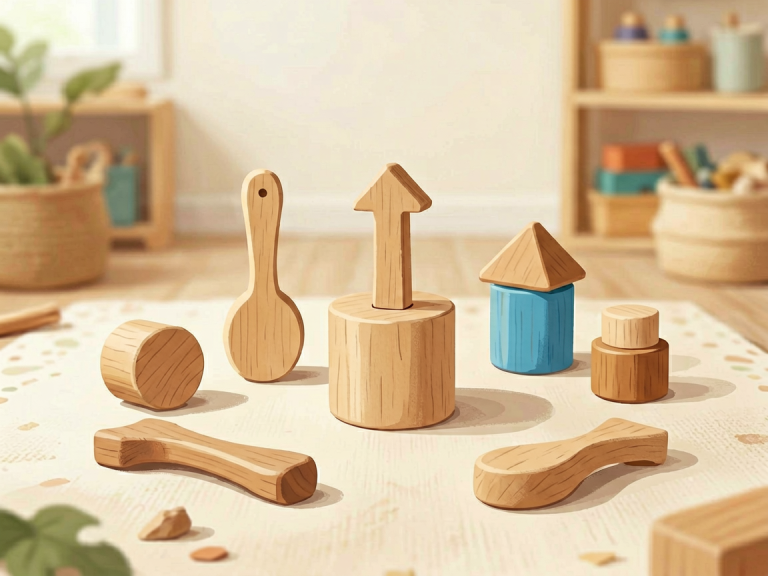
Science toys are often expensive—a good chemistry set can cost $50–$100, while a beginner's robotics kit may run upward of $150. Yet, as discussed, many of these toys offer little more than a brief, scripted experience. When the chemicals run out, the batteries die, or the robot breaks, the toy becomes useless. In contrast, a set of simple building blocks, a few magnets, and a collection of loose parts can provide hours of open-ended scientific exploration for a fraction of the cost. The irony is that the most effective science toys are often the least "sciency": a magnifying glass, a balance scale, or a simple pulley system that encourages trial-and-error learning.
Parents who invest heavily in branded STEM kits may feel cheated when their child loses interest after one afternoon. This leads to a cycle of disappointment: parents buy more expensive toys hoping for better results, while manufacturers continue to design flashy, fragile products that prioritize profit over pedagogy. The educational return on investment is often far lower than what the marketing promises, and children miss out on the deeper, more meaningful experiences that come from messy, unscripted exploration.
Over-Reliance on Technology and Screen-Based Interactions
In recent years, many science toys have moved toward app-based or screen-centric experiences. Virtual chemistry sets, augmented reality (AR) dissection kits, and coding robots that require a tablet or smartphone are increasingly common. While technology can certainly enhance learning, it also introduces new problems. First, screen time itself is a concern—especially for younger children, who benefit more from hands-on, tactile exploration than from swiping and tapping. Second, when the toy's functionality depends on an app, it creates barriers: what if the app is buggy? What if the device's operating system is outdated? What if the internet connection is slow? A child who cannot get their robot to move because the Bluetooth pairing fails is not learning about robotics; they are learning about technical frustration.
Moreover, these digital toys often turn the scientific process into a "guided tour" rather than a "choose-your-own-adventure." The app tells the child exactly what to do, leaving little room for error, iteration, or genuine discovery. When the toy's software provides instant feedback and corrections, children miss the crucial step of troubleshooting their own hypotheses. Real science involves failure, patience, and creative problem-solving—qualities that are hard to cultivate when a glowing screen directs every move.
Conclusion: Toward Better Science Toys
The problems with science toys are not insurmountable, but they require a fundamental shift in how these products are designed, marketed, and evaluated. Manufacturers should prioritize durability, accuracy, safety, and open-ended play over flashy aesthetics and oversimplified promises. Educators and parents can help by choosing toys that encourage process over product—simple tools like pulleys, magnets, seeds, and water that invite observation and experimentation. Most importantly, we must remember that a true science toy is not the one that does the science for the child; it is the one that gives the child the freedom to do science themselves. Only then can play become a genuine gateway to discovery, curiosity, and lifelong learning.