Puzzle Toys vs Logic Games for Kids: Unlocking the Mind Through Play
—
Introduction
In the golden age of childhood, play is not merely a pastime—it is the primary engine of cognitive, emotional, and social development. Among the vast universe of playthings, two categories consistently stand out for their educational value: puzzle toys and logic games. Parents and educators often debate which type offers superior benefits, but the truth is that both serve unique and complementary roles in shaping a young mind. Puzzle toys, such as jigsaw puzzles, tangrams, and interlocking blocks, challenge spatial reasoning and fine motor skills. Logic games, including board games like Chess, checkers, and modern strategy card games (e.g., *Robot Turtles*), demand sequential thinking, planning, and hypothesis testing. This article delves into the nuanced differences between these two categories, exploring how each cultivates distinct aspects of intelligence, creativity, and perseverance. By understanding their individual strengths and limitations, caregivers can make informed choices that nurture well-rounded, resilient learners.
—
1. Defining the Contenders: What Are Puzzle Toys and Logic Games?
Before comparing their effects, it is essential to establish clear definitions.
Puzzle toys are physical or digital objects that require a child to assemble, match, or manipulate pieces to form a coherent whole. Classic examples include wooden shape-sorters for toddlers, 50-piece floor puzzles for preschoolers, and complex 3D puzzles for older children. The core challenge lies in recognizing patterns, aligning shapes, and applying trial-and-error to achieve a predetermined visual outcome. Key characteristics: static end goal, tactile feedback, and often a single correct solution.
Logic games, on the other hand, are rule-based activities that involve problem-solving through deductive reasoning, planning, and strategic decision-making. They can be played on a board, with cards, or on a screen. Examples range from simple “guess the pattern” games to more elaborate constructions like *Settlers of Catan Junior* or *Clue*. Unlike puzzles, logic games frequently involve dynamic opponents (human or AI), changing variables, and multiple pathways to victory. They emphasize process over product—the journey of reasoning is as valuable as the final outcome.
Understanding this distinction is vital because the cognitive demands of each are fundamentally different. A puzzle primarily tests visuo-spatial intelligence and persistence, while a logic game exercises executive functions such as working memory, cognitive flexibility, and inhibitory control.
—
2. Cognitive Benefits of Puzzle Toys: Building Blocks of Spatial Intelligence
2.1 Enhancing Visual-Spatial Skills
From the moment a toddler tries to fit a triangular block into a triangular hole, puzzle toys are wiring the brain for spatial reasoning. Studies published in *Developmental Science* have shown that frequent puzzle play correlates with improved mental rotation abilities—the capacity to visualize objects from different angles. This skill is critical not only for mathematics and engineering but also for everyday tasks like reading maps or packing a suitcase. Tangram puzzles, for instance, force children to mentally rotate and combine seven geometric shapes to replicate a given silhouette, thereby strengthening the parietal lobe’s spatial processing networks.
2.2 Fostering Fine Motor Coordination and Hand-Eye Control
Puzzle pieces demand precise manipulation: pressing, twisting, and aligning. For young children, this repetitive action refines the small muscles of the hands and fingers, laying the groundwork for handwriting, typing, and even musical instrument playing. The act of picking up a tiny puzzle piece and guiding it into its slot also trains hand-eye coordination in a low-stakes, rewarding context. While logic games often require moving pieces or cards, they typically involve larger gestures and less fine-grained control, giving puzzle toys a unique edge in motor development.
2.3 Cultivating Patience and Goal-Oriented Persistence
A puzzle presents a clear, concrete goal: complete the picture. When a child struggles to find the right piece, they must exercise self-regulation to resist frustration and continue searching. This repeated cycle of effort and reward builds “grit”—a trait linked to long-term academic success. According to psychologist Angela Duckworth, passion and perseverance for long-term goals can be cultivated through “deliberate practice” in structured activities, and puzzles are an ideal vehicle. Unlike open-ended logic games, puzzles offer a finite endpoint, giving children a tangible sense of accomplishment that fuels their desire to tackle harder challenges.
2.4 Limitations: Lack of Dynamic Complexity
However, puzzle toys have a downside: they are static and deterministic. Once a child solves a particular jigsaw, the novelty diminishes. The cognitive load is relatively narrow, focusing almost exclusively on pattern recognition and spatial orientation. Moreover, puzzles do not inherently teach strategic thinking, cause-and-effect reasoning, or social interaction. A child working alone on a puzzle may miss opportunities to negotiate, collaborate, or adapt to changing circumstances—skills that logic games explicitly nurture.
—
3. Cognitive Benefits of Logic Games: Forging the Executive Brain
3.1 Developing Sequential Reasoning and Planning
Logic games are the gymnasiums of executive function. Games like *Sequence for Kids* or *Mastermind* require players to think several steps ahead, formulate hypotheses, and evaluate outcomes. For example, in *Mastermind*, a child deduces a hidden color code by placing colored pegs and interpreting feedback. This iterative process mirrors the scientific method: hypothesize, test, analyze results, and adjust. Such mental gymnastics bolster logical reasoning, a precursor to mathematical proof and programming.
3.2 Strengthening Working Memory and Cognitive Flexibility
Many logic games impose constraints that require players to hold multiple pieces of information in mind simultaneously. In *Chess*, a child must remember the positions of all pieces, anticipate an opponent’s moves, and inhibit impulsive responses. This constant juggling of information trains working memory—the cognitive system responsible for temporary storage and manipulation of data. Research from the University of Cambridge indicates that children who regularly play strategy-based logic games exhibit improved performance on tasks measuring cognitive flexibility (the ability to switch between rules or perspectives) compared to peers who engage in more passive screen time.
3.3 Encouraging Social Skills and Emotional Regulation
Unlike most puzzle toys, logic games are often multiplayer. Whether competing or cooperating, children learn to take turns, manage disappointment when losing, and celebrate others’ successes. Board games, in particular, provide a safe environment to practice emotional control: a child who loses a round must regulate his or her feelings without throwing the board. This social-emotional dimension is absent from solo puzzle play. Moreover, cooperative logic games (e.g., *Forbidden Island* or *Outfoxed!*) teach teamwork and collective problem-solving, where players must communicate strategies and share resources to achieve a common goal.
3.4 Limitations: Higher Entry Barrier and Frustration Risk
Logic games are often more abstract and rule-heavy than puzzles, which can be overwhelming for very young children. A four-year-old might struggle to grasp the concept of turn-based strategy, leading to confusion or disengagement. Additionally, the open-ended nature of some logic games means that failure can feel ambiguous—unlike a puzzle where you can see that the piece doesn’t fit, a logic game’s “wrong move” may not be immediately obvious. This can frustrate children who thrive on clear, immediate feedback. Therefore, logic games require careful age-matching and adult scaffolding to be effective.
—
4. Social and Emotional Dimensions: Solo vs. Group Dynamics
4.1 Puzzle Toys as a Solitary Sanctuary
Puzzles offer a unique form of solitary focus that many children find calming. In today’s overstimulated world, sitting quietly with a puzzle can serve as a form of mindfulness, reducing anxiety and improving attention span. For introverted children, this independent play builds self-reliance and intrinsic motivation. However, the solitude also means limited opportunities for negotiation, compromise, or perspective-taking—skills that are best honed through interpersonal interaction.
4.2 Logic Games as a Social Crucible
Logic games, particularly those played in groups, become miniature societies where children practice cooperation, competition, and conflict resolution. A child who loses a game of *Catan Junior* learns to cope with loss gracefully; a child who wins learns humility. Furthermore, cooperative logic games like *The Magic Labyrinth* require players to communicate spatial information verbally, building language and listening skills. These social-emotional benefits are crucial for school readiness and lifelong relationships.
—
5. Age Appropriateness: Matching Play to Developmental Stage
5.1 Toddlers and Preschoolers (Ages 2–5)
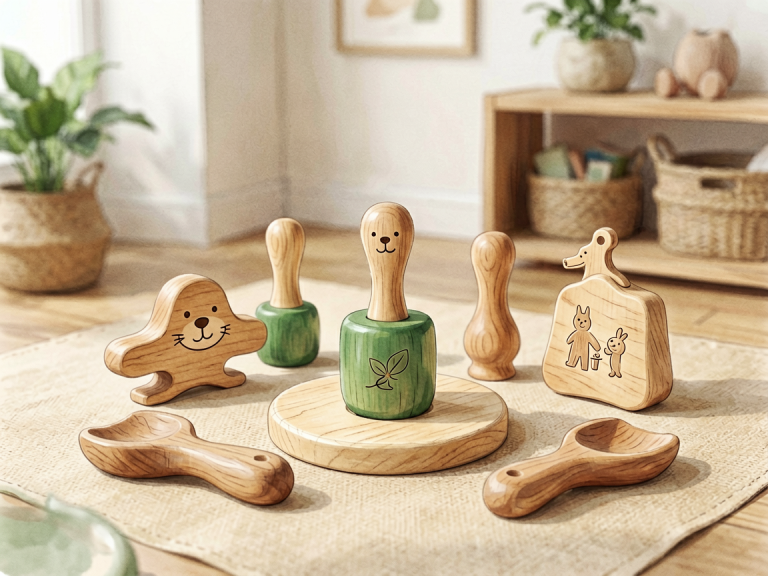
For this age group, puzzle toys reign supreme. Simple wooden puzzles with large knobs and chunky pieces help develop fine motor control and shape recognition. Logic games at this stage should be ultra-simple—for example, *Colorino* (matching colored pegs to a pattern) or *First Orchard* (a cooperative dice game). The key is to keep rules minimal and feedback immediate.
5.2 Early Elementary (Ages 6–8)
Children in this bracket can handle both categories with increasing sophistication. Jigsaw puzzles with 100–200 pieces challenge spatial memory, while logic games like *Rush Hour Junior* (a traffic jam puzzle) or *Qwirkle* (a pattern-matching game) introduce strategic thinking. Parents should alternate between the two to prevent monotony and to target different cognitive domains.
5.3 Middle Childhood and Beyond (Ages 9–12)
Older children benefit from complex logic games like *Chess*, *Ticket to Ride*, or even coding-based board games like *Robot Turtles*. Puzzle toys can remain relevant in the form of 3D wooden puzzles, mechanical puzzles (e.g., Rubik’s Cube), or escape-room-style activities. The line between puzzles and logic games blurs here: many advanced puzzles are essentially logic games in disguise, demanding strategic deduction rather than pure spatial fitting.
—
6. Striking the Right Balance: A Holistic Approach to Play
Neither puzzle toys nor logic games should dominate a child’s playtime. Instead, the ideal developmental diet includes a varied menu. Consider these evidence-based guidelines:
- Rotate activities weekly to keep novelty high and prevent over-focus on one skill set.
- Use puzzles for quiet time or winding down, and logic games for active, interactive sessions.
- Model the thinking process when playing with your child. For puzzles, narrate: “I think this edge piece has a straight side.” For logic games, verbalize your reasoning: “If I move my pawn here, what could happen next?”
- Embrace digital versions sparingly. While apps offer convenience, physical puzzles and board games provide richer tactile and social experiences.
- Observe your child’s natural inclinations. Some children gravitate toward the calm of puzzles; others thrive on the competition of logic games. Respect their preferences while gently stretching their comfort zone.
Ultimately, the goal is not to crown a “winner” between puzzle toys and logic games, but to recognize them as complementary tools. A child who masters puzzles learns patience and spatial intelligence; a child who excels at logic games learns strategy and social grace. The truly fortunate child learns both.
—
Conclusion
In the great debate of *puzzle toys vs logic games for kids*, there is no single champion—only a spectrum of cognitive seeds waiting to be planted. Puzzles ground a child in the tangible world of shapes, patterns, and persistence; logic games lift them into the abstract realm of rules, hypotheses, and interpersonal dynamics. When offered together, these two forms of play create a rich cognitive ecosystem that nurtures everything from fine motor control to executive function. As parents and educators, our role is not to choose sides but to curate a balanced “play diet” that respects each child’s developmental stage and temperament. In doing so, we equip the next generation with the mental versatility to solve not just puzzles and games, but the complex, unpredictable problems of life itself.