Beyond the Buzz: The Best Alternatives to Battery-Powered Toys for Child Development and the Planet
Introduction
In countless households around the world, the sound of a squeaking plastic button or the whir of a spinning motor has become the background music of childhood. Battery-powered toys dominate store shelves, promising flashing lights, realistic sounds, and instant entertainment. Yet parents and educators are increasingly asking a critical question: Is this constant electronic stimulation really what children need? The environmental cost of disposable batteries, the short-lived novelty of electronic gadgets, and growing concerns about screen time and overstimulation have all fueled a search for better options. Fortunately, a rich universe of alternative toys exists—ones that foster creativity, encourage physical activity, build problem-solving skills, and leave a lighter footprint on the Earth. This article explores the best alternatives to battery-powered toys, organized by category, to help families make informed, enriching choices.
Why Move Away from Battery-Powered Toys?
Before diving into specific alternatives, it is worth understanding the drawbacks of battery-dependent playthings. First, the environmental impact is significant. According to the U.S. Environmental Protection Agency, billions of batteries are discarded each year, and their toxic components—cadmium, mercury, lead—can leak into soil and water. Even rechargeable batteries eventually wear out and require proper disposal. Second, battery-powered toys often do too much for the child. A robot that talks, moves, and lights up leaves little room for imagination; the toy dictates the play. In contrast, open-ended toys invite children to invent their own stories and rules. Third, safety concerns arise: cheap electronics can overheat, and small battery compartments can be a choking hazard. Finally, the constant noise and visual stimulation can overstimulate young developing nervous systems, leading to shorter attention spans and difficulty in quiet, independent play. With these points in mind, let us examine the best alternatives.
1. Classic Construction Toys: Blocks, Magnets, and Gears
Perhaps the most timeless alternative to battery-powered toys is the humble building set. Wooden blocks, interlocking plastic bricks (like LEGO, which are manual, even though some sets now include motors), magnetic tiles, and gear systems all offer hours of engagement without a single AA battery.
Why They Excel
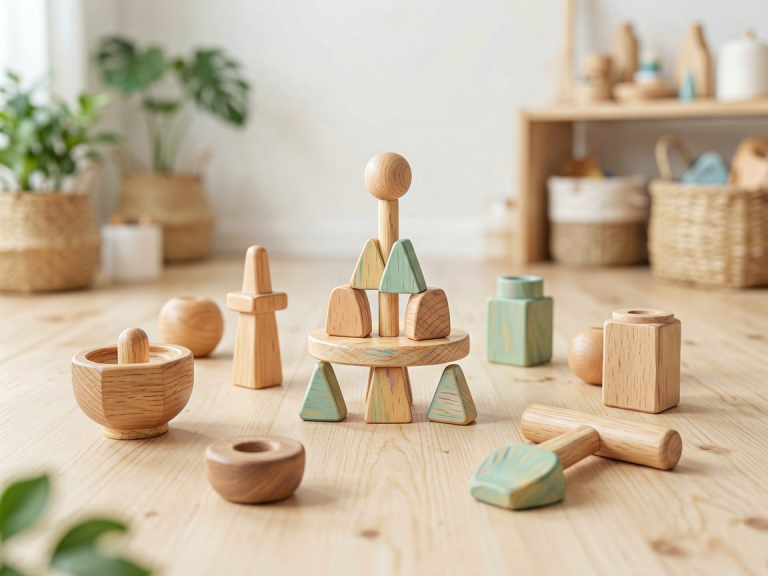
Construction toys are the ultimate open-ended playthings. A set of simple wooden blocks can become a castle, a spaceship, a farm, or a bridge—only limited by the child’s imagination. Magnetic building tiles, such as Magna-Tiles or PicassoTiles, allow children to experiment with geometry, balance, and symmetry. They naturally teach principles of physics—stacking, gravity, stability—through trial and error. Unlike a battery-powered car that zooms across the floor with a button press, a child must actively design and build their own car with blocks, then push it to make it move. This process develops fine motor skills, spatial reasoning, and persistence.
Recommended Options
- Wooden Unit Blocks: Classic sets from brands like Melissa & Doug or Grimm’s are durable, beautiful, and can be used for years.
- Magnetic Tiles: Transparent, colorful tiles that click together, perfect for ages 3 and up.
- Gears! Gears! Gears!: A manual gear set from Learning Resources that lets children build working mechanisms—no batteries, just hand-cranking.
2. Open-Ended Imaginative Play: Dolls, Figures, and Play Scenes
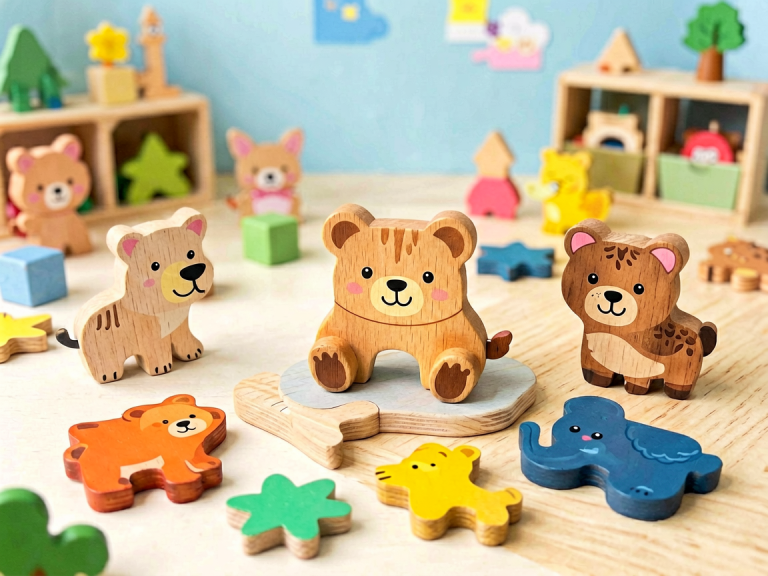
Battery-powered dolls that talk, cry, or sing are immensely popular, but they often limit a child’s narrative to the pre-recorded script. In contrast, traditional dolls, animal figures, and playsets allow children to become the directors of their own stories.
Why They Excel
A simple wooden dollhouse with miniature furniture—or even just a set of animal figurines—encourages children to create complex social scenarios, practice empathy, and explore emotions. A child can assign roles, invent dialogue, and resolve conflicts within the story, all without a single programmed response. This kind of play is foundational for language development and emotional intelligence. Moreover, these toys are typically made of natural materials like wood, fabric, or sturdy plastic that lasts for decades, often becoming treasured heirlooms.
Recommended Options
- Wooden Dollhouses and Furniture: Brands like PlanToys or Hape offer sustainably made, battery-free dollhouses.
- Animal and People Figurines: Schleich and Papo produce highly detailed, hand-painted figures that spark endless zoo, farm, or fantasy play.
- Play Silks and Costumes: Simple pieces of fabric can transform into capes, tents, blankets for dolls, or rivers for toy animals. No batteries, just imagination.
3. Active Outdoor Toys: Balls, Bikes, and Nature Exploration Kits
Perhaps the most obvious alternative to indoor electronic toys is anything that gets children moving outside. In an age of screens, outdoor play is more important than ever for physical health, sensory integration, and a connection to nature.
Why They Excel
Battery-powered ride-on cars may thrill a toddler for a few minutes, but a simple balance bike teaches coordination, balance, and confidence through active physical effort. A ball, a jump rope, or a frisbee require no charging and encourage social interaction, hand-eye coordination, and cardiovascular exercise. Beyond traditional sports equipment, nature exploration kits—bug catchers, magnifying glasses, compasses, and field guides—turn the backyard or park into a living laboratory. Children learn to observe, ask questions, and appreciate the natural world, skills no battery can replicate.
Recommended Options
- Balance Bike: A pedal-free bike that teaches toddlers to glide and balance. Brands like Strider or Radio Flyer offer excellent models.
- Classic Sports Equipment: A good-quality soccer ball, basketball hoop, or set of badminton rackets.
- Bug Catching Kit: Includes a ventilated jar, tweezers, and a magnifying glass—perfect for gentle observation.
- Kite: A simple delta kite requires wind and a running child—pure kinetic joy.
4. Arts, Crafts, and Maker Toys
Instead of toys that perform for a child, why not give them the tools to create something new? Art supplies, modeling clay, weaving looms, and simple crafting kits provide endless creative outlets.
Why They Excel
Battery-powered toys often deliver a finished experience; the child is a passive consumer. Art supplies, on the other hand, turn the child into a producer. A set of watercolor paints, a sketchbook, or a box of Crayola modeling clay allows for self-expression, experimentation, and the development of fine motor skills. More structured maker toys—like knitting looms, bead kits, or simple woodworking sets—teach patience and problem-solving. The sense of pride from creating something with one’s own hands is far more rewarding than watching a toy flash a pre-programmed light show.
Recommended Options
- Air-Dry Clay or Play-Doh: Non-toxic, reusable, and perfect for sculpting.
- Washable Markers and Watercolor Sets: Encourage drawing and painting without mess worries.
- Friendship Bracelet or Loom Kits: Great for older children who enjoy pattern-making.
- Simple Woodworking Kits: Pre-cut pieces that children can sand, glue, and paint to make small toys or birdhouses.
5. Puzzles, Board Games, and Strategy Activities
While some board games have gone digital, the vast majority of classic puzzles and tabletop games are completely battery-free—and they offer benefits that video games often lack.
Why They Excel
Jigsaw puzzles train visual-spatial skills, perseverance, and attention to detail. Board games like chess, checkers, or cooperative games such as “Hoot Owl Hoot!” teach turn-taking, strategic thinking, and how to win or lose gracefully. Unlike battery-powered games that flash rewards and sounds, these analog games rely on human interaction, conversation, and shared laughter. They are also excellent for family bonding, as they bring multiple generations together around a table rather than isolating each person with a glowing screen.
Recommended Options
- Wooden Jigsaw Puzzles: Especially those with thick, chunky pieces for younger children.
- Cooperative Board Games: Peaceable Kingdom makes a wide range of non-competitive games where everyone works together.
- Magnetic Travel Games: Compact chess, checkers, or tangrams for on-the-go play.
- Memory Card Games: Simple, portable, and endlessly replayable.
6. Musical Instruments (Acoustic)
A battery-powered toy piano that plays pre-recorded songs is fun for a moment, but a real xylophone, tambourine, or child-sized guitar offers a genuine musical experience.
Why They Excel
Acoustic instruments teach cause and effect in a pure form: when a child strikes a drum, it makes a sound. They learn rhythm, pitch, and volume through physical action. Unlike electronic instruments, acoustic ones do not have a “correct” button to press; children can experiment with harmonics, dynamics, and even create their own melodies. This fosters a deep, intuitive understanding of music. Instruments made of wood, metal, or skin are also more durable and often more beautiful than plastic electronic versions.
Recommended Options
- Xylophone or Glockenspiel: Color-coded keys make it easy for young children.
- Hand Percussion: Shakers, jingle bells, bongo drums, and maracas.
- Recorder or Kalimba: Simple, affordable, and satisfying for school-age children.
- Ukulele: A small string instrument that can be tuned and played without any electronics.
7. Science and Exploration Kits (Non-Electronic)
While many science kits rely on batteries for motors or lights, plenty of classic experiments require none at all. Chemistry sets, crystal growing kits, rock and mineral collections, and simple machines like pulleys and levers are all battery-free.
Why They Excel
These kits spark curiosity about how the world works. A child who builds a real working lever with a fulcrum and a load understands physics intuitively. A rock collection teaches geology, observation, and classification. A simple magnifying glass can lead to hours of examining leaves, insects, and fingerprints. These experiences cultivate a scientific mindset without the distraction of flashing lights.
Recommended Options
- Chemistry Set with test tubes, baking soda, and vinegar: Simple chemical reactions are thrilling and safe.
- Crystal Growing Kit: Uses heat and water to grow beautiful crystals over several days.
- Pulleys and Levers Set: From brands like Thames & Kosmos, these kits teach mechanical advantage.
- Mineral Collection: A set of labeled rocks and minerals encourages identification and classification.
8. Books and Storytelling Tools
It may seem obvious, but in a world of battery-powered storybooks that read aloud, the humble printed book remains one of the most powerful developmental tools.
Why They Excel
Reading a physical book together fosters bonding, vocabulary development, and attention span. A child turns the pages, points to pictures, and asks questions. Puppet sets, felt boards, and story cubes (with pictures on dice) extend the narrative into hands-on play. Storytelling encourages children to invent their own tales, strengthening language skills and creativity. No battery can replicate the warmth of a parent’s voice reading a bedtime story.
Recommended Options
- High-Quality Picture Books: Classics like *The Very Hungry Caterpillar* or *Where the Wild Things Are*.
- Felt Storyboard: A flannel board with cut-out characters for interactive storytelling.
- Story Cubes: Roll dice with pictures to create impromptu stories.
- Puppet Sets: Simple hand puppets for acting out stories.
Conclusion: A Thoughtful Playroom
Choosing alternatives to battery-powered toys is not about depriving children of fun; it is about enriching their play with depth, creativity, and connection. The best toys are those that grow with a child, that invite repeated exploration, and that leave room for the child’s own imagination to take the lead. Manual construction sets, active outdoor play, art supplies, board games, acoustic instruments, and books all offer something that no battery ever can: the chance to be the creator, not just the consumer. As parents, educators, and caregivers, we have the power to shape an environment where play is meaningful, sustainable, and joyous. By choosing thoughtfully, we give children not just a toy, but a world of possibilities—no batteries required.