The Ultimate Guide to Choosing Open-Ended Toys: Tips for Nurturing Creativity and Development
In a world saturated with flashing lights, pre-recorded sounds, and toys that dictate exactly how children should play, many parents and educators are rediscovering the power of open-ended toys. These simple, versatile playthings—think wooden blocks, fabric scraps, loose parts, and art supplies—invite children to take the lead, transforming a single object into countless worlds of imagination. Unlike closed-ended toys that have a single correct use, open-ended toys grow with the child, supporting cognitive, social, and emotional development in ways that are both profound and joyful. But with so many options on the market, how do you choose the right ones? This guide offers practical, research-backed tips to help you build a toy collection that truly sparks creativity and learning.
Why Open-Ended Toys Matter
Before diving into specific tips, it is worth understanding why open-ended toys deserve a central place in your child’s playroom. Research in child development consistently shows that free, unstructured play is the foundation for problem-solving skills, executive function, and emotional regulation. When a child uses a set of wooden blocks to build a castle, a spaceship, or a zoo for toy animals, they are practicing planning, spatial reasoning, and perseverance. They learn to negotiate with playmates, adapt their ideas when a tower falls, and invent new stories without external scripts. Open-ended toys also foster a sense of agency: the child becomes the author of their play, not a passive consumer of entertainment. This autonomy builds confidence and intrinsic motivation, qualities that are far more valuable than any branded character or electronic feature.
Key Tips for Choosing Open-Ended Toys
Tip 1: Focus on Simplicity and Versatility
The most powerful open-ended toys are often the simplest. A plain wooden ring can be a steering wheel, a bracelet, a cookie, or a target for tossing. A length of fabric can become a cape, a river, a blanket for a doll, or the roof of a fort. When evaluating a toy, ask yourself: How many different ways can this object be used? If the answer is “only one” or “as intended by the manufacturer,” it is likely not open-ended. Look for toys that invite transformation—shapes that can be stacked, combined, or rearranged; materials that can be manipulated, cut, or draped. Avoid toys with built-in limits, such as puzzles with only one correct solution or electronic devices that sing the same song every time.
Tip 2: Consider Age and Developmental Stage
Open-ended toys are not one-size-fits-all. A set of large, chunky wooden blocks is perfect for a one-year-old learning to grasp and stack, while a more delicate set of magnetic tiles or a box of loose parts (buttons, shells, corks) will engage a preschooler’s increasingly complex pretend play. For toddlers, prioritize toys that are safe to mouth and large enough to prevent choking. For school-age children, look for toys that introduce subtle challenges—construction kits with connectors, weaving looms, or simple board games that have flexible rules. Always observe your child’s current interests: a child fascinated by animals might love a set of wooden animal figures that can be used in countless stories, while a child who loves building might thrive with a set of interlocking gears or marble runs.
Tip 3: Prioritize Safety and Quality Materials
Children explore open-ended toys with their whole bodies—they mouth them, throw them, stand on them, and often leave them on the floor for weeks. For this reason, safety should be a non-negotiable priority. Choose toys made from non-toxic, durable materials such as solid wood (free of splinters and lead-based paint), food-grade silicone, organic cotton, or BPA-free plastics. Avoid toys with small parts that can break off easily, sharp edges, or long cords that pose a strangulation hazard. Quality also means longevity: a well-made wooden set can be passed down through siblings and even generations, whereas cheap plastic toys often crack, fade, or become brittle. Investing in a few high-quality pieces will save money and reduce waste in the long run.
Tip 4: Less Is More: Quality Over Quantity
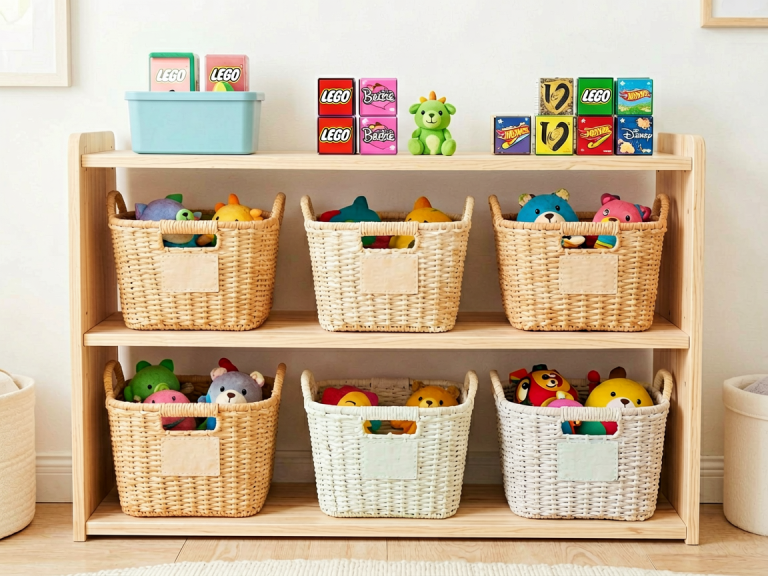
One of the most common mistakes parents make is buying too many toys, which actually undermines creative play. When a child is surrounded by dozens of specialized items, they may feel overwhelmed and unable to focus. In contrast, a smaller, carefully curated collection of open-ended toys encourages deeper engagement. A child with twenty blocks will build more elaborate structures than a child with two hundred blocks if the latter are mixed with battery-operated distractions. The principle of “fewer, better” applies here: choose toys that can be combined with each other. For instance, a set of wooden blocks, a few scarves, and a basket of animal figures can create an entire ecosystem of play. Rotate toys every few weeks to keep them fresh, rather than adding more.
Tip 5: Encourage Open-Ended Play Across Different Categories
Open-ended play is not limited to building sets. Aim to provide a variety of categories that stimulate different senses and skills. Construction toys (blocks, magnetic tiles, LEGO bricks) support fine motor skills and spatial thinking. Loose parts (buttons, pebbles, bottle caps, pinecones) foster creativity, classification, and scientific exploration. Pretend-play props (costumes, play food, dolls, simple furniture) encourage social and language development. Art materials (paper, crayons, clay, paint, glue) allow self-expression and process-oriented creativity. Sensory materials (sand, water, playdough, kinetic sand) provide calming, tactile experiences. By offering a balanced mix, you give your child the freedom to explore all dimensions of play.
Tip 6: Involve Your Child in the Selection Process
While adults can research and choose toys wisely, the best open-ended toy choices often come from observing what naturally fascinates your child. Take your child to a well-stocked toy store or a thrift shop and notice which items they gravitate toward. Do they pick up smooth wooden rings? Do they spend half an hour arranging pebbles in the yard? Do they love wrapping themselves in blankets? These clues reveal their current play schemas—patterns of behavior like transporting, connecting, or enveloping. When you choose toys that align with these schemas, you support their innate learning style. Additionally, allow them to make simple choices: “Would you like these blue blocks or the red ones?” This ownership increases their engagement and respect for the toys.
Tip 7: Look for Toys That Can Be Used in Multiple Ways
A true open-ended toy is a chameleon. Consider a simple item like a wooden ring from a stacking toy: it can be a bracelet, a wheel for a toy car, a cookie for a teddy bear’s tea party, or a hole to look through. A set of plastic cuisenaire rods can be used for math, building, sorting by color, or making sound patterns. When shopping, choose toys that have no fixed purpose and can be combined with other items in the house. For example, a set of wooden bowls can be hats, drums, nests, or containers for sorting. Avoid theme-specific toys like a “princess castle” with tiny fixed furniture; instead, buy a few plain wooden arches and scarves that can become any castle the child imagines.
Tip 8: Avoid Over-Stimulating Toys
Many modern toys are designed to grab attention with loud noises, flashing lights, and rapid movements. While these may initially entertain a child, they often lead to passive, short-lived play. The child merely reacts to the toy rather than initiating their own ideas. Over-stimulating toys can also contribute to sensory overload and difficulty with self-regulation. When choosing open-ended toys, opt for materials that are visually calm—natural wood tones, soft pastels, or neutral colors. Avoid toys that require batteries or that have a single “correct” button to push. The best open-ended toys ask questions: “What can I do with this?” not “What does this toy want me to do?”
Tip 9: Consider Durability and Longevity
A toy that breaks after a few uses is not only frustrating but also environmentally wasteful. Open-ended toys should be robust enough to withstand rough play, being dropped, and even being chewed on by teething toddlers. Look for solid construction: wooden toys with no loose joints, fabric toys with reinforced seams, and plastic toys that feel sturdy rather than flimsy. Another aspect of longevity is how the toy grows with the child. For example, a simple set of wooden blocks might be used by a one-year-old for stacking, by a three-year-old for building towers, and by a six-year-old for creating marble runs or math problems. Before buying, imagine how the same toy might be used at different ages. If it can only be used for one stage, it may not be a wise investment.
Tip 10: Embrace Natural Materials and Neutral Colors
Natural materials like wood, bamboo, wool, cotton, and stone offer sensory richness that plastic cannot replicate. Wood has a warm, varied texture; fabric has softness and drape; metal has weight and sound. These qualities invite exploration and are often more aesthetically pleasing, fitting into any home environment without visual clutter. Neutral colors—browns, beiges, greens, soft blues—also support creative play because they don’t dictate a specific theme. A red firetruck-shaped block might be used only as a firetruck, but a plain red block can be anything. When possible, choose toys that are free of commercial characters or branded imagery, as those tend to narrow the child’s imagination to predetermined stories.
Practical Examples of Open-Ended Toys
To bring these tips to life, here are some classic open-ended toys that embody the principles above:
- Wooden unit blocks – Simple rectangular, cylindrical, and triangular blocks that can be used for building, counting, balancing, and pretend play.
- Dollhouse with minimal furniture – A plain wooden house without fixed decoration allows the child to decide who lives there and what the rooms contain.
- Play silks or scarves – Versatile, washable fabric pieces that can become capes, water, roofs, or costumes.
- Loose parts kit – A basket containing items like corks, pinecones, wooden beads, shells, and fabric scraps for sorting, counting, and open-ended creation.
- Playdough and simple tools – Homemade or store-bought dough with wooden rollers, cookie cutters, and safe plastic utensils.
- Magnetic tiles – Transparent geometric shapes with magnets along the edges, perfect for 2D and 3D construction.
- Simple animal figures – A set of realistic or stylized wooden animals that children can use for storytelling, sorting, and creating habitats.
Remember that open-ended toys don’t have to be store-bought. A cardboard box, a collection of sticks and leaves, or a pile of old clothes can become the most cherished toys of all.
Conclusion
Choosing open-ended toys is an act of trust—trust that your child’s innate curiosity and creativity are the most powerful engines of learning. By selecting simple, versatile, and safe materials, you give your child the gift of true play: play that is self-directed, deeply engaging, and endlessly rewarding. Start small, observe your child’s interests, and resist the pressure to buy every trendy gadget. A few well-chosen wooden blocks, a handful of fabric scraps, and a willingness to step back and let the play unfold—these are the secrets to raising a confident, imaginative, and joyful child. So the next time you’re faced with a shelf full of colorful, noisy toys, pause and ask yourself: “Will this toy spark my child’s imagination, or will it simply entertain them?” The answer will guide you toward the best choices for years to come.