Beyond the Logo: Exploring Safer and Smarter Alternatives to Brand-Name Building Blocks
Introduction
For generations, the name “LEGO” has been synonymous with creativity, engineering, and childhood wonder. Those interlocking plastic bricks have inspired countless hours of imaginative play, and their quality control is legendary. Yet as parents, educators, and health-conscious consumers become more aware of potential risks associated with mass-produced children’s toys—ranging from chemical leaching to environmental degradation—the question naturally arises: Are there safer alternatives to brand-name building blocks that do not compromise on durability, creativity, or safety? The answer is a resounding yes. The market today offers a rich variety of non-toxic, eco-friendly, and equally engaging options that provide peace of mind without sacrificing the joy of construction. This article delves into why brand-name blocks may pose hidden hazards, and then explores a spectrum of safer substitutes, from plant-based bioplastics to responsibly sourced wood, as well as innovative open-ended systems designed to stimulate young minds in healthier ways.
Why Safety Concerns Are Valid: The Hidden Cost of Conventional Plastic Blocks
Before exploring alternatives, it is essential to understand the potential dangers lurking inside those colorful plastic bins. Most branded building blocks, including those from market leaders, are made from acrylonitrile butadiene styrene (ABS) plastic—a petroleum-derived polymer. While ABS is generally considered stable when properly manufactured, several issues persist:
- Chemical Additives and Leaching: Even high-quality ABS can contain residual monomers or additives such as phthalates (used as softeners), bisphenols, and flame retardants. Although regulations in the European Union, North America, and elsewhere have tightened, global supply chains vary. Cheap counterfeit blocks—often sold online as “compatible”—may contain dangerous levels of lead, cadmium, or phthalates. Studies have shown that when children mouth or repeatedly handle such blocks, trace chemicals can leach into saliva and skin.
- Environmental and Health Impact of Production: The manufacture of ABS plastics is energy-intensive, releases CO₂ and volatile organic compounds (VOCs), and generates microplastic pollution. These microparticles infiltrate waterways and eventually enter the food chain. For infants and toddlers who explore the world through touch and taste, microplastic ingestion is an emerging concern linked to endocrine disruption and immune system interference.
- Choking and Sharp Edges: While premium brands design their bricks to be smooth and rounded, many generic or cheaper alternatives have burrs, flash lines, or inconsistent sizing that can present choking hazards or cause cuts. Over time, even genuine bricks can degrade, splinter, or break into small, sharp pieces.
The combination of potential chemical exposure and environmental harm has prompted a growing community of health- and eco-conscious parents to seek out safer alternatives. Fortunately, innovation has kept pace with demand.
Natural Materials: Wooden Building Blocks – Timeless and Non-Toxic
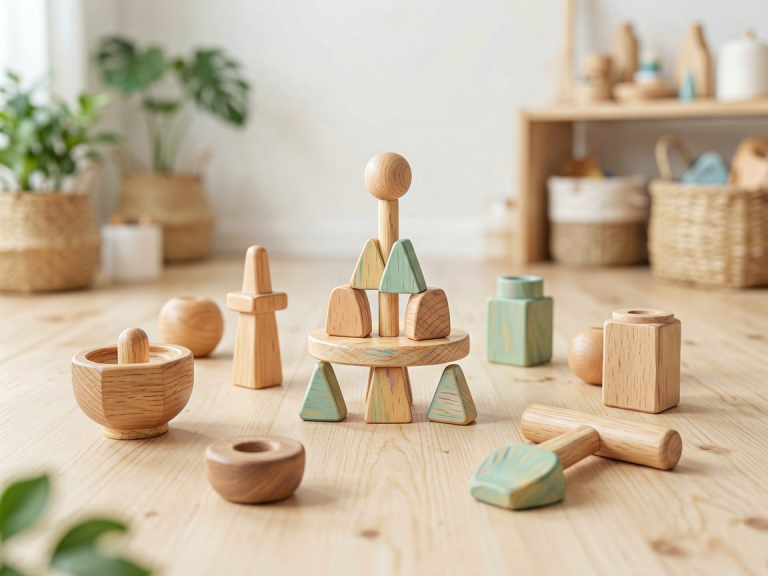
Perhaps the oldest and most reliable alternative to plastic brick systems is the humble wooden block. Crafted from sustainably sourced hardwoods such as maple, birch, or beech, high-quality wooden blocks offer a tactile, chemical-free experience. Unlike plastic, wood does not off-gas VOCs, contains no phthalates or BPA, and is fully biodegradable at the end of its life. Reputable manufacturers like Grimm’s Spiel und Holz Design, Hape, and Melissa & Doug use non-toxic, water-based stains and plant-based oils rather than synthetic paints.
Wooden blocks also promote different kinds of learning. Because they lack the precise interlocking studs of branded bricks, they encourage freeform stacking, balancing, and asymmetrical structures. This open-endedness fosters spatial reasoning, fine motor skills, and creativity in a less prescriptive way. Moreover, the natural grain and warmth of wood provide a sensory richness that plastic cannot replicate.
However, parents should exercise caution: not all wooden blocks are created equal. Some cheaper sets use plywood containing formaldehyde-based glues, or bright paints that may chip and contain heavy metals. Always look for certifications like FSC (Forest Stewardship Council) for sustainable forestry and EN71 or ASTM F963 (safety standards for toys) to ensure the finishes are non-toxic. For added safety, choose blocks that are single-piece hardwood rather than glued composites, and avoid any coating that feels waxy or has a strong chemical smell.
Bio-Based Alternatives: Plant-Based Plastics and Recycled Materials
For those who cherish the mechanical compatibility and precision of traditional brick systems but want to ditch petroleum, a new generation of bioplastics has emerged. These are often made from sugarcane, corn starch, or algae, and processed into polymers that mimic ABS in texture, strength, and snap-fit ability. Some of the most promising brands include:
- Plus-Plus (Denmark): A building system using small interlocking pieces shaped like a plus sign. While not exactly a brick, Plus-Plus has introduced a bio-based line derived from sugarcane. The pieces are BPA-free, phthalate-free, and recyclable in many municipal programs.
- Make-it Blocks: A relatively new entrant that uses 100% recycled ocean-bound plastic to produce bricks fully compatible with major brand-name systems. Their production process diverts waste from marine environments and reduces carbon footprint by over 30% compared to virgin plastic.
- Plant Bricks: Some crowdfunded projects (such as Ecobrick variants) have developed bricks molded from hemp-based bioplastics. Though still niche, they offer the same stud-and-tube compatibility with zero petroleum inputs.
- Recycled ABS from End-of-Life Toys: A handful of initiatives collect used bricks from consumers, grind them down, and remold them into new blocks. This closed-loop model dramatically reduces raw material demand and keeps plastic out of landfills.
While bioplastics and recycled options are not entirely free of chemical concerns—any plastic can contain additives—they drastically lower the toxic load and environmental footprint. Look for certifications like “OK Compost” or “USDA BioPreferred” to verify the bio-content.
Silicone-Based Building Blocks: Soft, Safe, and Sterilizable
For infants and toddlers who are still mouthing everything, silicone building blocks represent the gold standard in safety. Made from food-grade, hypoallergenic silicone (often certified LFGB or FDA), these blocks are free from BPA, phthalates, lead, latex, and PVC. The material is soft, flexible, and virtually unbreakable, eliminating sharp edges and choking risks. Silicone also withstands high temperatures, so blocks can be boiled, steam-sterilized, or placed in the dishwasher—a major advantage for households concerned about germs.
Notable brands include Ubbi, Starlyf, and Silicone Dreams. They produce interlocking blocks with a soft, grippy texture that is gentle on teeth and gums. While silicone bricks cannot replicate the tight clutch of plastic bricks, they excel in sensory play, water play (bath time), and for children with developmental conditions such as sensory processing disorder. The main downside is that silicone is heavier per block and more expensive, but the longevity and safety often justify the investment.
Paper and Cardboard Construction Systems: Lightweight and Renewable
An often-overlooked alternative is cardboard or paper-based building sets. Companies like Makedo, Strawbees, and Tinker Tubes provide connectors, rivets, or slotted panels that allow children to transform ordinary cardboard boxes and recycled tubes into elaborate structures. These systems are inherently safe—paper contains no toxic chemicals, is fully biodegradable, and can be composted after use. They also teach resourcefulness and upcycling.
More advanced are Croco or K’NEX-like sets made from reinforced cardboard. Some brands offer die-cut forms that snap together without glue, providing structural integrity similar to plastic bricks. While they lack the permanence and precision of branded bricks, they encourage iterative design: children can build, dismantle, and rebuild indefinitely. The sensory experience is different—quieter, more tactile, and organic—which can be calming for overstimulated children.
Magnetic Construction Kits: Strong, Clean, and Compatible
Magnetic building toys have surged in popularity, and many offer distinct safety advantages over plastic bricks. Systems such as Magna-Tiles, Picasso Tiles, and Magnet Tiles use high-power neodymium magnets encased in sturdy, non-toxic ABS (or sometimes recycled ABS). The blocks are large (typically 3 inches square) to prevent swallowing, and the edges are smooth and rounded. Unlike tiny studs, there are no crevices that trap dirt or bacteria.
Critically, magnetic tiles encourage geometric understanding and 3D spatial skills in ways that traditional bricks do not. They also allow for quick assembly and disassembly, reducing frustration for younger children. However, buyers must be vigilant about magnet safety: some off-brand magnetic tiles use weak or poorly sealed magnets that can break free and become a serious ingestion hazard. Stick to brands that comply with ASTM F963 and have a sealed outer casing with no accessible magnets. Additionally, ensure the plastic itself is BPA- and phthalate-free—many premium magnetic tile makers now advertise that their ABS is food-grade and free of harmful additives.
Tips for Choosing the Safest Alternatives
When navigating the landscape of safer building blocks, keep the following criteria in mind:
- Certifications matter. Look for EN71 (European standard), ASTM F963 (US), or CE marking. For wood, prefer FSC and non-toxic paint certifications such as the German “Blue Angel” or Japan’s “SEG” standards. For plastics, “BPA-free” is a bare minimum; also check for phthalate-free, lead-free, and “food-grade” labels.
- Material transparency. Reputable companies will list their exact materials, including the polymer type (e.g., “100% recycled ABS” or “sugarcane-based PE”). Avoid vague terms like “high-quality plastic.”
- Size and age appropriateness. For children under three, avoid blocks smaller than 1.25 inches in any dimension (or standard large Duplo/wooden unit blocks). Magnetic tiles are generally recommended for ages 3+ because magnets can be dangerous if swallowed.
- Durability and cleaning. Blocks that can be washed in hot water (silicone, glass, stainless steel) or wiped with alcohol (hard plastics) are preferable for hygiene. Wood should be cleaned with a damp cloth and mild soap, never soaked.
- Open-endedness. The safest toy is one that encourages creativity without a single “right” answer. Systems that allow for loose parts, mixing with other sets, and self-directed play are more likely to engage a child’s whole brain while minimizing frustration.
Conclusion: Building a Healthier Future, One Block at a Time
The move away from brand-name building blocks is not a rejection of quality craftsmanship—it is an embrace of informed choice. While the iconic snap of a branded brick evokes nostalgia, today’s parents and educators have access to a vibrant ecosystem of alternatives that prioritize health, sustainability, and child development. From the warmth of sustainably harvested wood to the pliable safety of food-grade silicone, the ingenuity of bioplastics to the simplicity of recycled cardboard, there exists a safer option for every family’s values and budget.
Switching to these alternatives does not mean losing the benefits of construction play. On the contrary, wooden blocks teach balance and texture; magnetic tiles reveal geometry; bioplastics demonstrate environmental stewardship; and silicone bricks allow worry-free mouthing. Each system carries its own unique lessons, and none of them require compromising on safety.
Ultimately, the safest building block is one that is free from hidden toxins, produced in a way that respects the planet, and designed to spark a child’s imagination without harmful side effects. By choosing wisely, we give our children not only a foundation for creativity, but also a foundation for a healthier, more sustainable world. The next time you reach for a set of bricks, look beyond the logo—your child’s health, and the health of the planet, will thank you.