Science Kits Compared to Building Toys: A Comparative Analysis of Educational Play
Introduction
In the ever-evolving landscape of children’s education and entertainment, few categories of toys have generated as much discussion among parents, educators, and researchers as science kits and building toys. Both are celebrated for their ability to foster hands-on learning, stimulate curiosity, and develop critical thinking. Yet they operate on fundamentally different pedagogical premises. Science kits are typically curated, experiment-driven packages that guide a child through a predetermined scientific inquiry—be it growing crystals, building a simple circuit, or extracting DNA from a strawberry. Building toys, on the other hand, such as LEGO, magnetic tiles, or wooden blocks, offer open-ended construction experiences where the child’s imagination determines the outcome. This article aims to provide a thorough, evidence-based comparison of these two categories, examining their respective strengths and limitations across domains such as cognitive development, creativity, scientific literacy, and practical usability. By the end, readers will have a clearer framework for deciding which type of play—or, ideally, which combination—best suits a child’s developmental stage and personal interests.
Defining the Two Categories
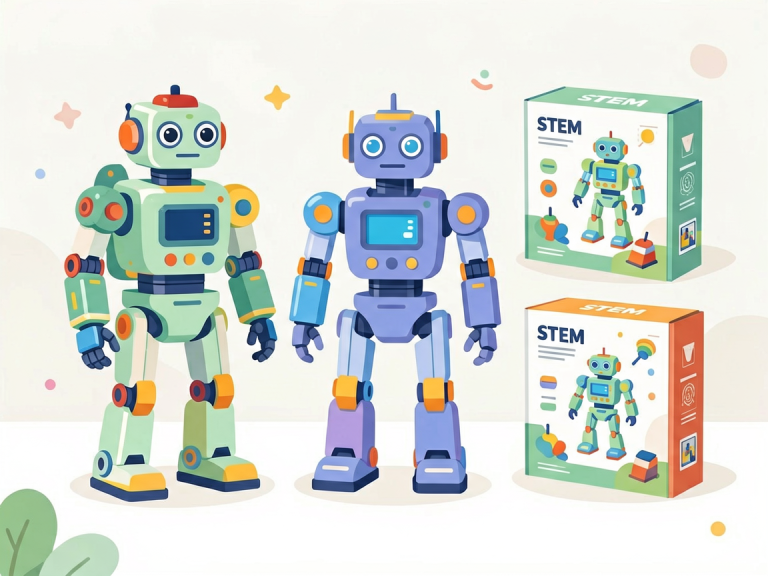
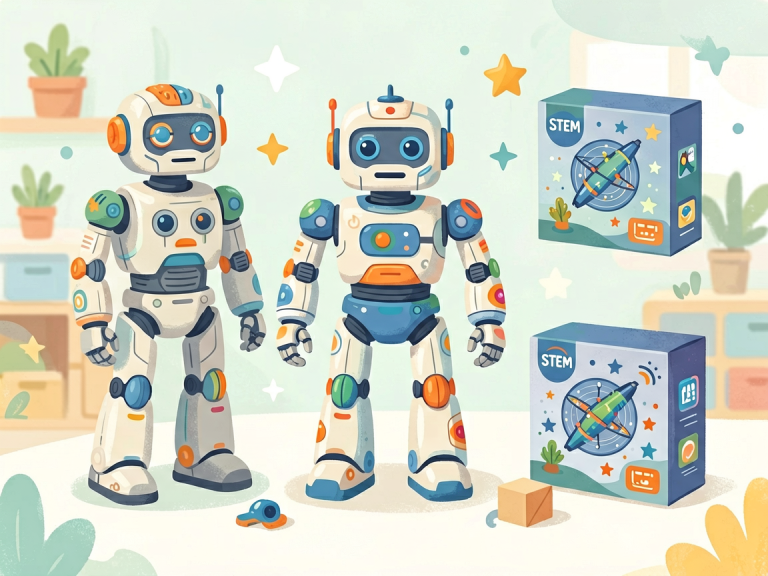
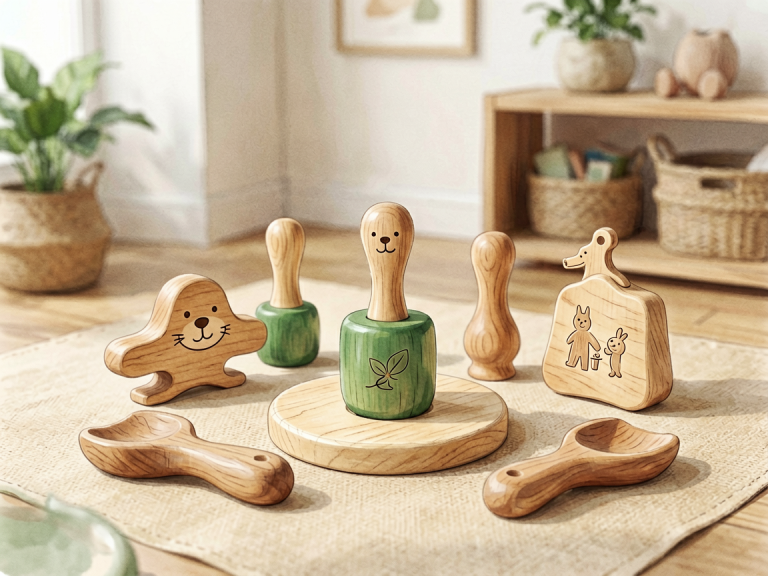
Before delving into a nuanced comparison, it is essential to establish precise definitions. A science kit is a packaged set of materials and instructions designed to perform one or more specific experiments. Examples include chemistry sets, robotics kits, weather station kits, and biology dissection kits. They often include step-by-step manuals, safety equipment, and specialized components that are not typically found around the house. The primary goal is to demonstrate a scientific principle—such as chemical reactions, electricity, or optics—in a controlled, repeatable manner. In contrast, a building toy consists of modular, often interlocking pieces that can be assembled in countless configurations. Classic examples include LEGO bricks, K’NEX, Lincoln Logs, and modern magnetic tiles like Magna-Tiles. While some building toys come with optional blueprints or theme-based sets (e.g., a LEGO Castle), the core value lies in the freedom to construct original structures, vehicles, or abstract forms. The building toy category blurs into engineering toys when mechanical components (gears, axles, motors) are introduced, but for this analysis we focus on the pure construction experience.
Cognitive and Skill Development
When comparing science kits and building toys in terms of cognitive development, the most striking difference lies in the type of thinking each promotes. Science kits are inherently convergent. The child follows a procedure, observes a result, and ideally connects that result to a pre‑taught concept. This process strengthens sequential reasoning, fine motor skills (pipetting, measuring), and the ability to follow complex instructions. Moreover, science kits often introduce technical vocabulary (e.g., “catalyst,” “voltage,” “centrifuge”) early on, building a language foundation for future STEM learning. However, the convergent nature can sometimes limit the development of divergent thinking—the ability to generate multiple solutions to a single problem—because the “correct” outcome is already specified.
Building toys, by contrast, are strongly divergent. A child faced with a pile of bricks must conceive a goal, plan a structure, test it for stability, and iterate when it collapses. This iterative process mirrors the design thinking cycle used in engineering and architecture. Research in early childhood education consistently shows that open-ended construction play enhances spatial reasoning, executive function (planning, flexibility), and problem-solving under uncertainty. A child building a bridge that must hold a toy car is engaging in real‑world physics—trial and error with balance, weight distribution, and material limits—without being explicitly taught the formulas. Therefore, while science kits are excellent for teaching specific, codified knowledge, building toys excel at cultivating the process‑oriented skills that underpin innovation.
Fostering Creativity and Open-Ended Play
Creativity is a contested term in child development, but most definitions include originality, flexibility, and the generation of ideas that are both novel and valuable. On this front, building toys generally have the upper hand. A single set of LEGO bricks can become a castle, a spaceship, a dinosaur, or a cityscape—the only limitation is the child’s imagination. This near‑infinite combinatorial freedom encourages what psychologists call “divergent creative production.” Children are not merely reproducing a model; they are inventing new forms and narratives. Importantly, building toys allow for mistakes that become creative opportunities. A tower that falls can inspire a more robust design, or the scattered pieces can be repurposed into something entirely different.
Science kits, while often marketed as being “fun” and “hands‑on,” tend to constrain creativity to the boundaries of the experiment. A crystal‑growing kit, for example, yields predictable crystals; the child may choose colors but cannot fundamentally alter the chemical process. Some advanced kits—like those for building simple robots or circuits—do offer modularity, allowing users to rearrange components to create different functions. Yet even these are bounded by electrical and mechanical laws. The creativity in science kits is more about *exploration within a system* (e.g., “What happens if I use more vinegar?”) rather than *inventing a new system* from scratch. This is not a flaw—scientific investigation itself requires disciplined creativity—but it means that building toys provide a richer environment for unstructured, spontaneous invention.
Teaching Scientific Concepts vs. Engineering Principles
Perhaps the most crucial distinction is what each type of toy teaches about science and engineering. Science kits are explicitly designed to transmit scientific content. A well‑designed kit will not only produce a cool reaction but also embed explanations about pH, oxidation, or electromagnetism. For children aged 8–14, these kits can effectively supplement school curricula by making abstract concepts tangible. For instance, a circuit kit that lights an LED when a wire is connected teaches the concept of a closed loop far more vividly than a textbook diagram. However, a risk is that children may focus on the “wow” factor—the color change, the bubble—without internalizing the underlying principle, especially if the instructions are followed mechanically.
Building toys, on the other hand, implicitly teach engineering principles: structural integrity, leverage, balance, and load distribution. A child building a tall tower learns about the center of gravity through repeated collapses. When gears are introduced (as in LEGO Technic or K’NEX), children intuitively grasp mechanical advantage and torque. These are authentic engineering experiences—learning by doing, without a manual prescribing every step. The downside is that the learning is implicit and may not be explicitly named; a child might become a skilled builder without being able to articulate why a triangular truss is stronger than a square one. Therefore, building toys are superior for developing an intuitive sense of physical laws, while science kits are superior for formalizing that intuition into declarative knowledge.
Practical Considerations: Cost, Complexity, and Age Appropriateness
From a practical standpoint, both categories have pros and cons. Science kits are typically one‑time‑use or limited‑use purchases. Once the chemicals are consumed or the experiment is done, the kit often loses its value, though some can be replenished (e.g., buying extra baking soda). They also require adult supervision for many experiments, especially those involving heat, electricity, or chemicals. This can be a barrier for busy parents but also provides an opportunity for guided learning. Pricing varies widely; a basic crystal kit may cost $15, while advanced robotics kits can exceed $100. Complexity increases with age, but many kits are designed for narrow age bands, so they may quickly become too simple or too difficult.
Building toys, conversely, are highly reusable. A set of LEGO bricks purchased at age four can still be used at age fourteen—and even by the parents. This long‑term value makes them more cost‑effective per hour of play. They require minimal supervision beyond early childhood, when small parts pose choking hazards. However, the open‑ended nature can frustrate children who crave structure or have not yet developed planning skills. Some building toy lines (e.g., LEGO Creator Expert or Technic) include complex step‑by‑step instructions that bridge the gap between open‑ended play and guided construction, offering the best of both worlds. Age‑appropriateness is also broader: toddlers can stack large blocks, while adolescents can build intricate, motorized models.
The Ideal Combination: Blending Both Approaches
Given the complementary strengths of science kits and building toys, the most developmentally rich environment is one that includes both. A child who regularly engages with building toys develops the spatial intuition, persistence, and creative confidence needed to tackle the structured experiments in science kits. Conversely, exposure to science kits can motivate a child to apply scientific thinking to their building projects—for example, deliberately designing a bridge with trusses after learning about triangles in a geometry kit. Many modern products intentionally blur the line: robotics kits that require assembling a chassis and then programming sensors; chemistry sets that include modular lab equipment; or construction kits that incorporate lights and motors. These hybrids offer the optimal synthesis of convergent and divergent thinking.
Parents and educators should consider the child’s natural inclinations. A highly imaginative child who builds elaborate fortresses might benefit from the structure of a science kit to channel that creativity into systematic investigation. A child who loves following recipes in a science kit might gain confidence from the freedom of building toys, learning that not every problem has a single right answer. The key is to rotate between the two, allowing each to fill the gaps left by the other.
Conclusion
In the debate of science kits compared to building toys, there is no definitive winner—only different tools for different aspects of learning. Science kits excel at delivering explicit, curriculum‑aligned knowledge in a structured, engaging format. They teach children how to follow protocols, record observations, and link cause to effect. Building toys excel at cultivating the flexible, resilient, and inventive mindset essential for engineering and artistic creation. They teach children how to plan, fail, and adapt. The most effective educational approach recognizes that both types of play are valuable and that a child’s development is richest when she can move seamlessly between the precision of a controlled experiment and the freedom of an open‑ended creation. As the world increasingly demands both specialized knowledge and creative problem‑solving, offering children access to both science kits and building toys is not just a luxury—it is a strategic investment in their future.