Beyond the Screen: Why Screen-Free Toys Remain Essential in the Age of App-Based Play
Introduction
In the past decade, the landscape of children’s play has undergone a seismic shift. Walk into any toy store or browse an online marketplace, and you will be confronted with a dazzling array of options—from classic wooden blocks and dollhouses to interactive tablets loaded with educational apps. The debate between screen-free toys and app-based toys is no longer a niche concern for tech-skeptical parents; it has become a central question in early childhood development, education, and even public policy. On one hand, app-based toys promise engagement, adaptability, and a seamless integration with the digital world that children will inevitably inhabit. On the other hand, screen-free toys—the humble stuffed animals, building bricks, and art supplies—offer tactile, open-ended experiences that have nurtured generations of curious minds.
This article will explore the strengths and limitations of both categories, drawing on developmental psychology, educational research, and practical parenting insights. It will argue that while app-based toys can be valuable tools when used deliberately, screen-free toys provide irreplaceable benefits for cognitive, social, and emotional growth. The goal is not to declare a winner, but to help parents, educators, and caregivers make informed decisions that prioritize a child’s holistic development over marketing hype.
The Allure of App-Based Toys: Interactivity and Personalization
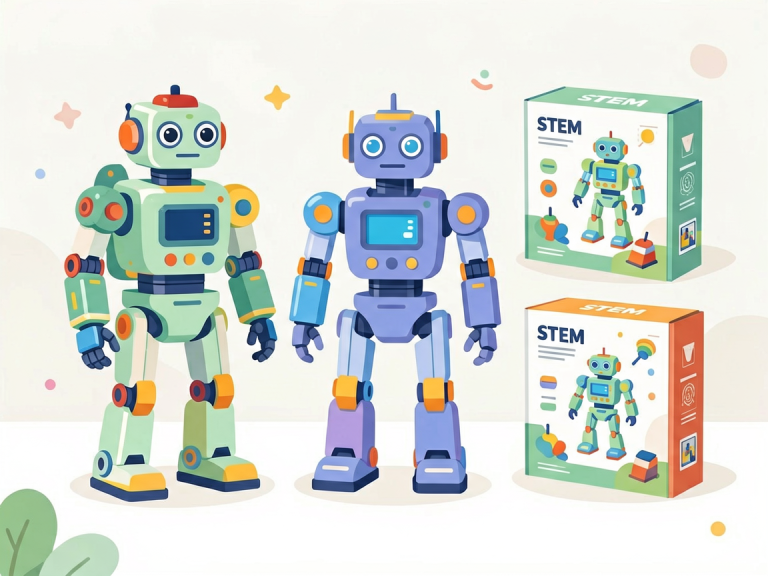
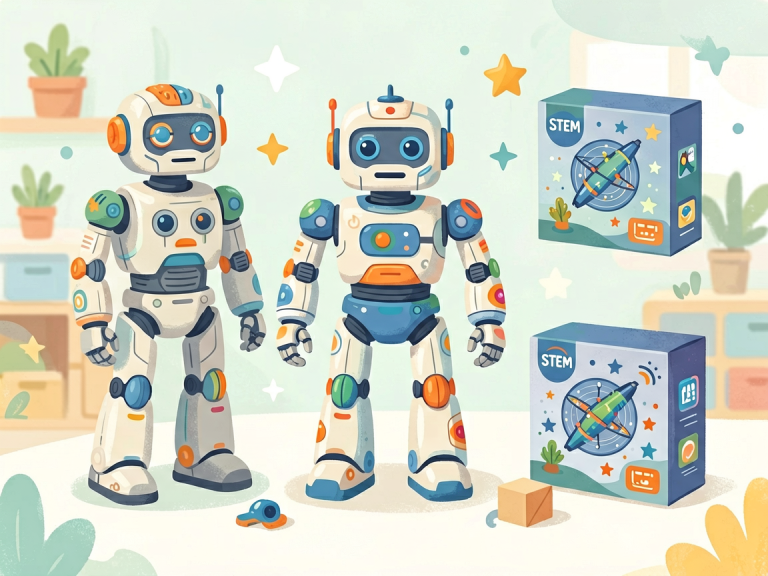
App-based toys, from smart robots that teach coding to tablet games that adapt to a child’s learning level, have become increasingly sophisticated. Their primary selling point is interactivity: they respond to a child’s input in real time, offering praise, challenges, and immediate feedback. This feature can be especially appealing for parents seeking to supplement formal education. For instance, a math app that generates new problems based on a child’s performance can provide individualized practice that a human tutor might struggle to deliver at scale.
Moreover, many app-based toys incorporate elements of gamification—points, levels, rewards—that can sustain a child’s attention for extended periods. In a world where attention spans are often fragmented, this seems like a superpower. Proponents also argue that these toys can introduce children to digital literacy from an early age, preparing them for a future where technology is ubiquitous. Apps that teach coding logic, such as Scratch Jr., or those that simulate scientific experiments, can spark curiosity in ways that traditional toys sometimes cannot.
However, there are significant caveats. The American Academy of Pediatrics recommends avoiding digital media (except video calling) for children younger than 18 to 24 months, and limiting screen time to one hour per day for children aged 2 to 5. Research indicates that overuse of screens can delay language development, reduce the quality of parent-child interaction, and disrupt sleep patterns. App-based toys, even when marketed as “educational,” often encourage passive consumption rather than active creation. A child tapping a screen to move a digital puzzle piece is fundamentally different from a child physically manipulating a wooden puzzle, because the latter engages fine motor skills, spatial reasoning, and proprioception—the sense of body position.
Furthermore, the algorithms that power app-based toys are designed to maximize engagement, not necessarily learning. They can inadvertently encourage superficial interaction—swiping, tapping, and skipping—rather than deep, sustained concentration. A child might “complete” 20 math problems in an app within five minutes, but retain very little compared to solving five problems with a physical manipulative and a caring adult. The personalized feedback of an app is no substitute for the nuanced, empathetic feedback a parent or teacher can provide.
The Timeless Value of Screen-Free Toys: Hands-On, Open-Ended Play
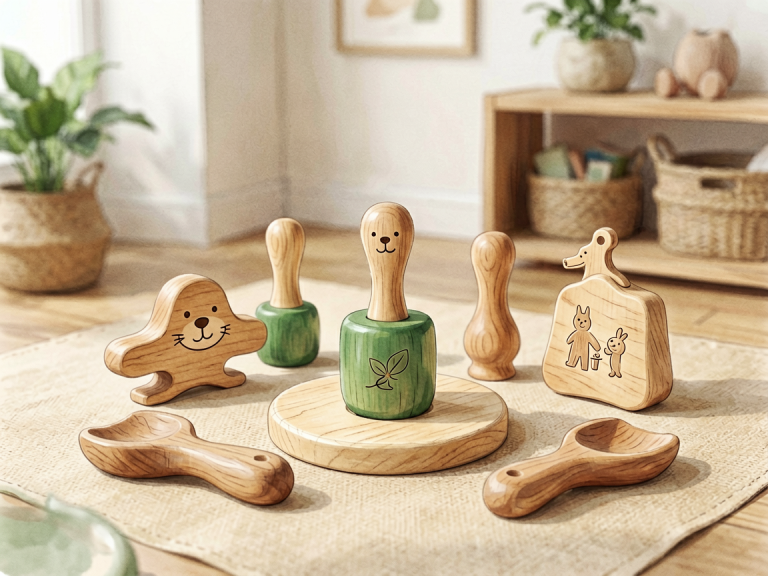
Screen-free toys encompass everything from building blocks and puzzles to art supplies, dolls, cars, and outdoor equipment. Their defining characteristic is that they require the child to supply the imagination, not the other way around. A cardboard box can become a spaceship, a castle, or a time machine. A set of wooden blocks can be stacked, knocked down, and rearranged in infinite ways, teaching lessons in gravity, balance, and geometry without a single digital prompt.
From a developmental standpoint, screen-free toys are superior for fostering creativity and problem-solving. When a child plays with a screen-free toy, they are the director of their own narrative. There is no predetermined path, no “right” way to play. This open-endedness encourages divergent thinking—the ability to generate multiple solutions to a problem—which is a cornerstone of innovation. In contrast, most app-based toys have fixed outcomes: you solve a puzzle, you win a level, you unlock a reward. The play is linear, not exploratory.
Another critical advantage is the sensory experience. Screen-free toys engage multiple senses: the smooth texture of a wooden train track, the smell of clay, the sound of a real bell, the weight of a metal car. These multisensory inputs are vital for neural development, as they help build connections between different regions of the brain. A child who plays with a physical set of magnetic tiles learns about polarity, shape, and balance through touch, sight, and even sound (the click of magnets). An app-based equivalent might simulate magnets, but the feedback is always two-dimensional and mediated by a screen.
Social development also thrives with screen-free toys. When children play together with physical toys, they negotiate roles, share resources, and resolve conflicts in real time. A group of children building a block tower must communicate verbally and nonverbally, collaborate, and sometimes compromise. App-based toys, even those with multiplayer features, often isolate children in front of individual screens. Even when two children play on the same device, the interaction is constrained by the interface; they cannot both hold the same object or feel its weight.
Cognitive and Emotional Development: A Comparative Look
Let us examine specific cognitive domains. For language development, screen-free toys consistently outperform app-based alternatives. A classic example is the picture book: when a parent reads a physical book with a child, they can point to pictures, ask open-ended questions, and adapt the pace based on the child’s interest. Studies have shown that children learn vocabulary more effectively from human interaction than from videos or apps. Similarly, role-playing toys like dollhouses or puppets encourage children to create narratives, practice dialogue, and explore emotional scenarios—all of which build linguistic and social-emotional skills.
For executive function skills—working memory, inhibitory control, and cognitive flexibility—screen-free play again has the edge. Consider a simple game like “Simon Says” or playing with a set of nesting cups. These require a child to remember rules, suppress impulsive actions, and shift attention between different aspects of the play. App-based games that claim to train executive function often do so, but the skills may not transfer to real-world contexts because the environment is too simplified. In contrast, screen-free play is messy and complex, exactly the kind of context that builds robust neural pathways.
Emotionally, screen-free toys offer a safe space for expression. A child who throws a stuffed animal in anger learns that the toy can be retrieved and comforted; they learn about cause and effect in a tangible way. App-based toys rarely allow for such emotional discharge without a programmed response—the app might play a happy sound or reset the game, which can invalidate the child’s feelings. Moreover, the overstimulation of bright screens and rapid transitions can dysregulate children, making it harder for them to self-soothe. Screen-free toys, by contrast, are calm. They do not have lights, sounds, or timers. They invite a slower, more mindful mode of play.
Practical Considerations for Parents and Educators
Given these contrasts, how can families navigate the toy aisle wisely? The key is intentionality. Not all app-based toys are harmful, and not all screen-free toys are beneficial. A high-quality app that promotes creativity, such as a digital drawing tool with no in-app purchases, can be a supplement to—not a replacement for—physical art supplies. However, parents should be cautious of apps that rely on passive consumption (e.g., videos that “teach” without requiring active participation) or that use persuasive design to keep children hooked.
A useful heuristic is the “three M” framework: Moderation, Modality, and Meaning. Moderation refers to the amount of screen time, which should be limited and balanced with extensive offline play. Modality asks: does the app-based toy provide an experience that cannot be replicated physically? For example, a virtual dissection app might be valuable in later grades, but not for a preschooler. Meaning considers whether the play is driven by the child’s curiosity or by the app’s algorithms. If the child is always following prompts, the play is likely not as enriching as free-form block-building.
For educators, screen-free toys should remain the backbone of early childhood classrooms. Montessori, Waldorf, and Reggio Emilia approaches have long championed hands-on materials, and their success is validated by neuroscience. Even in digital-native generations, children crave real-world manipulation. A sandbox, a set of cuisenaire rods, or a collection of natural objects (pinecones, shells, stones) can provide more learning opportunities than the most expensive tablet.
Conclusion
The debate between screen-free and app-based toys is not a binary choice. In an ideal world, children would have access to both, with clear boundaries and adult guidance. However, the pendulum has swung so far toward digital that it is worth reiterating a simple truth: the most important “toy” in a child’s life is the presence of a caring adult who engages in interactive, responsive play. Whether that play involves a cardboard box or a coding app matters less than the quality of the interaction.
That said, as a society, we are witnessing a natural experiment in early childhood development. We are raising the first generation of children who have known screens since infancy. The early results—rising rates of myopia, delayed speech, and increased anxiety—are concerning. While app-based toys are not solely to blame, screen-free toys offer a protective counterbalance. They slow down time, they invite curiosity, and they remind us that the most profound learning happens not through a screen, but through the messy, beautiful, hands-on process of being human.
So the next time you consider buying a toy, ask yourself: Will this toy ask something of my child, or will it do the thinking for them? Will it leave room for imagination, or will it fill every silence with sound? The best toys are not the ones with the most features; they are the ones that leave the most space for a child’s own wonder.