The Toy Graveyard: Why We Buy Toys Our Kids Never Use and the Mistake of Consumer-Driven Parenting
Every parent has stood in that aisle—the one lined with bright plastic packages, smiling cartoon characters, and promises of hours of creative fun. We pick up a toy, imagining our child’s delighted face. We bring it home, present it with fanfare, and watch—sometimes with a sinking heart—as it is played with for exactly thirty-seven minutes before being abandoned to the growing pile under the bed. This scenario is so universal that it has become a cliché of modern parenthood. Yet behind this cliché lies a profound mistake: the systematic overpurchase of toys that children do not use, a phenomenon driven by a complex web of marketing, parental guilt, and a fundamental misunderstanding of how children actually play.
The Allure of the New Toy: Marketing and Parental Guilt
The first layer of this mistake is rooted in the relentless machinery of the toy industry. Toy companies invest billions into understanding the psychology of both children and parents. For children, advertisements are designed to create instant, fiery desire through bright colors, sound effects, and the promise of social status (“everyone has one!”). For parents, the marketing targets our deepest insecurities: the fear that our child might fall behind, miss out on developmental milestones, or be left out of playdates. “Educational” toys are particularly insidious, often sold with dubious claims about boosting IQ, language skills, or creativity. A study published in *JAMA Pediatrics* found that many toys marketed as “educational” have no proven developmental benefit beyond what simple blocks or everyday objects provide.
But the real fuel for the toy-buying fire is parental guilt. In an era of dual-income households and scheduled extracurriculars, many parents feel they lack quality time with their children. A new toy becomes a quick substitute for presence—a material apology for being tired, distracted, or working late. We buy the toy not because our child needs it, but because buying it makes *us* feel better. This emotional transaction is the heart of the mistake. We mistake a purchased object for a genuine interaction, and in doing so, we teach our children that love can be expressed through consumption. The unused toy becomes a silent monument to a missed connection.
The Psychology of Play: Why Kids Lose Interest
The second layer of the mistake lies in our failure to understand how children actually engage with toys. Contrary to popular belief, children do not need an endless variety of playthings. In fact, cognitive research shows that an overabundance of choices can overwhelm a child’s developing executive function, leading to shorter attention spans and less deep play. A landmark study by researchers at the University of Toledo observed toddlers in two playrooms: one with four toys and one with sixteen. The children in the room with fewer toys played longer, more creatively, and showed more sustained focus. The children with more toys flitted from one to another, never settling into the immersive “flow state” that is critical for learning.
Furthermore, children’s interests evolve in unpredictable ways. The toy that was a must-have last month may be completely irrelevant this week because the child has discovered a new passion—for dinosaurs, or fairies, or building forts out of couch cushions. This is developmentally normal, but parents often interpret it as a signal to buy *another* toy to “reignite” interest. We treat play like a problem to be solved with consumer products, rather than a natural, organic process that can be supported with a few high-quality, open-ended items. The mistake is not just buying too many toys; it is buying the *wrong kind* of toys—those that are rigid, single-purpose, or tied to a franchise that will fade within months.
The Mistake of Quantity Over Quality
Perhaps the most damaging aspect of the unused-toy phenomenon is the implicit lesson it teaches children about value. When a child sees a constant influx of new toys, each one quickly forgotten, they internalize the message that objects are disposable. The sensory overload of a playroom overflowing with plastic reduces the capacity for gratitude and care. A toy that is rarely used is rarely treasured. This breeds a mindset of dissatisfaction—a constant hunger for the next purchase, mirroring the adult consumer culture we often lament.
The financial cost is evident: the average American family spends over $600 per year on toys, a significant portion of which ends up in landfills or donation boxes within months. But the environmental cost is staggering. According to the Ellen MacArthur Foundation, the toy industry is one of the most plastic-intensive sectors, with the vast majority of toys being non-recyclable and ending up in oceans or incinerators. The unused toy is not just a waste of money; it is a waste of resources, energy, and the labor of workers in factories often located in developing countries. By buying toys our children don’t use, we are unknowingly participating in an extractive system that harms the planet for future generations.
How to Break the Cycle: Mindful Toy Buying
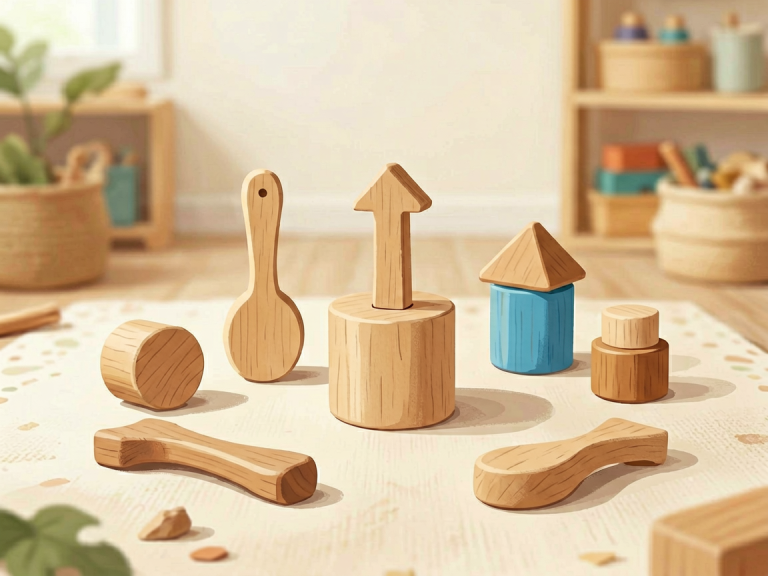
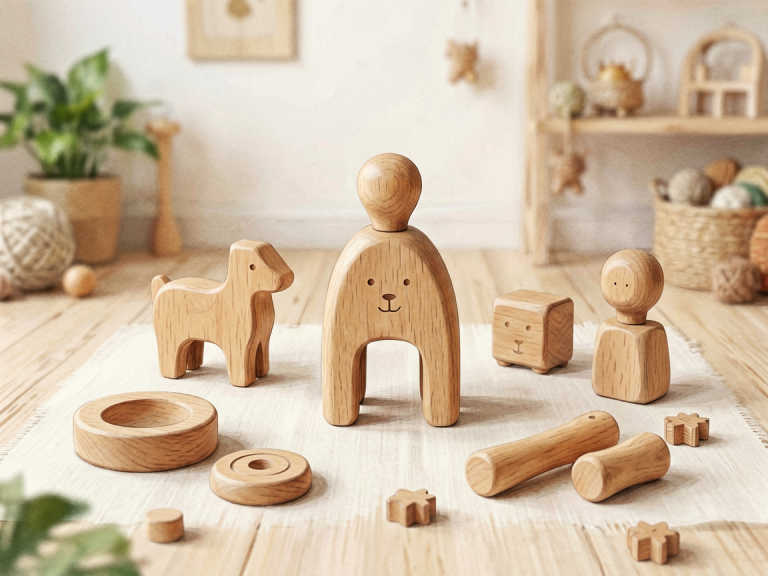
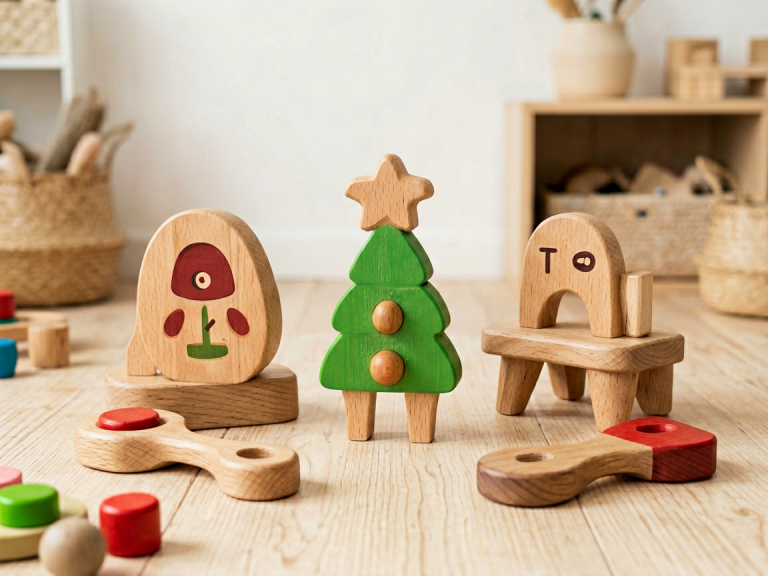
The solution begins with a simple reframe: stop buying toys for children and start buying opportunities for play. The most valuable toys are not the ones with the loudest commercials but the ones that invite open-ended interaction. A set of wooden blocks, a few balls, a play kitchen with no batteries, or a simple art supply station can provide years of engagement because they change with the child’s imagination. The mistake is not in buying toys, but in buying toys that do the playing *for* the child. Electronic, pre-programmed toys that sing, dance, and flash lights often reduce a child to a passive observer. The child presses a button and the toy performs; the child does not create, build, or problem-solve.
A second strategy is the “one-in, one-out” rule. For every new toy that enters the home, an old toy must leave. This teaches children to make choices, to value what they have, and to understand that space is finite. It also reduces the visual chaos that stresses both parents and children. Moreover, parents should resist the urge to buy toys as a default for special occasions. Instead of a toy for every holiday, consider experiences: a trip to the zoo, a subscription to a children’s magazine, a cooking class, or a day spent building a fort together. These create memories that no plastic object can match.
Finally, we must confront our own guilt. The next time you reach for a toy at the checkout counter, pause. Ask yourself: *Is this for my child, or for me?* If the answer is the latter, put it back. Walk out of the store and take your child to the park instead. Let them play with sticks, mud, and a cardboard box. These are the toys they will actually use, and the mistake we make is thinking we need to buy them at all. The best playthings are free: time, attention, and the freedom to be bored long enough to become creative.
In the end, the graveyard of unused toys is not a failure of our children—it is a failure of our own understanding. We buy because we are sold a fantasy of childhood that does not exist. The sooner we stop chasing that fantasy, the sooner our children can play with what truly matters: their own imagination.