A Parent’s Guide to Selecting the Perfect LEGO‑Style Bricks for a 5‑Year‑Old
Introduction: Why the Right Bricks Matter at Age Five
At five years old, a child stands at a thrilling developmental crossroads. Fine motor skills are sharpening, imagination is exploding, and the ability to follow simple instructions is just emerging. LEGO‑style bricks—whether official LEGO sets or high‑quality compatible brands—offer a perfect medium for nurturing creativity, problem‑solving, and patience. However, not all bricks are created equal for this age group. Choosing the wrong size, complexity, or theme can lead to frustration or safety risks. This guide will walk you through every critical factor—from brick size and safety to theme selection and budget—so you can confidently pick the ideal building blocks for your five‑year‑old builder.
1. Prioritize Safety: Brick Size, Material, and Certification
1.1 Avoid Tiny Bricks – Stick to DUPLO or Junior Lines
The most fundamental rule for a five‑year‑old is that bricks must be large enough to prevent choking hazards. While official LEGO DUPLO bricks (twice the size of standard LEGO) are marketed for ages 1½–5, many five‑year‑olds are ready to transition to standard LEGO Junior or 4+ sets. These sets use the classic 2×4 brick size but include simplified instructions and larger, easier‑to‑handle elements such as pre‑shaped bases, doors, and wheels. Avoid any bricks smaller than a standard 2×2 (e.g., 1×1 plates or micro‑figures) until the child consistently demonstrates no interest in mouthing objects. For non‑LEGO brands, such as Mega Construx or Sluban, always verify the age recommendation on the box—ideally “4+” or “5+”—and physically examine the smallest piece.
1.2 Check for Toxic Materials and Sharp Edges
Not all “LEGO‑style” bricks are created equal. Cheap, off‑brand bricks may be made of low‑quality ABS plastic that can splinter, have rough edges, or contain harmful chemicals like phthalates and lead. Always choose bricks that are BPA‑free, phthalate‑free, and certified by safety standards such as ASTM (USA) or EN71 (Europe). Reputable brands like LEGO, Mega Construx (now part of Mattel), and Cobi clearly display these certifications. When in doubt, buy from established retailers rather than random online sellers. A simple test: run your finger along the edges of a few bricks—they should be smooth and slightly rounded.
2. Match Complexity to Your Child’s Developmental Stage
2.1 The Sweet Spot: 30–80 Pieces with Large Base Elements
Five‑year‑olds typically have an attention span of 10–15 minutes per activity. Sets with 100+ tiny pieces can overwhelm them, leading to tantrums or abandoned projects. The ideal set size for this age is 30 to 80 pieces, with at least one or two large baseplates or pre‑shaped elements (like a car chassis or house frame). These larger pieces provide instant structure, allowing the child to feel successful quickly. For example, a fire station set with a large base, a few walls, a ladder, and a firefighter figure gives a sense of completion without requiring hours of precise assembly.
2.2 Instructions: Simple Picture–Based Steps with No Text
Traditional LEGO instructions use numbered bags and clear, step‑by‑step diagrams. For a five‑year‑old, the ideal instructions have no more than 8–10 steps per page, each step adding only one or two bricks. Avoid sets that require reading or recognizing left/right arrows. Many LEGO 4+ sets use an icon system (e.g., a hand pointing) to show which piece to attach next. If you choose a non‑LEGO brand, preview the instructions online before buying—steer clear of sets where the steps are too small to see or the color contrasts are poor. Better yet, build with your child at first, modeling how to “read” the pictures together.
2.3 Open‑Ended Play vs. Model‑Specific Sets
A five‑year‑old benefits most from a mix of both. Model‑specific sets (a police car, a castle, a dinosaur) teach follow‑through and sequencing. Open‑ended “bucket” sets (containing only bricks without a fixed model) encourage free building and problem‑solving. The best approach is to buy one themed set and supplement it with a small tub of basic bricks (around 200–400 pieces) that match the same color palette. This allows the child to rebuild the model, modify it, or create entirely new structures—extending play value long after the initial construction.
3. Choose Themes That Spark Imagination at Age Five
3.1 Classic Interests: Vehicles, Animals, and Everyday Scenes
Five‑year‑olds are deeply engaged in pretend play and role‑modeling. Themes like fire stations, construction sites, farms, and simple houses resonate strongly because they mirror real‑world activities they observe. LEGO’s “City” line (especially “Fire,” “Police,” and “Construction”) is a safe bet, as the vehicles are chunky and the figures are recognizable. For animal lovers, “LEGO DUPLO” (if still in the sweet spot) or “LEGO Classic” sets that include animal bricks (cows, dogs, horses) work well. Avoid overly complex fantasy themes (e.g., Ninjago with many weapons, or Star Wars with tiny weapons and complex ships) unless your child has already mastered simpler sets—the small parts and intricate designs often lead to frustration.
3.2 Gender‑Neutral Options: Let the Child Lead
While marketing often pushes “pink carousel” sets for girls and “blue rockets” for boys, a five‑year‑old’s interests are far more fluid. Observe what your child plays with daily: do they love trains? Construction trucks? Fairy tales with castles? Choose a theme that aligns with their existing fascinations. If they are equally excited by a fire truck and a flower garden, opt for sets that offer both. The LEGO Classic line (e.g., “Building Fun,” “Creative Suitcase”) contains a rainbow of bricks and simple instructions for a house, a train, a flower, and a bird—perfect for the undecided builder.
3.3 Licensed Characters: Use with Caution
Sets based on popular cartoons or movies (Paw Patrol, Peppa Pig, Disney) can be incredibly engaging, but they often come with a higher price tag and fewer generic bricks. For example, a set featuring a specific character may have only 20–30 unique pieces, and once assembled, the child may resist taking it apart because they want to keep the character intact. If you buy a licensed set, treat it as a display model or use it alongside a basic brick box so the child can rebuild the environment around the character. Also note that licensed sets often have more printed pieces that cannot be reused in other builds—limiting creativity.
4. Practical Considerations: Budget, Storage, and Compatibility
4.1 Mixing Brands: What Works and What Doesn’t
Many parents wonder if they can buy cheaper LEGO‑style bricks to save money. The honest answer: yes, but with caveats. High‑quality compatible brands like Mega Construx, Cobi, and Sluban use similar clutch power (the bricks hold together well) and are often designed to interlock with genuine LEGO. However, cheaper no‑name bricks may be too loose or too tight, causing frustration for small hands. Test a few bricks by snapping them together—if they feel wobbly or require excessive force to separate, discard the brand. A good rule of thumb: mix no more than two brands in the same build, and avoid mixing in large quantities or you’ll end up with a “fiddly” experience.
4.2 Storage That Encourages Independent Play
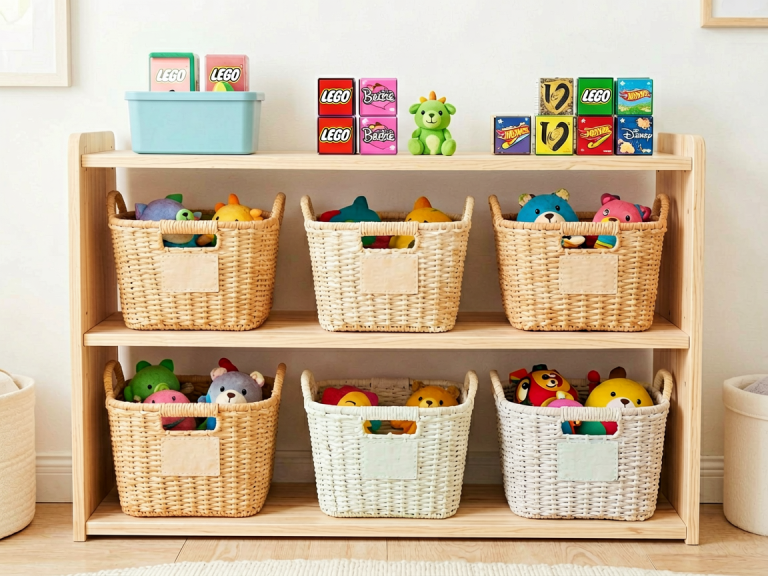
A five‑year‑old is beginning to develop organizational skills, but a messy bin of mixed bricks can discourage them. Use a divided storage tray (like a tackle box or a LEGO‑brand brick separator) with compartments sorted by color or shape—not size. Sorting by color is intuitive for a child this age and makes it easier to find a specific brick during building. Label bins with pictures (e.g., a photo of a red 2×4 brick) to help them return pieces. Avoid huge, deep bins where bricks get buried—they will tip the entire bin out to find one piece, leading to tears when pieces scatter.
4.3 Budgeting: Quality Over Quantity
You do not need to buy the largest set. For a five‑year‑old, a $20–$30 set of 40–60 pieces with a strong theme will provide far more engagement than a $15 bucket of 500 mismatched bricks. The reason: themed sets give a sense of purpose and a completed “story.” If you are on a tight budget, buy one good set and then supplement with a basic brick box (around $10–$15) in solid primary colors (red, blue, yellow, white, black) that can be used with the set. Also consider second‑hand LEGO—check for stains (which can be cleaned with mild soap) and missing pieces (buy from sellers who provide an inventory). Many Facebook Marketplace lots are sold by weight; just be sure to inspect for small parts.
5. Common Pitfalls to Avoid
5.1 Overcomplicating: “But He’s So Smart!”
Many parents mistakenly buy “7‑14” sets because their five‑year‑old can count to 100 or build a train track. However, a set’s difficulty is not just about cognitive ability; it is about fine motor control and attention resilience. A child who can identify all the pieces may still struggle to press a 1×1 plate onto a stack of four others. Always stick to the age recommendation on the box—there is no shame in a 4+ set for a five‑year‑old. They will enjoy the success and confidence far more than the challenge.
5.2 Neglecting the Role of Adult Help
Five‑year‑olds still need co‑building support. Even with simple instructions, they may struggle with aligning pieces under pressure, reading the orientation of a picture, or managing frustration when a piece falls off. Plan to sit with them for the first few builds. Use “parallel building” (you build the same model nearby, or you build a separate model together). Focus on process, not outcome—praise their effort rather than the final product. This builds resilience and a growth mindset.
5.3 Buying Too Many Sets at Once
It is tempting to stock up on sales, but a five‑year‑old’s interests shift quickly, and too many bricks can overwhelm them. Buy one set, let them exhaust its potential (rebuild it multiple times, mix with other toys), and only add another when they lose interest. As a rule, have no more than two themed sets and one basic brick bucket available at any given time. This encourages deep play rather than shallow sampling.
Conclusion: The Joy of Building Together
Choosing LEGO‑style bricks for a five‑year‑old is not about finding the “best” set or the biggest deal—it is about matching the bricks to the child’s unique stage of development. Prioritize safety with large, certified bricks; choose sets of 30–80 pieces with clear, picture‑based instructions; select themes that resonate with their real‑world play; and invest in a storage system that promotes independence. Most importantly, remember that the value of these bricks lies not in the finished model but in the hands‑on process—the repeated “clicks” of cylinder on stud, the trial‑and‑error of balance, and the shared laughter when a tower wobbles and falls. At age five, every build is a tiny victory that builds not just a toy, but a foundation of patience, creativity, and confidence. So go ahead—pick up that bright red 2×4 brick, place it in your child’s hand, and step into a world where one simple block can become anything they dream.