Building Blocks for Tiny Hands: A Complete Guide to Choosing LEGO-Style Bricks for 2-Year-Olds
Introduction: Why Brick Play Matters at Age Two
The second year of life is a whirlwind of cognitive leaps, motor skill development, and boundless curiosity. At 24 months, toddlers are no longer passive observers; they are active explorers who crave sensory input, cause-and-effect experiments, and opportunities to practice their emerging fine motor control. LEGO-style bricks—those colorful, interlocking plastic blocks—are often celebrated as an ideal toy for this age, but not all bricks are created equal. A standard LEGO brick designed for a 5-year-old can be a choking hazard, a source of frustration, or even a physical danger for a 2-year-old. The key lies in understanding the unique needs of a toddler’s developing brain and body. This guide will walk you through every critical factor—from safety standards to developmental benefits—so you can confidently select the perfect set of LEGO-style bricks for your little builder.
1. Safety First: The Non-Negotiable Checklist
When choosing bricks for a child under three, safety is paramount. At this age, children still explore the world through their mouths, and their grip strength is unpredictable. Follow these non-negotiable rules:
1.1 Size and Choking Hazard Prevention
The most obvious danger is ingestion of small parts. LEGO-style bricks for toddlers must be significantly larger than standard bricks. Look for sets labeled “DUPLO” (LEGO’s official toddler line) or “compatible large blocks” that measure at least 1.5 inches (about 4 cm) in any dimension. A simple test: if a brick can fit entirely inside a toilet paper tube, it is too small for a 2-year-old. Avoid any set that contains wheels, eyes, or decorative pieces smaller than 1.2 inches in diameter.
1.2 Material and Toxicity
Toddlers will put bricks in their mouths, so the material must be non-toxic and free of BPA, phthalates, and lead. Reputable brands like LEGO DUPLO, Mega Bloks First Builders, and MEGA BLOKS (now part of Mattel) use food-grade ABS plastic that meets international safety standards (e.g., EN71 in Europe, ASTM F963 in the US). If you buy unbranded “compatible” bricks, check for a “CE” mark or a certificate of safety. Avoid painted bricks or those with a strong chemical smell.
1.3 Edge and Shape Safety
Sharp corners are a no-go. The best bricks for 2-year-olds have rounded edges and smooth surfaces. The studs (the bumps on top) should be shallow enough that they don’t scratch delicate skin. Also, inspect for any rough mold lines that could cause paper cuts. Run your finger over every surface of the block before giving it to your child.
1.4 Battery and Electronic Hazards
Some modern brick sets include lights or sounds. For a 2-year-old, avoid any set with a battery compartment that is not secured with a screw. Toddlers can open a small flap and access button batteries, which can cause severe internal burns if swallowed. Stick to purely mechanical bricks for now.
2. Size and Proportion: Matching the Toddler Grip
A 2-year-old’s hand is still developing the pincer grasp (using thumb and forefinger). Standard LEGO bricks (2×2 studs) are too small to be manipulated comfortably. Here is what to look for:
2.1 The DUPLO Standard
LEGO DUPLO bricks are exactly twice the size of standard LEGO in every dimension: two DUPLO studs fit into one standard LEGO stud. This 2:1 ratio means DUPLO bricks are large enough for a toddler to grasp with a whole-hand (palmar) grip, yet small enough to encourage fine motor challenge. Most DUPLO sets are recommended for ages 1½ to 5, making them ideal.
2.2 Mega Bloks and Alternatives
Mega Bloks First Builders are slightly larger than DUPLO (about 1.75 inches tall) and have a softer, more flexible plastic, which can be easier for little hands to push together. However, the softer material may not hold together as tightly, which can lead to frustration. Some parents prefer DUPLO for its more satisfying “click.” Ultimately, both are safe, but test a few bricks in the store: if you can separate them with one hand, they are likely suitable for a toddler.
2.3 The “One Brick, One Hand” Rule
A good rule of thumb: each brick should be at least as large as the palm of your child’s hand. If you have to use two hands to hold one brick, it’s too big. If you can wrap your fingers completely around it and it disappears in your fist, it’s too small.
3. Developmental Benefits: What to Look For in a Set
Beyond safety, the best brick sets are those that actively support a 2-year-old’s developmental milestones. Look for these features:
3.1 Simple Shapes and High Contrast Colors
At age two, children are beginning to recognize and name colors (often red, blue, yellow, green, and black). Choose sets with a limited palette of bold, primary colors. Avoid pastels or too many similar shades, which can confuse early color-learning. Similarly, stick to basic shapes: squares (2×2, 2×4) and rectangles (2×6, 2×8). Avoid complex shapes like sloped bricks, arches, or inverted studs in the first set—save those for age 3+.
3.2 Encouraging Stacking and Sorting
The most important skill for a 2-year-old brick builder is vertical stacking. The bricks should press together with moderate resistance—not so tight that your child needs adult help, and not so loose that the tower falls over with a light breath. A set that includes a baseplate (a flat board with studs) is excellent: it provides a stable foundation for a first tower. Sorting by color is a natural next step; some sets come with color-coded storage buckets, reinforcing categorization skills.
3.3 Fine Motor and Problem-Solving
Pressing two bricks together requires bilateral coordination (using both hands in a coordinated way) and finger strength. The ideal brick will require a firm but achievable push. Look for sets that include a few “special” pieces—like a wheelbase with large wheels (choking-safe, >2 inches) or a simple animal figure (e.g., a DUPLO dog or duck). These pieces add imaginative play value without overwhelming the child.
3.4 Language and Social Development
At two, children are exploding in vocabulary. Choose sets that include simple thematic elements—a house, a car, a tree—that you can name and describe as you build together. “Let’s put the red block on top. Now the yellow block. Can you find another red one?” This interaction builds language, attention, and social bonding. Avoid sets with complex storytelling narratives (e.g., “fire station rescue”) until age 3.
4. Compatibility and Expandability: Planning for the Future
One of the greatest joys of LEGO-style bricks is that they can be combined and reused for years. However, compatibility is not automatic across all brands.
4.1 DUPLO and Standard LEGO
Here is a little-known fact: DUPLO bricks are backward-compatible with standard LEGO! The studs on a DUPLO brick are the same diameter as a standard LEGO brick’s studs, so a DUPLO brick can be stacked on top of a standard LEGO brick (though the connection may be slightly loose). This means you can gradually introduce smaller bricks as your child gets older, creating a seamless transition around age 4 or 5. Begin with DUPLO-only sets; you can later add a standard LEGO baseplate or a few 2×4 bricks.
4.2 Mega Bloks and Other Brands
Mega Bloks First Builders are NOT compatible with DUPLO in most cases—their studs are slightly larger, and the underside recesses are different. However, Mega Bloks are compatible with other Mega Bloks sets. If you choose a non-DUPLO brand, commit to it for the first few years to avoid mixed sets that don’t work together. Be aware that used Mega Bloks often have more wear and may lose connectivity.
4.3 The Storage Factor
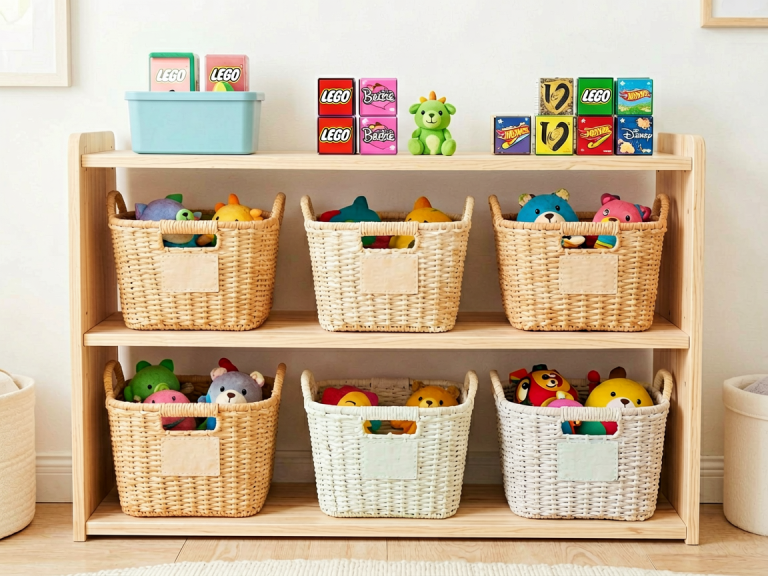
A 2-year-old likely has a short attention span. Choose a set that comes with a storage bucket or bag. DUPLO and Mega Bloks both sell buckets with 40–80 pieces, which are perfect. Avoid sets with hundreds of bricks—they will overwhelm the child and the parent. A good starter set is 30–50 large bricks, plus a baseplate.
5. Common Mistakes to Avoid
Even experienced parents can fall into traps when buying bricks. Here are three mistakes to steer clear of:
5.1 Buying “Standard” LEGO Sets “for the Future”
I once met a parent who bought a LEGO Classic 1100-piece box for her 2-year-old, thinking she would “grow into it.” She ended up spending her days picking tiny glow-in-the-dark 1×1 tiles out of the sofa (and her child’s nostrils). Wait until your child is at least 3½ and no longer mouthing objects before introducing standard bricks.
5.2 Overlooking the Baseplate
A baseplate is not just a luxury—it is a learning tool. Without a baseplate, a toddler’s tower will wobble on the carpet, causing frustration. A large green or blue baseplate gives the child a stable, defined workspace and teaches spatial boundaries. Most DUPLO baseplates are 10×10 studs (about 10 inches square) and are compatible with all DUPLO bricks.
5.3 Ignoring Cleanup and Sorting
Two-year-olds are naturally chaotic. If you buy a mixed-color bucket, be prepared to spend time separating bricks after each play session—or let the chaos reign. To encourage independent cleanup, choose a set with a color-coded storage bucket (e.g., all red bricks in one compartment, all blue in another). This tiny organizational step will build early categorization skills.
6. Recommended Starter Set: A Practical Example
To illustrate all of the above, let me recommend a specific set: LEGO DUPLO My First Number Train (10954) . This set contains 23 pieces, including a train engine, three train cars, and numbered bricks (1–9). All bricks are large, rounded, and DUPLO-sized. The train wheels are large (about 2 inches in diameter) and do not detach. Numbers are printed (not painted) on the bricks, so they won’t chip. The set encourages counting, sorting, and imaginative train play. It retails around $20 USD and is available worldwide. For a pure building experience, Mega Bloks First Builders Big Building Bag (80 pieces) is also excellent for the price.
Conclusion: The Right Brick Builds Confidence
Choosing LEGO-style bricks for a 2-year-old is not about the most advanced set or the biggest price tag—it is about safety, size, and developmental alignment. The perfect brick is one that fits comfortably in a small hand, clicks together with just the right pressure, and sparks a delightful “I did it!” moment each time a tower stands tall. Start with DUPLO or a known compatible brand, prioritize large pieces and simple shapes, and always supervise play. You are not just buying a toy; you are laying the foundation for a lifelong love of creation, problem-solving, and joyful learning. Happy building!