Top Toy Features That Foster Development in 9-Month-Olds
Choosing the right toys for a 9-month-old can feel overwhelming, with store shelves packed with blinking, buzzing, and brightly colored options. At this age, babies are in a remarkable developmental sprint: they are moving from sitting independently to crawling, beginning to understand object permanence, refining their pincer grasp, and absorbing sensory information at an astonishing rate. The best toys are not merely entertaining—they are tools that support these leaps in physical, cognitive, and social growth. By focusing on specific features—safety, sensory richness, motor challenges, cause-and-effect mechanics, and opportunities for movement—parents can select playthings that engage a 9-month-old’s curiosity while nurturing key milestones. Below, we break down the essential toy features that make the most of this vibrant stage.
Safety First: Non-Toxic, Durable, and Choke-Free Design
At nine months, everything goes into the mouth. Babies explore texture, taste, and temperature through oral investigation, so toy safety is non-negotiable. The best toys for this age are made from non-toxic materials—BPA-free plastic, food-grade silicone, untreated wood with water-based paints, and organic cotton. They should be free of phthalates, lead, and other harmful chemicals, with labels like “ASTM certified” or “EN71 compliant” confirming rigorous testing.
Equally critical is the absence of small parts. A 9-month-old’s pincer grasp is emerging, meaning they can pick up tiny objects between thumb and forefinger—a skill that also makes them vulnerable to choking hazards. Toys with batteries must have screw-secured compartments; any removable parts should be larger than a toilet paper roll (about 1.75 inches in diameter). Durability matters, too: toys that crack or splinter easily can create sharp edges. Soft fabric toys should have reinforced seams and no loose buttons or beads. Even the most engaging toy is useless if it poses a risk, so safety must be the foundation of every choice.
Sensory Stimulation: A Symphony of Sounds, Textures, and Colors
The 9-month-old brain is a sensory sponge, forming neural connections at a rate of about one million per second. Toys that engage multiple senses simultaneously help wire these pathways. Look for features that offer varied textures: crinkly fabrics, bumpy silicone teethers, smooth wooden rings, and fuzzy plush surfaces. Babies love to rub, squeeze, and mouth these different materials, learning that the world feels different depending on how you touch it.
Sound is another powerful attractant. Toys that produce gentle rattles, soft chimes, or crinkling noises reward a baby’s shake or hit with immediate auditory feedback. Avoid overly loud electronic noises, which can overstimulate; instead, opt for toys with adjustable volume or natural acoustic sounds. High-contrast colors, especially black-and-white patterns or bold primary colors, remain visually engaging, though 9-month-olds also begin to appreciate more intricate patterns and faces. A good sensory toy might combine a crinkle flap, a squeaker, a teether ring, and a mirror—all in one compact activity book or soft block. This variety holds attention longer and supports learning about the physical properties of objects.
Fine Motor Skill Boosters: Grasping, Picking, and Manipulating
Nine months is a golden period for fine motor development. Babies are refining their whole-hand grasp and starting to use a pincer grip—the ability to pick up small items between thumb and forefinger. Toys that encourage these precise movements are invaluable. Stacking cups or rings, for example, require the baby to grasp a ring, coordinate arm movement, and release it onto a post. At first they may only bat at the rings, but over weeks they learn to pinpoint the post and slide the ring down.
Soft building blocks with slightly different shapes are also excellent; a 9-month-old can practice transferring a block from one hand to the other, banging two blocks together, or trying to stack them (even if they topple). Activity boards with knobs, sliding beads, and spinning gears strengthen hand muscles and teach cause-and-effect in a physical way. Look for toys that require both bilateral coordination—using two hands together—and unilateral movements. The key is that the toy responds to the baby’s action in a satisfying, predictable manner, which motivates repeated practice and mastery.
Encouraging Movement: Toys That Promote Crawling and Pulling Up
By nine months, many babies are proficient crawlers, and some are beginning to pull themselves up to a standing position. Toys that encourage these gross motor milestones are invaluable. Push-along or pull toys, such as a sturdy wooden cart with a long handle, give a crawling baby a reason to move forward. When the baby pushes the cart and it rolls, the visual and auditory reward reinforces the effort. Similarly, a ball that rolls just out of reach—not too fast—invites a game of chase, strengthening leg and arm muscles.
Wobble toys or “pound and roll” sets (where a child hits a ball with a mallet and it rolls away) combine fine and gross motor play. For babies learning to stand, consider a low, stable activity table that supports weight while offering buttons, beads, and spinning wheels at the perfect height. Always ensure these toys have a wide, non-slip base to prevent tipping. The best movement toys are not passive; they require the baby to shift weight, reach, pivot, or cruise laterally, building the trunk strength and balance needed for walking.
Cause and Effect: Interactive Features That Teach Action-Reaction
One of the most profound cognitive discoveries during the first year is that actions have consequences. Toys with clear cause-and-effect features help solidify this understanding. A pop-up toy with buttons that, when pressed, reveal a smiling animal face is a classic example. A baby pushes a button, and a jack-in-the-box springs up—the surprise and delight are not just fun; they are a lesson in agency.
Other effective features include lights that turn on with a gentle tap, music that plays when a lever is pulled, or a cow that moos when its ear is squeezed. The response should be immediate and consistent so the baby can build a mental link: “I did this, and that happened.” Over time, babies begin to experiment by pressing different buttons or shaking in different ways, demonstrating early problem-solving. Avoid toys that have too many random effects or delayed responses, as these can confuse rather than teach. Simple, predictable interactivity—no more than two or three distinct actions—works best at this age.
Cognitive Foundations: Object Permanence and Problem-Solving
Around eight to ten months, babies develop object permanence—the understanding that an object continues to exist even when it is out of sight. Toys that reinforce this concept are both educational and entertaining. A simple wooden box with a hole and a ball that disappears inside, then reappears in a tray, is a perfect tool. The baby pushes the ball in, watches it vanish, and then reaches for the tray to find it again. This game is repeated dozens of times, each repetition strengthening the neural pathways for memory and anticipation.
Similarly, toys with flaps that hide a mirror or a picture encourage the baby to lift the flap and discover what is underneath. Peek-a-boo-style toys, where a puppet pops out from behind a fabric wall, also work well. Problem-solving comes into play when the baby must figure out how to open a lid, slide a door, or fit a shape into a hole (although true shape sorting usually emerges closer to 12 months). Simple puzzles with one piece per board, where the piece has a knob, allow the baby to practice aligning and inserting. These toys lay the groundwork for logical thinking and persistence.
Social and Emotional Engagement: Mirrors, Soft Toys, and Mimicry
Nine-month-olds are becoming intensely social. They enjoy watching faces, mimicking expressions, and engaging in back-and-forth interactions. Unbreakable mirrors attached to toys or activity mats let babies study their own reflection, which supports self-awareness and emotional regulation. They will smile at themselves, touch the mirror, and sometimes look behind it—all wonderful signs of emerging identity.
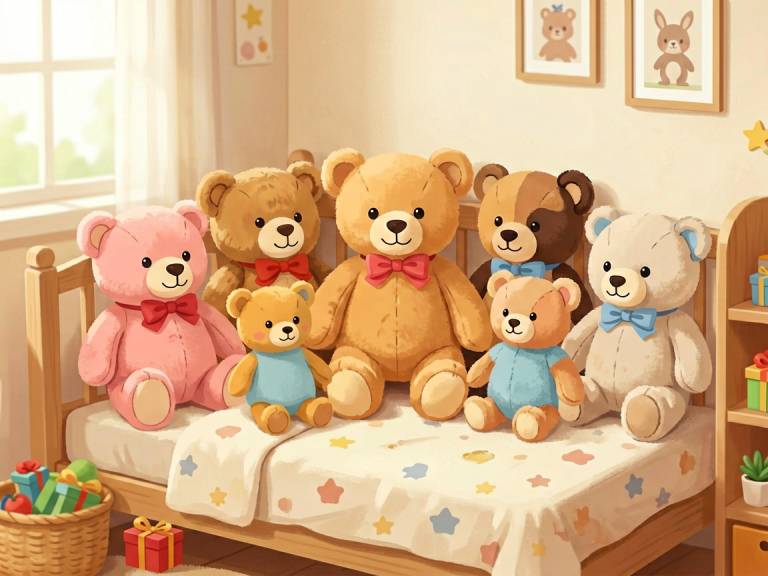
Soft dolls or plush animals with simple faces encourage nurturing behavior. A baby may hug a teddy, pat its belly, or offer it a bottle. Even if the action is clumsy, the imitation of caregiving is a critical social milestone. Look for toys with a neutral, friendly face and no small attached accessories (like glasses or bows) that could come off. Musical toys that require two people—like a drum that an adult beats while the baby pats—foster joint attention and turn-taking. The best social toys are those that invite an adult to play along, because at this age, a responsive caregiver is the most powerful “toy” of all.
Versatility and Longevity: Toys That Grow with the Baby
Parents appreciate toys that remain interesting as skills develop. The best features for a 9-month-old are often those that can be used in multiple ways over several months. A set of stacking cups, for example, can first be explored by mouthing and banging, then used for stacking and nesting, later employed as molds for sand or bath toys, and eventually incorporated into pretend play. A wooden activity cube with different panels (a bead maze, a shape sorter, a spinning wheel, a mirror) offers variety within one toy, and the shape sorter will challenge the baby at 12 months while the bead maze may only be fully mastered at 18 months.
Adjustability is a bonus: some toys have removable parts that increase difficulty, or they can be converted from a floor toy to a tabletop version. Soft fabric blocks that are lightweight at nine months become building materials for towers later. Choosing versatile toys reduces clutter, saves money, and provides a familiar object that the child can grow into—a small, steady anchor in a rapidly changing developmental landscape.
Conclusion
Selecting toys for a 9-month-old is less about chasing the newest electronic gadget and more about understanding the deep needs of a curious, growing human. The best toy features—safety, sensory variety, fine motor challenges, movement encouragement, cause-and-effect, object permanence, social engagement, and versatility—work together to create rich play experiences. A toy that looks simple (a set of wooden rings, a soft block, a ball) often provides the richest learning because it invites the baby to act, explore, and repeat. By focusing on these core features, caregivers can confidently choose playthings that not only entertain a 9-month-old but also build the physical, cognitive, and emotional foundations for the amazing year ahead.