How to Decide If LEGO Style Bricks Are Right for Your Child: A Comprehensive Guide
Introduction
Few toys have achieved the iconic status of LEGO bricks. For decades, these tiny, interlocking plastic pieces have sparked creativity, taught engineering principles, and provided countless hours of entertainment for children around the world. However, as any parent quickly discovers, the decision to introduce LEGO style bricks into a child’s life is not always straightforward. The market is flooded with branded LEGO sets, generic off-brand bricks, and themed collections that range from simple animal figures to complex replicas of spacecraft and castles. Beyond the sheer variety, parents must weigh developmental benefits, cost, space constraints, and even their child’s unique temperament. Is your child ready for the challenge? Will they actually use the bricks, or will the set gather dust in a corner? This article provides a structured framework to help you decide if LEGO style bricks are right for your child, covering age appropriateness, interest alignment, practical considerations, educational value, and alternatives. By the end, you will have the tools to make an informed, confident choice.
—
1. Understanding Developmental Stages and Age Appropriateness
The first and most critical factor in deciding whether LEGO bricks are suitable for your child is their developmental stage. LEGO bricks are not a one-size-fits-all toy; the company itself recommends specific age ranges for different product lines, and for good reason.
*Fine Motor Skills and Safety*
Very young children, typically under three years old, are still developing hand-eye coordination and fine motor control. Small LEGO bricks (the classic size, approximately 8 mm × 16 mm) pose a significant choking hazard for toddlers who mouth objects. For this age group, LEGO offers DUPLO bricks, which are twice the size in each dimension and designed to be safely handled by small hands. If your child is between 18 months and 3 years, DUPLO is an excellent entry point. They can stack, sort, and knock down towers without the risk of swallowing small pieces. However, even DUPLO requires adult supervision to ensure pieces are not thrown or misused.
*Cognitive Readiness for Complex Building*
Between ages 4 and 6, children typically develop the ability to follow simple step-by-step instructions and understand cause-and-effect relationships. LEGO sets labeled for ages 4+ often include larger pieces, fewer steps, and familiar themes like trains, animals, or vehicles. At this stage, children can build basic structures, but they may become frustrated if a set requires precise alignment or contains too many tiny components. If your child has a short attention span or easily loses patience, consider starting with a bulk tub of classic bricks rather than a themed set with a specific end model. Classic bricks encourage open-ended play, which is more forgiving of mistakes.
*Abstract Thinking and Patience*
By ages 7 to 10, most children can handle sets with 300 to 800 pieces, follow multi-page instructions, and engage in more sophisticated problem-solving. This is also the age when children begin to form strong personal preferences—some may love fantasy themes (e.g., Harry Potter, Minecraft), while others gravitate toward technic sets with gears and axles. If your child demonstrates persistence in other activities like puzzles or drawing, they are likely ready for the challenge of a medium-complexity LEGO build. Conversely, a child who is easily overwhelmed by detail may benefit from simpler sets or free building.
*Teens and Beyond*
Adolescents and even adults can engage with advanced LEGO sets featuring thousands of pieces, intricate mechanics, and even programmable robotics (e.g., LEGO Mindstorms or Spike Prime). If your child is a tinkerer, enjoys coding, or dreams of becoming an engineer, these sets can be transformative. However, the cost and space requirements are significant, and the child must have the intrinsic motivation to complete such projects.
Key insight: Match the brick size, piece count, and instruction complexity to your child’s current motor and cognitive abilities. Pushing a child too early can lead to frustration, while waiting too long may miss a golden window of interest.
—
2. Assessing Your Child’s Interests and Play Style
Even if your child is developmentally ready, they may not be naturally drawn to construction toys. Every child has a unique play personality. Some are storytellers who love role-playing with figurines; others are builders who thrive on creating structures; and still others are collectors who enjoy sorting and organizing pieces.
*The Builder vs. The Dreamer*
Observe how your child plays with other toys. Do they spend hours stacking blocks, creating towers, or rearranging furniture in a dollhouse? If so, they are likely a natural builder and will embrace LEGO style bricks. On the other hand, a child who prefers running, climbing, imaginative dress-up, or drawing may view bricks as static objects. This does not mean they will dislike LEGO, but you may need to introduce bricks in a context that appeals to their story-driven mind. For example, a princess-themed castle set or a fire station with minifigures can merge building with narrative play.
*Screen-Based Interests*
In today’s digital age, many children are drawn to video games, tablets, and streaming content. LEGO has cleverly bridged this gap by licensing popular franchises: Star Wars, Marvel, Jurassic World, Sonic the Hedgehog, and even video game properties like Super Mario and Minecraft. If your child is obsessed with a particular movie or game, a corresponding LEGO set can be a powerful motivator. It transforms passive screen time into active, hands-on creativity. However, be cautious: some children become so fixated on the finished model that they refuse to take it apart, missing out on the rebuilding and creative reuse that are the true strengths of LEGO.
*Attention Span and Persistence*
Another factor is your child’s typical attention span during solo activities. If they can sit and assemble a 50-piece puzzle without being distracted, they can likely handle a small LEGO set. If they flit from one activity to another every five minutes, a large set with hundreds of steps will be overwhelming. In that case, start with a small number of bricks (e.g., a 100-piece classic box) and allow them to build freely without instructions. You can also participate alongside them—co-building with a parent can extend a child’s focus.
Key insight: Don’t assume every child will love LEGO just because it is popular. Match the theme and play style to your child’s existing interests, and be prepared to adapt your expectations.
—
3. Considering Practical Factors: Budget, Space, and Safety
Beyond the child’s personal readiness, practical household realities will influence your decision. LEGO style bricks can be expensive, messy, and even hazardous if not managed properly.
*Cost Considerations*
Authentic LEGO sets are notably pricey—a single large set can cost $100, $200, or more. Generic off-brand bricks (often called “LEGO compatible” or “compatible” building blocks) are significantly cheaper, sometimes a quarter of the price. However, quality varies. Cheap bricks may have poor clutch power (they don’t stick together well), inconsistent colors, or sharp edges. If you are on a tight budget, consider starting with a small genuine LEGO set to test your child’s interest before investing in a large collection. Alternatively, you can mix genuine and compatible bricks for play, but keep in mind that for precise builds (like Technic or mechanical sets), genuine pieces usually fit better. Also factor in storage: you will likely need bins, sorting trays, and perhaps a dedicated play table to avoid losing pieces.
*Space and Clean-Up*
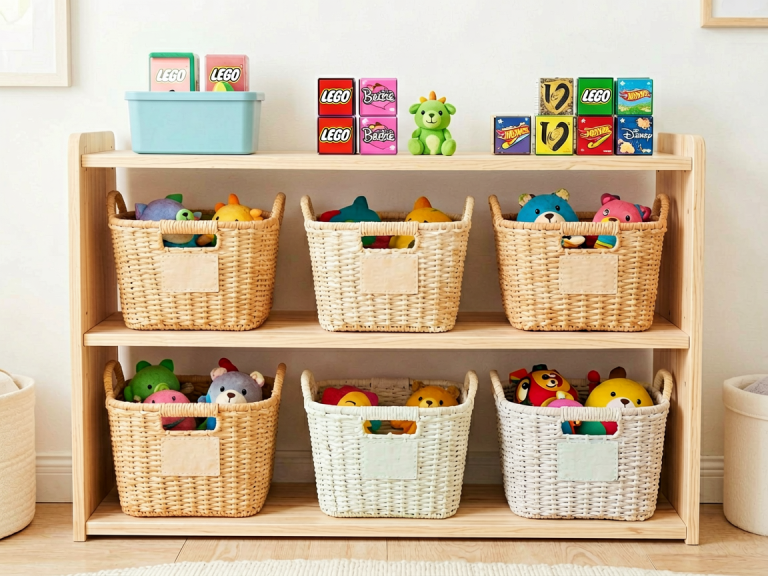
LEGO bricks have a notorious ability to scatter across every room. If your home has limited space or if you prefer a minimalist environment, be prepared for the constant presence of plastic pieces underfoot. A large collection requires organizational systems (sort by color, size, or set), which can become a chore for both parent and child. Consider establishing clear rules: bricks stay in a designated play area, and clean-up occurs before new activities begin. Some families find that a large LEGO table with built-in storage bins makes management easier. Also think about the final display: will your child want to keep assembled models on a shelf, or are they willing to dismantle them for storage? If you cannot accommodate permanent displays, encourage a “build, play, rebuild” cycle.
*Safety and Allergies*
Standard LEGO bricks are made of ABS plastic, which is generally non-toxic and BPA-free. However, if your child has a tendency to put small objects in their mouth, opt for DUPLO until age 4 or 5. Also be aware that some off-brand bricks may use lower-quality plastics that could contain harmful chemicals—buy from reputable sellers. Additionally, LEGO minifigures have small accessories (swords, wands, cups) that are choking hazards. Supervise young children during play and store small pieces out of reach.
Key insight: Be honest about your family’s tolerance for mess and your budget. You can enjoy LEGO on any scale, but starting small and scaling up is safer than a grand, expensive purchase that leads to frustration.
—
4. Educational Benefits vs. Potential Drawbacks
LEGO bricks are often praised as educational tools, but it is important to understand both the benefits and the limitations.
*Cognitive and STEM Benefits*
Building with LEGO bricks develops spatial reasoning, planning, and problem-solving skills. Following instructions teaches sequential thinking and attention to detail. Free building encourages creativity, innovation, and trial-and-error. For older children, technic sets introduce mechanical principles like gears, levers, and pulleys, while robotics lines teach basic programming logic. Research has shown that construction play can improve mathematical abilities and even language development, as children narrate their creations.
*Social and Emotional Development*
LEGO play also fosters social skills when done in groups—children learn to negotiate, share pieces, and collaborate on large projects. It can be a calming, meditative activity for anxious children, providing a sense of control and accomplishment. However, there are potential pitfalls. Some children become perfectionistic, tearing down their own work if it doesn’t match the box image exactly. Others may experience frustration when a piece is missing or when the model collapses. As a parent, you can mitigate this by praising effort rather than outcome, and by emphasizing that mistakes are part of the process.
*Drawbacks to Watch Out For*
One major drawback is that structured sets (those with fixed instructions) can actually limit creativity if the child becomes obsessed with building only the official models. Some children never learn to free-build because they have only ever followed instructions. To combat this, mix instruction-based sets with open-ended classic bricks. Another issue is the environmental impact: LEGO bricks are non-biodegradable plastic, and while they are durable and often passed down, the consumer culture of buying new themed sets each year contributes to waste. You can address this by buying secondhand sets or focusing on timeless classic bricks.
Key insight: LEGO bricks can be highly educational, but the benefits are maximized when you balance structured builds with free play and when you foster a growth mindset. Be aware of potential negative habits like perfectionism and excessive screen tie-ins.
—
5. Alternatives to LEGO Bricks and How They Compare
Finally, you may wonder if LEGO style bricks are the best choice at all, or if other construction toys might be more suitable for your child.
*Magnetic Tiles (e.g., Magna-Tiles, Magformers)*
Magnetic tiles are excellent for younger children (ages 3–6) because they connect easily and allow quick creation of 3D shapes without fine motor precision. They are less frustrating, safer, and encourage geometric exploration. However, they don’t offer the same level of detailed building or minifigure play that LEGO provides. If your child struggles with small pieces, magnetic tiles may be a better starting point.
*Wooden Blocks*
Classic wooden unit blocks are timeless and encourage open-ended construction, balance, and physics understanding. They are quieter, environmentally friendly, and often preferred in Montessori-style education. But they lack the interlocking mechanism and the detailed accessories that LEGO offers. For a child who loves stacking and knocking down towers, wooden blocks can be sufficient and less expensive.
*Knock-Off Plastic Bricks*
As mentioned, generic brick sets cost much less and can be a good trial run. However, quality inconsistency means they may not be as satisfying for precise builds. For a child who is just beginning, a small tub of generic bricks can be a low-risk investment. If your child loses interest, you haven’t spent much. If they fall in love, you can gradually upgrade to genuine LEGO.
*Digital Building Games*
For children who are screen-oriented, apps like LEGO Builder or even Minecraft creative mode offer building experiences without physical mess. Digital building lacks the tactile and spatial benefits of manipulating real objects, but it can be a great supplement. If your child enjoys digital building, they might also enjoy real bricks—try a small set to see if it translates.
Key insight: Don’t feel pressured to choose LEGO as the only option. Based on your child’s age, interest, and your family’s values, a combination of different construction toys may yield the best developmental results.
—
Conclusion
Deciding whether LEGO style bricks are right for your child is a nuanced process that goes beyond simply following a trend. By examining developmental readiness, aligning with your child’s interests, accounting for practical limits, weighing educational pros and cons, and considering alternatives, you can make a choice that fits your unique situation. Remember that there is no perfect age or set—the magic of LEGO lies in its adaptability. A two-year-old can delight in stacking DUPLO towers, a ten-year-old can spend weeks building a detailed castle, and a teenager can engineer a robotic arm. The key is to start small, observe your child’s engagement, and be willing to pivot if needed. Whether you invest in a single bucket of classic bricks or a sprawling city collection, the ultimate goal is to foster creativity, patience, and joy—and these qualities are rarely found in the plastic pieces themselves, but in the hands that build them.