From Blocks to Beakers: Science and Engineering Toys That Spark Wonder in Two-Year-Olds
Introduction
The toddler years are a whirlwind of discovery. Every dropped spoon, every overturned cup, every splashing puddle is a lesson in cause, effect, and the physical world. For parents and caregivers, this stage presents a golden opportunity to nurture a child’s innate curiosity through play. While traditional toys like stuffed animals and picture books have their place, a growing body of research suggests that introducing science and engineering concepts through age-appropriate toys can lay a powerful foundation for cognitive development, problem-solving skills, and a lifelong love of learning. But what does “science” or “engineering” look like for a two-year-old? It is not about microscopes or complex equations; it is about hands-on exploration, sensory engagement, and the simple joy of building, stacking, pouring, and observing. This article explores the best types of science and engineering toys designed specifically for two-year-olds, explains why they matter at this critical developmental stage, and offers practical guidance for choosing safe, engaging options that turn everyday play into a rich learning experience.
Why Science and Engineering Toys Matter at Age Two
At two years old, a child’s brain is developing at an astonishing rate. Neural connections are being forged at a speed that will never be replicated later in life. During this period, experiences that involve cause and effect, spatial reasoning, and fine motor manipulation directly support the growth of executive functions, memory, and logical thinking. Science and engineering toys are uniquely suited to provide these experiences.
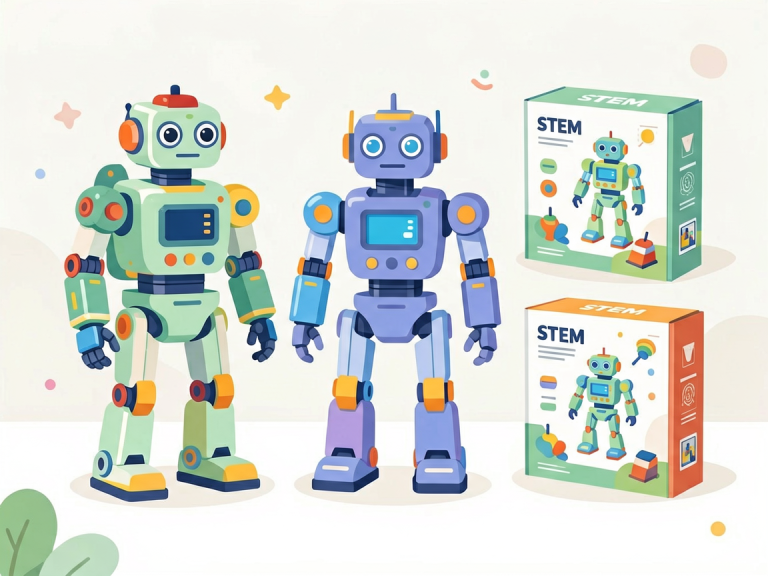
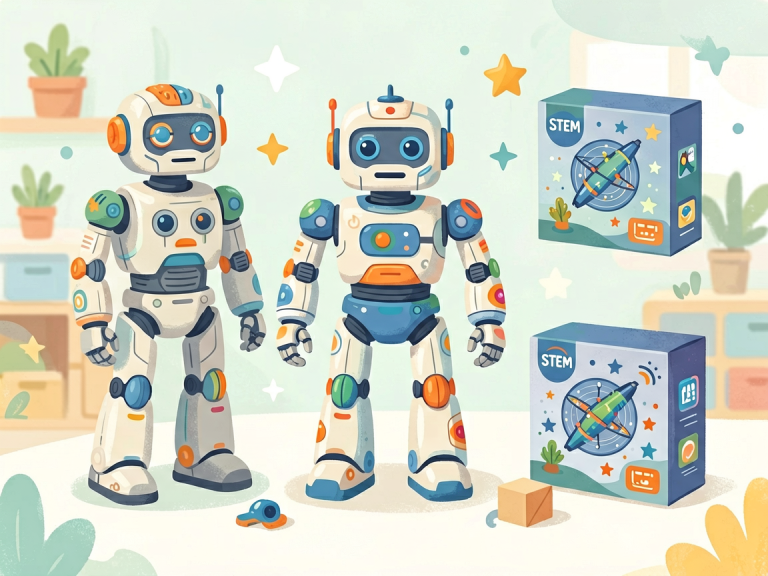
First, they encourage active, hands-on learning. Unlike passive toys that simply light up or make noise, a good STEM (Science, Technology, Engineering, and Mathematics) toy requires the child to act: to push, pull, fit, balance, or combine. This active engagement strengthens neural pathways associated with problem-solving and persistence.
Second, they introduce basic scientific concepts in concrete, tangible ways. A two-year-old who drops a rubber ball and watches it bounce is learning about gravity and elasticity. A child who pours water from one cup to another is exploring volume, flow, and the properties of liquids. These early, informal experiments build intuitive understanding that will later support formal science education.
Third, engineering toys—especially building sets—promote spatial awareness and early math skills. Stacking blocks, fitting shapes into holes, and connecting interlocking pieces require the child to judge size, shape, and balance. Over time, these activities develop the ability to visualize objects in three dimensions, a crucial skill for both engineering and geometry.
Finally, these toys foster resilience and creativity. When a tower falls or a puzzle piece doesn’t fit, the child must try again. This trial-and-error process is the essence of engineering design. By experiencing small failures in a safe, playful context, toddlers learn that mistakes are not the end but a step toward a solution.
Top Science Toys for Two-Year-Olds
Science toys for this age group should focus on sensory exploration, simple cause-and-effect, and natural phenomena. Here are some of the most effective categories:
Water and Sand Play Sets
A simple water table or a set of buckets, scoops, and funnels can provide hours of scientific discovery. Pouring, splashing, and transferring water teach children about fluid dynamics, volume, and gravity. Adding floating and sinking objects—like a cork, a stone, or a plastic boat—introduces the concept of density. Sand play offers similar benefits with texture and shape. Look for sets with large, easy-to-grip tools and no small parts that could be a choking hazard.
Simple Magnets
Magnetic toys designed for toddlers, such as large magnetic wands with colorful metal rings or chunky magnetic shapes, allow children to experience the invisible force of magnetism. They quickly learn that some objects stick and others do not. Always choose encapsulated magnets that cannot be swallowed, and supervise play to ensure safety.
Nature Exploration Kits
Two-year-olds are natural botanists and zoologists. A simple “nature kit” might include a child-safe magnifying glass (with a large handle and no sharp edges), a small bucket for collecting leaves and rocks, and a bug viewer with a magnifying lid. Taking the kit outside transforms a walk into a scientific expedition, encouraging observation and vocabulary development as the child describes what they see.
Light and Shadow Toys
Flashlights, color paddles, and simple light tables (if available) captivate toddlers. Shining a flashlight on a wall and making hand shadows teaches about light, shadow, and opacity. Color mixing paddles allow a child to see how red and blue combine to make purple—a foundational lesson in visible light and color theory.
Top Engineering Toys for Two-Year-Olds
Engineering toys for this age emphasize building, balancing, and understanding how parts come together to form a whole. The best options are sturdy, safe, and open-ended.
Large Building Blocks
Classic wooden unit blocks or large cardboard blocks are the gold standard. They require no instructions, no batteries, and no right or wrong way to play. A two-year-old can stack them high, knock them down, arrange them in lines, or create simple enclosures. This unstructured play builds spatial reasoning, hand-eye coordination, and an early understanding of structural stability (what makes a tower fall?).
Interlocking Construction Sets (e.g., Duplo)
Duplo blocks, Mega Bloks, or similar large interlocking bricks are perfect for little hands. They require a precise push to connect, which strengthens fine motor skills. Children learn about alignment, pressure, and the concept of “locking” parts together. As they grow, they can combine pieces to create simple vehicles, animals, or buildings, introducing goal-oriented engineering.
Simple Gear or Pulley Sets
Some manufacturers make toddler-safe gear sets with large, interlocking plastic gears that turn when one is rotated. Watching a gear spin another gear teaches mechanical cause and effect. Similarly, a basic pulley system with a bucket and a rope (always supervised) lets a child lift a toy to the top of a play structure, demonstrating the principles of force and motion.
Stacking and Nesting Toys
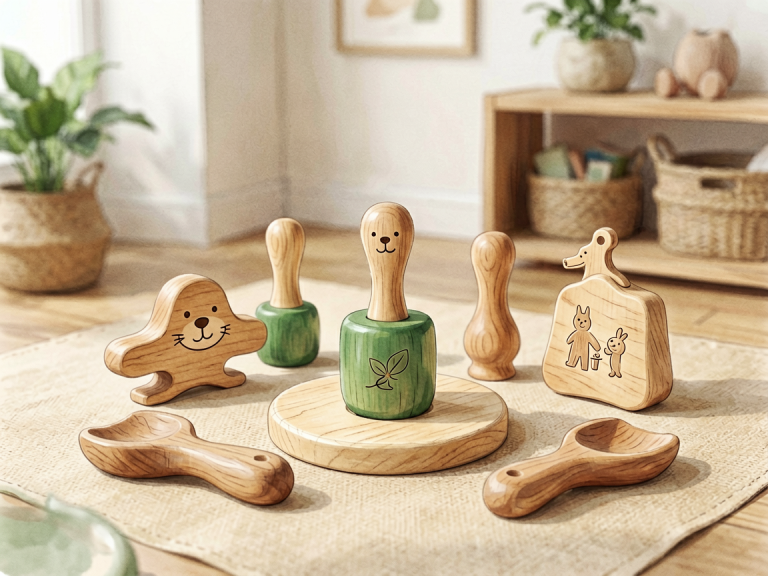
While often overlooked as simple baby toys, high-quality stacking rings, nesting cups, and shape sorters are early engineering challenges. The child must figure out the correct sequence (largest to smallest) or orientation (which hole matches which shape). This process involves pattern recognition, problem-solving, and the ability to plan ahead—all fundamental engineering thinking skills.
Choosing Safe and Age-Appropriate Toys
Safety is paramount when selecting toys for a two-year-old. Here are key guidelines:
- No small parts. Any toy or component that can fit inside a standard toilet paper roll is a choking hazard. Always check the manufacturer’s age recommendation.
- Non-toxic materials. Toddlers explore with their mouths. Ensure paints, plastics, and finishes are labeled non-toxic and are free from BPA, phthalates, and lead.
- Durability. Two-year-olds are not gentle. Toys should be sturdy enough to withstand drops, throws, and repeated biting. Avoid anything that could splinter or crack into sharp pieces.
- No long cords or strings. These pose strangulation risks. Battery compartments should be secured with screws.
- Supervision is essential. Even the safest toy can become a hazard if used inappropriately. Always play alongside your child, especially with items like magnets or water.
The Role of Parents in Guided Play
The toy itself is only half the equation. The other half is the adult who facilitates the play. A parent or caregiver can dramatically enhance the learning value of science and engineering toys by using simple language and asking open-ended questions. For example, while playing with building blocks, you might say: “What happens if we put the big block on top of the small one?” Or while at the water table: “Why do you think the plastic duck floats but the stone sinks?” These prompts encourage the child to think critically and articulate their observations.
Moreover, adults can model curiosity and persistence. If a tower falls, you can say, “Oh, it fell! Let’s try a different way. Maybe we need a bigger base.” This teaches a growth mindset and normalizes trial and error. Avoid completing the task for the child; instead, allow them to struggle productively, offering just enough support to keep frustration manageable.
Finally, rotate toys to maintain novelty and challenge. A two-year-old’s attention span is short, but their hunger for new experiences is endless. Keeping a small selection of well-chosen STEM toys and introducing new ones periodically will sustain engagement and deepen learning over time.
Conclusion
Investing in science and engineering toys for a two-year-old is not about creating a prodigy or rushing academic skills. It is about honoring the way children naturally learn: through hands-on exploration, repeated experimentation, and joyful play. Blocks become bridges, water becomes a laboratory, and magnets become magic. These early experiences build a sturdy scaffold of cognitive abilities, curiosity, and confidence that will support all future learning. By choosing safe, well-designed toys and engaging thoughtfully with our toddlers, we give them the tools to understand the world—and the desire to keep discovering it. In the end, the best science and engineering toy is the one that makes a two-year-old’s eyes light up and their hands reach out, ready to build, pour, stack, and question everything.