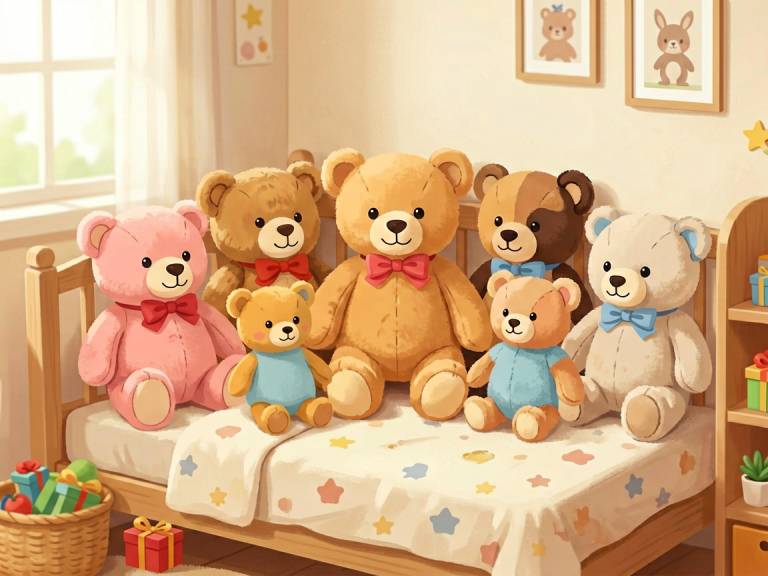
The Ultimate Toy Buying Checklist for 9-Month-Olds: Developmental Milestones, Safety, and Play
Introduction: Why a Specialized Checklist Matters
Every parent knows the feeling: you walk into a toy store, and suddenly the sheer variety overwhelms you. Bright colors, flashing lights, plush animals, rattles, teethers, and musical instruments line the shelves. But when your baby is exactly nine months old, the world of play changes dramatically. At this age, your little one is no longer a passive newborn nor a fully mobile toddler. Nine-month-olds are in a unique developmental sweet spot: they sit confidently, explore objects with purpose, begin to crawl or pull themselves up, and show clear preferences. Choosing the wrong toy can frustrate them, waste your money, or even pose safety risks. This comprehensive toy buying checklist for 9-month-olds will guide you through every consideration—from safety standards to developmental needs—so you can make informed, joyful choices that support your baby’s growth.
1. Understanding the 9-Month-Old Developmental Stage
Before purchasing any toy, you must understand what your baby is experiencing physically, cognitively, and emotionally. At nine months, most babies:
- Sit without support and may transition from sitting to crawling.
- Crawl on hands and knees, or use a commando crawl.
- Pull themselves to standing while holding onto furniture.
- Use a pincer grasp (thumb and forefinger) to pick up small objects.
- Bang, shake, and throw objects to understand cause and effect.
- Explore object permanence—they know a hidden toy still exists.
- Mouth everything as a primary sensory tool.
- Show separation anxiety and prefer familiar faces.
- Imitate simple actions like waving or clapping.
These milestones directly influence what toys will be engaging, safe, and beneficial. A toy meant for a six-month-old might be too simple, while a toy designed for a one-year-old could be frustratingly complex.
2. The Critical Safety Checklist for Toys
Safety is non-negotiable. At nine months, babies explore with their mouths, and their grip strength increases. Follow these rules:
Material and Construction
- Avoid toxic materials: Look for BPA-free, phthalate-free, lead-free labels. Choose wood with non-toxic paint or food-grade silicone.
- No small parts: Anything that fits through a toilet paper roll (approx. 1.5 inches) is a choking hazard. Check that buttons, batteries, or accessories are securely attached.
- Sturdy assembly: Toys with wheels, arms, or moving parts must not break easily. Test by pulling and twisting.
- No sharp edges or points: Run your fingers along surfaces. Avoid toys with metal edges or rough seams.
Age Recommendations and Recalls
- Always check the manufacturer’s age recommendation. “For ages 6 months+” is a good starting point but examine the specifics.
- Check recall databases (CPSC.gov) before buying used toys. Many vintage toys contain lead paint or broken parts.
Hygiene and Cleaning
- Choose washable toys: Soft toys should be machine-washable. Plastic and silicone should withstand dishwashing or wiping with sanitizer.
- Avoid toys that trap moisture: Mold can grow inside bath toys or plush with hidden squeakers.
Battery Compartments
- Secure with screws: Battery covers that slide off are dangerous. Magnets and batteries can cause internal burns if swallowed.
3. The Core Toy Categories for 9-Month-Olds
A balanced playroom includes toys that address different developmental areas. Here are the essential categories:
Sensory and Exploration Toys
- Purpose: Stimulate sight, sound, touch, and sometimes smell or taste.
- Examples:
- Textured balls: Soft, bumpy, or ridged balls that are easy to grasp.
- Crinkle paper toys: Infants love the sound and feel.
- Sensory teethers: Silicone rings with different textures can be chilled.
- High-contrast books: Black-and-white or brightly colored board books with simple images.
- What to look for: Variety of textures, easy to grip, safe to mouth.
Fine Motor and Problem-Solving Toys
- Purpose: Strengthen the pincer grasp, hand-eye coordination, and cognitive persistence.
- Examples:
- Stacking cups or rings: Lightweight, nestable, and stackable. Avoid rings with a central peg that is too stiff.
- Simple shape sorters: A ball-sized cube with 2–3 large shapes (circle, square, triangle) and corresponding holes.
- Pop-up toys: Buttons, levers, or lids that open when manipulated.
- Peg puzzles: Chunky wooden pegs that fit into matching holes.
- What to look for: Large pieces, no small parts, clear cause-and-effect mechanisms.
Gross Motor and Mobility Toys
- Purpose: Encourage crawling, pulling up, and early walking.
- Examples:
- Push toys: A lightweight cart or walker that supports steadying. Ensure it has a wide base to prevent tipping.
- Play tunnel: A collapsible fabric tunnel that babies can crawl through.
- Activity table: A low table with different stations (spinning, sliding, popping) that encourages standing.
- Large, soft balls: About 6–8 inches, easy to roll and chase.
- What to look for: Stable, no sharp edges, wheels that roll smoothly but not too fast.
Cause-and-Effect and Cognitive Toys
- Purpose: Teach that actions produce predictable reactions.
- Examples:
- Musical instruments: Maracas, drums, xylophones that make sound when hit or shaken.
- Car ramps or ball tracks: A ball dropped from the top rolls down a series of steps.
- Action-reaction puzzles: Press a button and a puppet pops out.
- Light-up toys: Soft, colorful lights that respond to touch.
- What to look for: Simple mechanisms, no loud or jarring sounds (babies can be startled), durable.
Social and Imaginative Play Toys (Emerging)
- Purpose: Imitate adult behavior and foster attachment.
- Examples:
- Baby dolls: Soft, simple dolls with basic faces. Some are washable and come with a small blanket.
- Telephone toys: A soft toy phone that “rings” or has buttons.
- Mirrors: Unbreakable plastic mirrors, especially ones that attach to a crib or play mat.
- What to look for: Soft, non-toxic, no detachable clothes or accessories.
4. The Detailed Toy Buying Checklist (Pocket-Ready)
Here is your actionable checklist to bring to the store or use online. Print it or save it on your phone.
Pre-Purchase Questions
- [ ] Does this toy match my baby’s current skills? (e.g., if they are not yet sitting, avoid complex table toys.)
- [ ] Is the toy intended for 9 months or older? (Check the package. “0+ months” may be too simple.)
- [ ] Can I clean it easily?
- [ ] Are all parts larger than 1.5 inches?
- [ ] Does it have any cords, strings, or ribbons longer than 7 inches? (Strangulation risk.)
- [ ] Are batteries accessible only with a screwdriver?
- [ ] Is the toy free from strong chemical smells?
- [ ] Is it the right weight? (Babies drop things; light toys are safer.)
Category-Specific Checks
- Sensory toys: Are textures varied? No sharp points? Can be mouthed?
- Fine motor: Are pieces chunky enough for small hands? Do they fit into the intended space without forcing?
- Gross motor: Is the push toy stable? Does it have a wide base? No pinch points?
- Cause-and-effect: Is the action easy to perform (press, shake, drop)? Does the reaction happen quickly?
- Social: Is the toy soft and cuddly? No small eyes or buttons that could detach.
Bonus Tips
- Buy one or two at a time: Babies can become overwhelmed. Rotate toys weekly.
- Consider second-hand: Many toys are gently used, but inspect for rust, cracks, and missing parts.
- Avoid overstimulation: Toys with too many lights, sounds, and moving parts can frustrate a nine-month-old. Simple is often better.
5. Avoiding Common Mistakes
Even experienced parents make toy-buying errors. Here are the pitfalls to sidestep:
Mistake #1: Buying for the Future
It’s tempting to buy a “walking toy” because your baby is pulling up. But a toy meant for a 12-month-old may have small pieces or require skills your baby doesn’t yet have. Buy for the *present* stage, not the next.
Mistake #2: Ignoring the Mouthing Stage
Some toys are labeled “for ages 12 months+” simply because they are too hard or have small parts. But nine-month-olds still mouth everything. Choose teething-friendly materials even for non-mouth toys.
Mistake #3: Overlooking the Child’s Personality
Some babies love loud sounds; others get scared. Some are active; others prefer sitting and manipulating. Observe your baby’s temperament. A shy baby might prefer a soft book over a noisy drum.
Mistake #4: Failing to Supervise
No toy is 100% safe. Always supervise play, especially with new toys. A toy that is safe today might break tomorrow.
6. Recommended Toys (Without Brand Bias)
Here are some generic examples that meet all criteria:
- Oball: A soft, flexible ball with holes, easy to grab and throw.
- Stacking Cups: A set of 6–8 colorful cups that nest and stack.
- Silicone Teething Toys: Animal-shaped or ring-shaped, with different textures.
- Wooden Rattle: A simple, unpainted wooden rattle with a smooth finish.
- Activity Cube: A fabric or wooden cube with different activities on each side—zipper, crinkle, mirror, etc.
- Baby Push Wagon: A low, stable wagon with blocks inside.
7. Summary: The Five-Pillar Checklist
To conclude, remember these five pillars when buying toys for your nine-month-old:
- Safety: Non-toxic, no small parts, sturdy, washable.
- Developmental Match: Supports current milestones—sitting, crawling, grasping, object permanence.
- Sensory Engagement: Provides visual, auditory, tactile, and sometimes oral stimulation.
- Encourages Active Play: Promotes movement, problem-solving, or social interaction.
- Simple and Open-Ended: Allows multiple ways to play and grow with the child.
A well-chosen toy for a nine-month-old is not just a source of entertainment—it is a tool for learning, bonding, and discovery. By using this checklist, you ensure that every plaything you bring home contributes to your baby’s joy and development. Happy shopping, and enjoy watching your little one explore the world through play.