How to Choose Wooden Blocks for Kindergarteners: A Parent’s and Educator’s Guide
Wooden blocks have long been a staple in early childhood education, cherished for their simplicity, durability, and profound developmental benefits. For kindergarteners—children typically aged three to five—playing with blocks is far more than a pastime. It is a hands-on way to explore geometry, balance, cause and effect, and social cooperation. Yet not all wooden blocks are created equal. The market offers a dizzying array of shapes, sizes, finishes, and price points, making it challenging for parents and educators to select the best set for their little learners. This guide will walk you through every critical consideration, from safety and material quality to educational value and budget, ensuring you choose blocks that inspire creativity, foster development, and last for years.
Understanding the Developmental Benefits
Before diving into selection criteria, it is essential to recognize why wooden blocks are particularly valuable for kindergarteners. During this stage, children are refining their fine motor skills, learning to grasp, stack, and balance objects. Blocks challenge their hand-eye coordination and spatial awareness. Moreover, block play naturally introduces foundational math concepts: counting, sorting, comparing sizes, and recognizing patterns. Socially, when children build together, they practice negotiation, sharing, and collaborative problem-solving. The open-ended nature of blocks allows for limitless creativity—a simple set can become a castle, a spaceship, or a zoo. A well-chosen set will support all these areas without overwhelming the child. Therefore, the selection process should prioritize the features that align with these developmental needs.
Safety: The Top Priority
The first and most non-negotiable factor when choosing wooden blocks for kindergarteners is safety. Children at this age still explore the world through their mouths, and they may also throw or hit with blocks in moments of frustration. Look for blocks that are free from toxic finishes. The safest options are those made from solid, untreated hardwoods like maple, beech, or birch, which have no risk of chemical leaching. If colored blocks are desired, ensure the paint or stain is non-toxic and water-based, preferably certified by safety standards such as ASTM (American Society for Testing and Materials) or EN71 (European toy safety standard). Avoid blocks with a glossy varnish that may contain volatile organic compounds (VOCs). Additionally, check for smooth, splinter-free surfaces. Run your hand over every edge—any roughness can cause splinters in tender fingers. Also, consider the size: blocks that are too small pose a choking hazard. For kindergarteners, avoid any block smaller than 1.5 inches (about 4 cm) in its smallest dimension. Larger blocks are also easier for small hands to grasp and less likely to be swallowed. Finally, inspect for loose parts, such as glued-on letters or decorations that could be chewed off. All wooden blocks should be solid and one-piece construction.
Size, Shape, and Variety: Matching Developmental Stages
Not all block sets are appropriate for every age. For kindergarteners, a set that includes a range of shapes—cubes, rectangles, cylinders, arches, triangles, and half-circles—offers the best balance for creative building. Classic unit blocks (based on a standard unit size, typically 1.5 x 3 x 6 inches) are ideal because their proportions allow children to understand symmetry and scale. The variety in shapes encourages different types of construction: arches for tunnels, cylinders for columns, triangles for roofs. Avoid sets that are too small or too uniform; they limit the complexity of structures. Additionally, consider the number of blocks. A set of 50 to 100 blocks is generally sufficient for individual play, while group play in a kindergarten classroom may require 200 or more. Think about storage: blocks should be easy to access and store, often in a bin or a shelf that allows sorting by shape or size. Color is another factor. While some educators prefer natural, unpainted blocks to let the wood texture shine, many children are drawn to brightly colored blocks that help with color recognition and sorting. If choosing colored ones, ensure the hues are distinct (red, blue, yellow, green) and not pastel shades that can be confusing. A mix of natural and colored blocks can also work well.
Material Quality and Craftsmanship
The longevity and performance of wooden blocks depend heavily on the quality of the material and construction. Solid hardwood is far superior to pine or plywood because it withstands repeated stacking, dropping, and rough handling without denting or cracking. The grain should be tight, with no knots that could weaken the block. Look for blocks that are precisely cut so that they sit flat on a surface and stack evenly. Uneven blocks lead to frustration and collapse. The edges should be slightly rounded—not sharp—to prevent injury but not so rounded that they lose stability. Some manufacturers sand the blocks to a satin finish, which feels smooth and pleasant but is not too slippery. Avoid blocks with a glossy, coated surface because children’s blocks often end up on the floor (or in mouths), and a slick finish can cause them to slide off each other during building. Weight is another clue: a good hardwood block will have a satisfying heft that gives children feedback on their constructions. Lightweight blocks might be cheaper but feel flimsy. Always check customer reviews and brand reputation. Trusted brands like Melissa & Doug, Guidecraft, and Hape are known for high-quality wooden toys, but there are also excellent smaller artisans. If possible, test a sample in person by handling the blocks yourself.
Educational Value: Beyond Simple Stacking
While all block play is educational, some sets are designed with specific curriculum goals in mind. For kindergarteners, look for sets that incorporate elements of early math and literacy. For instance, blocks with printed letters, numbers, or pictures on one side can transform building into a literacy activity. However, ensure these prints are engraved or heat-stamped, not glued on, so they won’t peel off. Another option is blocks that come in fractional sizes—such as half-units, double-units, and quarter-circles—which help children visualize fractions and geometry. Some sets include ramps, tracks, or dowels that allow for marble runs or bridge building, introducing introductory physics concepts like gravity and incline. Even simple blocks can be used to teach patterning (red-blue-red), counting, and 3D shapes. When selecting, consider your teaching goals. If you are a parent, you might prioritize open-ended creativity; if an educator, you may want blocks that align with your STEM curriculum. You can also look for sets that come with activity cards or guidebooks, but these are not essential—the best learning comes from child-directed play. The key is that the blocks stimulate problem-solving: Can you make a bridge that doesn’t fall? How many blocks do you need to reach that height? Such challenges build resilience and logical thinking.
Quantity and Storage Considerations
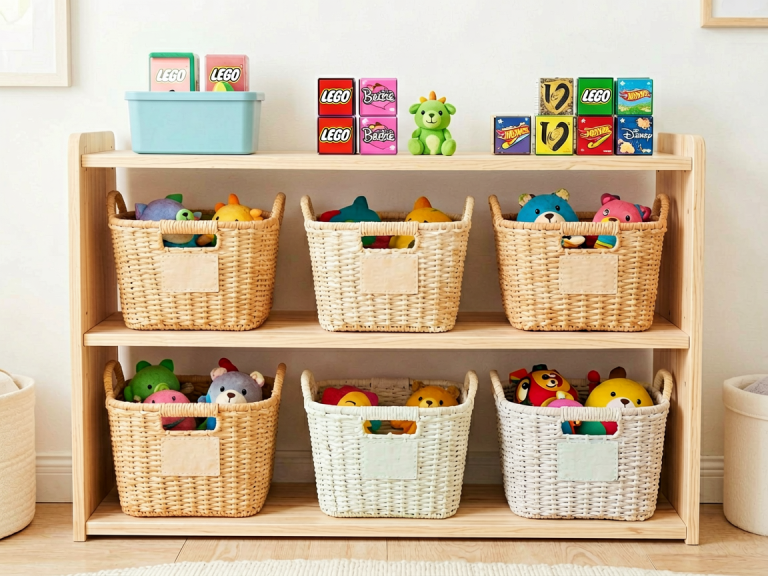
One often overlooked aspect is how many blocks you actually need. A small set of 20 to 30 blocks might be fine for a one-year-old, but kindergarteners quickly outgrow it. They want to build towers taller than themselves, create enclosures for toy animals, or construct multi-room houses. Insufficient blocks lead to frustration. As a rule of thumb, for home use with one child, a set of at least 60 to 80 blocks is recommended. For a classroom of 20 children, you’ll need several hundred, ideally organized in a block center with labeled shelves. Storage is equally important. Loose blocks piled into a deep bin will get damaged and become hard to find the right shape. Look for a set that comes with a sturdy wooden crate, or plan to buy a separate shelving unit with compartments. Some blocks are sold in sets that include a canvas bag or a plastic tote; these are adequate but not ideal for long-term organization. The best storage allows children to see and reach each block easily, promoting independent cleanup. Also consider the space: a large block set may require a dedicated area of at least 4–5 square feet on the floor. Ensure you have room before purchasing a massive set.
Budget and Brand Considerations
Wooden blocks range from inexpensive generic sets to premium artisan options costing hundreds of dollars. Where on this spectrum should you invest? Price often reflects wood quality, precision, and safety testing. Very cheap blocks may be made from softwood that dents easily, or they may have rough finishes. However, you don’t need to break the bank. Mid-range brands like Melissa & Doug offer solid, safe blocks at a reasonable price point, especially when purchased as a set. Alternatively, you can buy open-stock blocks from educational supply companies like Lakeshore Learning, allowing you to customize the collection over time. If you are a teacher with a limited budget, consider reaching out to parent organizations for a grant or a donation drive. Also, watch for sales and second-hand options, but inspect used blocks carefully for damage, splinters, or peeling paint. Avoid buying blocks that show signs of water damage or mold. Remember that a good set of wooden blocks can last for decades, often passed down through siblings or classrooms. In that context, paying a bit more upfront for quality is a wise investment. One brand to consider for exceptional durability: Guidecraft’s “Unit Blocks” are a classroom standard, made from hardwood and tested for years of use. Another is “Little Tikes” (though some of their sets are plastic), but for wood, “Hape” offers beautifully colored, safe options.
Final Tips for Making Your Choice
When you finally decide, involve your kindergartener if possible. Let them see and touch a few options—you can often find display sets in toy stores or educational supply shops. Pay attention to what excites them. Does your child show more interest in natural wood or bright colors? Do they love arches and tunnels? Their enthusiasm will drive deeper engagement. Additionally, start simple. You don’t need the biggest set on day one. Begin with a core set of 50–70 blocks, and then add specialty pieces (ramps, wheels, people) as their building skills grow. Most importantly, remember that the block set is just a tool; the real magic happens when the child’s imagination takes over. A well-chosen set will support countless hours of play, learning, and joy. By focusing on safety, size, material, and educational potential, you are giving your kindergartener a gift that will outlast any plastic gadget and build a foundation for lifelong curiosity. Take your time, research thoroughly, and trust your instincts—the perfect set is out there waiting.