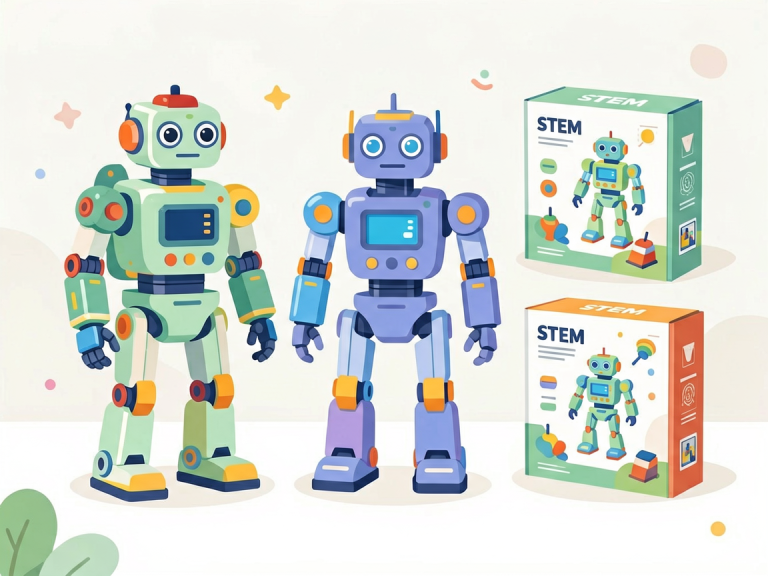
Building Young Minds: The Value of Science and Engineering Kits for Four-Year-Olds
Introduction
The preschool years are a period of extraordinary cognitive, social, and motor development. At age four, children are naturally curious, constantly asking “why” and “how,” and they learn best through hands-on, sensory-rich experiences. In recent years, science kits and engineering kits designed specifically for this age group have gained popularity among parents and educators alike. These kits are not merely toys; they are carefully curated tools that introduce foundational STEM (Science, Technology, Engineering, and Mathematics) concepts in a playful, age-appropriate way. While some may question whether four-year-olds are too young for structured scientific play, the evidence strongly suggests that the right kind of kit can foster creativity, problem-solving skills, and a lifelong love of discovery. This article explores the benefits, key features, safety considerations, and practical tips for choosing and using science and engineering kits with four-year-old children.
Why Introduce Science and Engineering at Age Four?
The brain of a four-year-old is developing at an astonishing rate, forming neural connections that lay the groundwork for future learning. At this age, children are not yet burdened by abstract reasoning demands; instead, they thrive on concrete, tangible experiences. Science and engineering kits capitalize on this natural inclination by allowing children to observe cause and effect, manipulate materials, and see immediate results. For example, a simple sink-or-float experiment kit teaches basic concepts of density and buoyancy without a single textbook. The child learns that a rock sinks while a wooden block floats—not because they memorize a fact, but because they see it happen with their own eyes and feel the weight in their hands.
Moreover, these kits nurture executive function skills such as planning, sequencing, and perseverance. When a four-year-old attempts to build a tower with wooden blocks or snap-together connectors, they must decide which piece goes where, adjust their strategy when the tower falls, and try again. This iterative process—often called the engineering design cycle—is exactly the kind of thinking that leads to innovation later in life. Early exposure also helps combat stereotypes about science being “too hard” or “only for boys,” creating a more inclusive learning environment from the start.
What Makes a Good Kit for a Four-Year-Old?
Not all science or engineering kits are suitable for a four-year-old. Parents and caregivers must look for specific attributes that align with the child’s developmental stage. First and foremost, safety is paramount. Kits should contain large, non-toxic parts that cannot be easily swallowed. Sharp edges, small magnets, and chemical substances are absolute no-gos. Reputable brands clearly label their products with age recommendations and safety certifications such as ASTM (American Society for Testing and Materials) or EN71 (European safety standard).
Second, the kit should promote open-ended exploration rather than rigid, step-by-step instructions. While a simple guide can be helpful, a four-year-old’s attention span is short, and they learn more when they are free to experiment. For instance, a magnetic building set with colorful rods and balls allows children to create structures, test magnetic attraction and repulsion, and even make rudimentary sculptures. The best kits have multiple possible outcomes, so the child never gets bored.
Third, the materials should be durable and easy to handle. Four-year-old hands are still developing fine motor skills, so parts that are too tiny or too tricky to connect will only cause frustration. Chunky gears, large interlocking blocks, and easy-to-press buttons are ideal. Additionally, the kit should involve multiple senses—bright colors, interesting textures, and even sounds (like a simple buzzer or clicking mechanism) can hold a child’s attention and reinforce learning.
Types of Kits: Science versus Engineering
Though they often overlap, science kits and engineering kits for four-year-olds typically emphasize different aspects of STEM. Science kits for this age group focus on observation, classification, and simple experiments. Examples include a bug-catching kit with a magnifying glass and a critter container, a water play set that demonstrates absorption and displacement, or a light-and-shadow exploration box. These kits encourage children to ask questions: “What happens if I pour water on this sponge?” or “Why does the red filter make everything look red?” The emphasis is on discovering natural phenomena.
Engineering kits, on the other hand, center on building, designing, and problem-solving. The most common type is a construction set: large plastic bricks, magnetic tiles, or wooden planks that can be assembled into bridges, towers, or vehicles. More specialized engineering kits might include simple gears that turn one another, pulley systems for lifting small toys, or snap-together circuits that light up an LED. The goal is not to teach electrical theory but to let the child experience the thrill of making something that works. When a four-year-old successfully connects a battery holder to a light bulb and sees it glow, they have just completed a basic circuit—even if they cannot yet name the components.
A well-designed kit often blends both science and engineering. For instance, a kit that comes with a plastic boat hull, a small sail, and a fan encourages the child to explore how wind moves the boat (science) while also allowing them to modify the sail’s angle or add weight (engineering). The most powerful learning occurs at this intersection.
Safety and Supervision: A Shared Responsibility
While kits are designed with safety in mind, adult supervision remains crucial for four-year-olds. Even large parts can become choking hazards if a child bites off a piece, and some kits include small items like beads or marbles that require careful handling. Parents should read the instructions thoroughly before handing the kit to the child and should stay nearby during play. It is also wise to establish clear rules: no throwing parts, no putting anything in the mouth, and clean up after use.
Supervision does not mean hovering, though. The adult’s role is to facilitate, not to dictate. Instead of telling a child exactly how to build a tower, a parent can ask guiding questions: “I wonder what would happen if you put the big block on top of the small one?” or “Can you make a ramp for the marble to roll down?” This kind of interaction builds vocabulary and reasoning while keeping the activity safe. Furthermore, parents should look for kits that are labeled “non-toxic” and free from phthalates, BPA, and lead. Many reputable brands now use plant-based plastics or sustainably sourced wood.
How Parents Can Maximize the Learning Experience
A science or engineering kit is only as good as the environment in which it is used. To get the most out of these tools, parents can adopt a few simple strategies. First, set aside a dedicated space for exploration—a corner of the living room or a low table where the child can leave a project unfinished and return to it later. This respects the child’s pace and encourages sustained engagement.
Second, integrate the kit into everyday conversations. While playing with a balance scale, talk about “heavier” and “lighter” when weighing fruit from the kitchen. If the kit includes a magnifying glass, take it outside to examine leaves, pebbles, or the bark of a tree. By connecting the kit’s activities to the real world, parents help children see that science is not confined to a box.
Third, embrace mess and failure. A four-year-old’s attempt to build a bridge may collapse repeatedly. That is not a failure—it is data. Encourage the child to observe why it fell and try a different approach. Resist the urge to fix it for them. The process of trial and error builds resilience and a growth mindset. Likewise, water experiments can get messy; place the kit on a tray or in a bathtub to minimize cleanup stress.
Finally, rotate kits to maintain novelty. A child may become obsessed with one kit for weeks, then lose interest. That is normal. Having two or three kits available and swapping them every month can sustain curiosity without overwhelming the child. Libraries and toy-lending programs sometimes offer STEM kits for loan, which is a cost-effective way to try different types.
Conclusion
Science and engineering kits for four-year-olds are far more than educational toys—they are gateways to a world of inquiry, creativity, and perseverance. When chosen wisely, they align perfectly with a four-year-old’s developmental needs: they are hands-on, sensory-rich, and forgiving of mistakes. They plant seeds for logical thinking, spatial reasoning, and even early literacy as children describe what they see. Most importantly, they transform abstract concepts into tangible, joyful experiences. A child who builds a wobbly tower with magnetic tiles today may one day design skyscrapers; a child who mixes colored water to make purple may become the chemist who discovers a new pigment. By investing in these kits and fostering a supportive environment, parents give their four-year-olds the most precious gift: the confidence to ask questions and the tools to find answers. In a world increasingly shaped by technology and innovation, that is a foundation worth building.