Beyond the Brick: Parent-Approved Building Alternatives That Inspire Creativity and Peace of Mind
—
Introduction
For decades, LEGO bricks have reigned supreme in the world of children’s construction toys. Their interlocking design, endless possibilities, and cross-generational appeal are undeniable. Yet many parents have begun to question whether LEGO is truly the best choice for their children. Concerns range from the high cost of themed sets and the risk of lost pieces to the potential for frustration when tiny bricks are scattered across the living room floor. More significantly, some parents worry about the environmental impact of single-use plastics, the hidden dangers of small parts for younger siblings, and the lack of open-ended play in sets that push children to follow rigid instructions rather than invent their own structures.
Fortunately, a growing market of parent-approved alternatives now offers the same building fun without the headaches. These alternatives emphasize safety, sustainability, educational value, and imaginative freedom. In this article, we explore five categories of building toys that have earned the trust of parents around the world—each providing a unique twist on the classic brick experience while addressing the very real concerns that come with traditional plastic sets. Whether you are a seasoned eco-conscious parent, a teacher seeking classroom-friendly options, or simply someone looking for a quieter, less chaotic playtime, these alternatives deserve serious consideration.
—
1. Wooden Building Blocks: Timeless, Safe, and Sustainable
Why Parents Approve
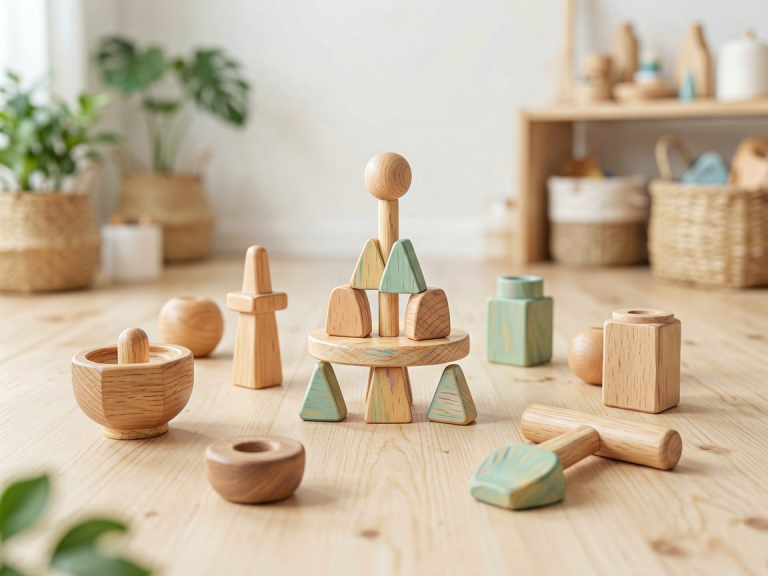
Wooden building blocks are perhaps the oldest construction toy in human history, and for good reason. Unlike LEGO-style plastic bricks, wooden blocks are typically made from sustainably harvested wood, finished with non-toxic paints or natural oils, and free from small parts that pose choking hazards. Parents appreciate their durability—a set of well-made wooden blocks can last for decades, passed down through siblings and even generations. They are also remarkably quiet when dropped or stacked, a subtle but important benefit for parents who value a calmer play environment.
Key Features and Brands
Modern wooden block sets have evolved far beyond the simple cubes of the past. Brands like *Grimm’s Spiel und Holz* and *Melissa & Doug* offer beautifully colored geometric shapes, arches, and planks that encourage free-form building. The *Kapla* system, for example, uses identical wooden planks that rely on precise balance rather than interlocking tabs, teaching children physics concepts like gravity, friction, and structural stability. Another popular choice is *Tegu*, a magnetic wooden block system that adds a gentle magnetic attraction inside each piece, allowing for cantilevered structures that would be impossible with standard blocks.
Educational Value
Wooden blocks are a staple in Montessori and Waldorf education because they promote open-ended, child-led play. There are no instructions, no prescribed outcomes—only the child’s imagination. This zero-pressure approach fosters creativity, problem-solving, and spatial reasoning. Parents also love that wooden blocks encourage cooperative play: siblings must negotiate, share, and communicate to build a fortress or a bridge, developing social skills that screen-based toys cannot replicate.
Environmental and Safety Edge
Most wooden block manufacturers prioritize eco-friendly production. For example, Grimm’s uses FSC-certified wood and water-based stains. And because the pieces are large and solid, there is little risk of ingestion or sharp edges. The lack of tiny connectors also means no lost pieces under the sofa—a small victory for parental sanity.
—
2. Magnetic Tiles: The Modern Marvel of Open-Ended Construction
Why Parents Approve
Magnetic tiles have exploded in popularity over the past decade, and they have become a go-to alternative for parents who want something more technologically intuitive than LEGO but less rigid than structured sets. Unlike bricks that require precise alignment and force to snap together, magnetic tiles connect effortlessly with a satisfying *click*, making them accessible even to toddlers as young as 18 months. Parents appreciate that the magnets are safely enclosed, the edges are smooth, and the tiles are large enough to prevent swallowing.
Key Features and Brands
The most famous brand in this category is *Magnatiles* (by Magna-Tiles), which offers translucent, colorful squares and triangles that can be assembled into 2D patterns, 3D structures, and even complex geometric shapes. *PicassoTiles* and *Playmags* are popular, more affordable alternatives that maintain the same high safety standards. Many sets now include wheels, windows, and specialty pieces that mimic the functionality of LEGO while retaining the magnetic simplicity.
Educational Value
Magnetic tiles are a cross between construction and geometry. Children naturally learn about polarity, symmetry, and angles as they build. They also develop fine motor skills by precisely aligning tiles. For older kids, the translucent tiles can be used with light tables for a dazzling effect, or combined with dry-erase markers to draw windows and doors. Because the tiles are magnetic, buildings are stable but can be easily dismantled—no frustrated tears from a tower that won’t come apart.
Parental Peace of Mind
One of the biggest annoyances with LEGO is the pain of stepping on a stray brick barefoot. Magnetic tiles are larger, softer-edged, and far less painful. They also contain no small parts that could be lost in vacuum cleaners or swallowed by curious pets. And because they don’t require instruction manuals, children are free to build intuitively—and parents are freed from the role of “instruction reader.”
—
3. Modular Construction Kits: Engineering Meets Creativity
Why Parents Approve
For parents who want their children to build more than just static models, modular construction kits offer a bridge between pure play and early engineering. These kits often include reusable connectors, rotating gears, and flexible joints that allow for moving parts. Unlike LEGO Technic, which also offers gears and axles, these alternatives tend to be simpler, less expensive, and far more forgiving when a piece is lost.
Key Features and Brands
*Strawbees* is a standout: it uses plastic straws and multi-hole connectors that snap together to create anything from a simple bridge to a complex robotic arm. The system is lightweight, so structures can be large without being heavy. Another excellent option is *K’NEX*, which uses interlocking rods and connectors to build moving models like roller coasters and vehicles. More recently, *FlexiBlocks* and *Erector by Meccano* have introduced sets that combine plastic and metal elements, teaching kids about torque and leverage.
Educational Value
These kits are a parent’s dream for STEM education. They teach cause and effect, leverage, and basic mechanics. Many sets come with challenge cards or simple instructions, but the real fun begins when children ignore the manual and invent their own machines. Parents report that children who play with modular kits often develop an early interest in robotics, physics, and even computer programming (especially when combined with a motor or LED add-on).
Safety Notes
Most modular kits are designed for children ages 5 and up, and they avoid the sharp edges or toxic materials that sometimes appear in cheaper construction toys. Because the connectors are generally larger than LEGO’s small pins, they are less likely to be choked on. Parents also appreciate that these systems are often compatible with other brands—for example, Strawbees connectors work with common drinking straws, making replacement inexpensive.
—
4. Eco-Friendly and Biodegradable Building Sets
Why Parents Approve
As climate consciousness grows, many families are looking for alternatives to petroleum-based plastic. LEGO itself has pledged to use sustainable materials, but its current sets are still largely made from ABS plastic, which takes hundreds of years to decompose. In response, small companies have created building sets from renewable resources, including cornstarch, bamboo, and recycled paper. These products are biodegradable or compostable, and they often come in minimal packaging.
Key Features and Brands
*Piusi* from Germany produces building blocks made from wood and plant-based bioplastics, with a texture similar to LEGO but a much smaller carbon footprint. *Brickables* offers interlocking cardboard bricks that are surprisingly sturdy—children can build life-sized forts and castles that collapse safely when knocked over. Another innovative product is *Eco Bricks* from *Green Toys*, which uses recycled milk jugs to create durable, bright blocks that are dishwasher-safe.
Educational Value
These sets teach environmental stewardship directly. When children play with blocks made from recycled or natural materials, they internalize the idea that toys don’t have to be disposable. Many sets also come with educational pamphlets about recycling and sustainability.
Parental Approvals
Eco-friendly blocks are typically free from BPA, phthalates, and other harmful chemicals. They are also often lighter than plastic bricks, making them safer for toddlers who might throw them. The major downside is that they may not be as precisely interlocking as LEGO, but most parents find that the trade-off in peace of mind is well worth it.
—
5. Digital-Physical Hybrid Systems: The Best of Both Worlds
Why Parents Approve
Some parents worry that purely analog toys will fail to prepare children for a digital future. Hybrid systems that combine physical building with app-based coding or augmented reality offer a compromise. These products are parent-approved because they limit screen time—children must first build a physical model, then use the app to test or control it.
Key Features and Brands
*Osmo* (from Byju’s) offers a set of plastic blocks that work with an iPad camera to create interactive games. *Lego Boost* is of course a LEGO product, but for those seeking non-LEGO alternatives, *Makeblock mBot* uses metal parts and a block-based coding interface. *Puzzlets* combines programming tiles with a physical play surface.
Educational Value
These systems develop computational thinking, logic, and debugging skills. Children learn that mistakes are opportunities for iteration, a lesson that extends beyond coding into life. Importantly, the physical building component keeps children active and engaged in the real world, rather than passively consuming content on a screen.
Parental Peace of Mind
Most hybrid systems are designed with parental controls and time limits. The apps typically do not include advertisements or in-app purchases. And because the physical pieces are often larger and fewer than a LEGO set, cleanup is quicker.
—
Conclusion
LEGO bricks are undeniably iconic, but they are far from the only option for creative, educational, and safe building play. From the tactile warmth of wooden blocks to the magnetic magic of tiles, from the engineering challenges of modular kits to the eco-consciousness of biodegradable materials, and even to the blend of physical and digital worlds, parents today have a rich array of alternatives that address their deepest concerns—safety, cost, environmental impact, and the quality of play.
The best alternative depends on your child’s age, interests, and your family’s values. A toddler might thrive with large magnetic tiles; a budding engineer might prefer Strawbees; an eco-conscious family might choose bioplastic bricks. What unites all these options is a parent-centered design philosophy: they are built to be safe, durable, and conducive to independent play. When you choose any of these alternatives, you are not sacrificing fun—you are simply redefining what fun looks like. One block at a time, you are building a better playroom, a healthier planet, and a more imaginative child.
*(Word count: approximately 1,380 words)*