Low Mess Alternatives to LEGO Style Bricks: Reimagining Creative Play Without the Cleanup Nightmare
Introduction: The Double-Edged Sword of Classic Building Blocks
For decades, LEGO bricks have reigned supreme as the ultimate creative construction toy. Their interlocking precision, endless possibilities, and nostalgic charm have made them a staple in homes, classrooms, and therapy centers around the world. Yet any parent, teacher, or caregiver who has spent an evening stepping on a rogue 2×4 brick knows the dark side of this beloved system. The mess is real—tiny plastic pieces scatter under sofas, lodge in carpet fibers, disappear into toy bins, and inevitably end up in vacuum cleaners. Sorting, storing, and cleaning up after a LEGO session can be a monumental task, often turning a joyful playtime into a stressful chore. This is precisely why a growing number of families and educators are seeking low mess alternatives that preserve the developmental benefits of construction play while minimizing the chaos. In this article, we will explore a range of innovative and practical substitutes that offer engaging, creative, and—most importantly—cleaner experiences. From magnetic tiles to foam blocks, from flexible connectors to digital building platforms, these alternatives prove that you do not have to sacrifice imagination at the altar of tidiness.
The Problem with Traditional Brick Systems: Why Mess Matters
Before diving into the alternatives, it is worth understanding exactly what makes LEGO-style bricks such a high-mess proposition. First, their small size is both a feature and a curse. A single set can include hundreds of tiny pieces, each capable of rolling under a bookshelf or hiding in a shoe. Second, bricks are hard and often sharp-edged, making them painful to step on and noisy to sweep. Third, the act of building frequently involves dumping entire bins of bricks onto a table or floor, and the disassembly process—often more chaotic than construction—scatters pieces everywhere. Fourth, the sorting and storage challenge is real: unless you have an elaborate labeling system, finding a specific piece can require rummaging through a mountain of plastic. Finally, the mess is not just physical but also mental: the pressure to keep bricks organized can dampen the free-form, exploratory nature of play. For parents of young children, children with sensory sensitivities, or anyone living in a small space, these factors make LEGO sets less appealing than their creative potential would suggest.
Magnetic Building Tiles: Clean, Quiet, and Captivating
One of the most popular and genuinely low-mess alternatives is the magnetic tile system, exemplified by brands like Magna-Tiles, PicassoTiles, and Connetix. These sets consist of translucent, flat plastic squares, triangles, and other shapes, each embedded with strong magnets along the edges. The key advantage is that pieces are large—typically 3 inches or more in size—which means they cannot easily disappear into couch cushions or get lost under rugs. Because they are magnetic, they snap together with a satisfying click, requiring no force or dexterity that might cause pieces to fly across the room. And because they are flat, they stack neatly into a compact pile for storage, reducing the need for bins and drawers. The building process is inherently less messy: children typically work on a table or a flat mat, and pieces stay put once connected. Even if a few tiles fall off a structure, they are easy to spot and pick up. Furthermore, magnetic tiles encourage open-ended, architectural play—towers, houses, castles, and geometric shapes—with a satisfying visual appeal due to their translucent colors and light-reflecting properties. They are also far quieter than plastic bricks; no clattering sounds, no dropping of tiny pieces. For families with infants napping nearby or for classrooms that need to maintain a calm atmosphere, this is a huge bonus. Perhaps best of all, magnetic tiles are almost impossible to step on painfully, and they clean up in minutes. A quick sweep or gather by hand, and they are back in the box.
Wooden Building Blocks: Timeless, Low-Tech, and No Sharp Edges
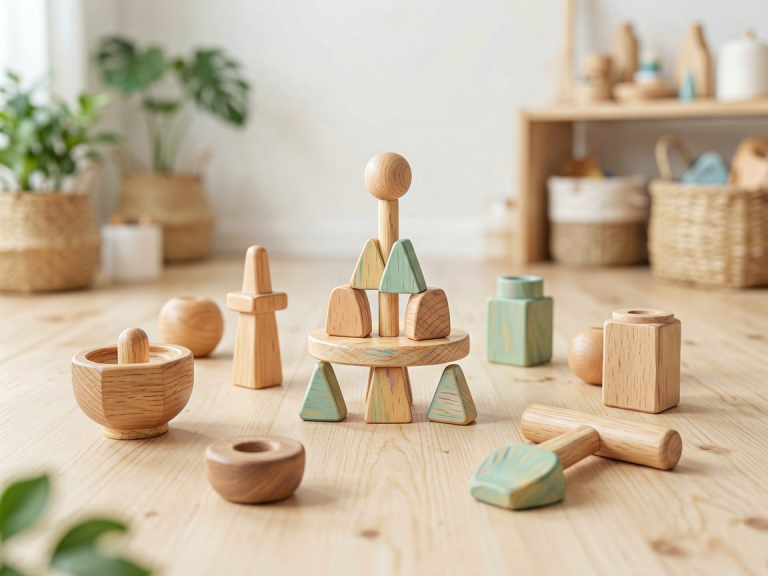
Before plastic entered the toy scene, children built with wood—and that classic option remains a fantastic low-mess alternative. Modern wooden block sets, such as those made by Grimm’s, Melissa & Doug, or Hape, offer a natural, tactile experience that is both soothing and educational. Wooden blocks come in various shapes—cubes, cylinders, arches, planks—and are large enough to be easily handled and cleaned up. Unlike LEGO bricks, they do not interlock; they simply stack, balance, and align. This means no tiny nooks and crannies to collect dust, no snapped connectors, and no frustrating piece-hunting. The mess factor is drastically reduced because wooden blocks are heavy and substantial; they tend to stay where they are placed, and when knocked over, they create a satisfying thud rather than a scatter of micro-plastics. Storage is straightforward: a single cloth bag or a small shelf can hold an entire set. Moreover, wooden blocks are hypoallergenic, non-toxic, and biodegradable, appealing to eco-conscious families. The open-ended nature of block play encourages spatial reasoning, physics exploration, and creativity without the need for instructions. And cleanup is a breeze—just toss them in the bag or stack them on a shelf. No sorting by color or type required. For toddlers and preschoolers especially, wooden blocks provide a rich sensory experience without the mess that often accompanies plastic construction toys.
Foam Building Blocks: Safe, Soft, and Spill-Proof
For the youngest builders—infants and toddlers who are still mouthing objects and learning to sit—foam building blocks are a perfect low-mess alternative. These blocks are typically made from EVA foam or similar materials that are lightweight, soft, and often brightly colored. They come in various shapes, including classic cubes, triangles, and even interlocking pieces that mimic LEGO-style studs but on a much larger, softer scale. The mess here is virtually nonexistent: foam blocks are too large to lose, too soft to cause injury, and easy to wipe clean. They do not roll under furniture, and they can be stacked into a pile in seconds. Brands like Baby Einstein, Mega Bloks First Builders (the large foam versions), and Edushape offer sets that are safe for ages 6 months and up. Because foam is light, even a dramatic tower collapse results in a silent, gentle tumble rather than a cacophony of plastic. Parents appreciate that foam blocks can be used on any surface—carpet, hardwood, tile—without leaving marks or causing slips. Storage is simple: they often come with a mesh bag or a box, and their softness means they can be pushed into a corner without breaking. For sensory play, foam blocks provide a pleasing texture and are often scented or textured to engage multiple senses. They are also waterproof and easy to sanitize, making them ideal for outdoor or bath-time use. While they lack the precision of LEGO, they more than compensate with safety and simplicity.
Snap-Together Plastic Panels and Connectors: A Modular System Without the Tiny Pieces
Another excellent alternative is the realm of snap-together construction systems that use larger, rigid panels and rods rather than tiny bricks. Examples include products like K'NEX (using connectors and rods), Strawbees, and ZOOB. These systems rely on flexible or rigid connectors that join larger pieces, dramatically reducing the number of small components. For instance, Strawbees uses long, hollow plastic straws that connect with multi-holed “bees.” The pieces are relatively large and easy to handle, and the building process is intuitive. Because the pieces are long and often brightly colored, they do not disappear easily. Disassembly is straightforward, and because there are no sharp edges or tiny studs, cleanup is fast. K'NEX rods and connectors can be bundled together, and children quickly learn to sort them by color and size, but even if they don't, the pieces are large enough to be scooped up by hand. These systems encourage engineering thinking, structural design, and even kinetic movement when combined with motors. They are particularly popular for STEM education because they allow for complex constructions—bridges, vehicles, animal shapes—without the tediousness of brick-by-brick assembly. And because pieces are not as prone to being stepped on, they are far less anxiety-inducing for parents. Storage might require a few bins, but the pieces are chunky enough that you won’t find them weeks later under the sofa.
Digital Building Apps: The Ultimate No-Mess Solution
If you want to completely eliminate physical mess, digital building platforms are the ultimate alternative. Apps like LEGO Digital Designer, Minecraft’s Creative Mode, or the more recent block-building game “Roblox” offer a virtual environment where children can construct anything they imagine without a single piece of plastic touching the floor. On tablets or computers, building becomes a purely digital experience: no cleanup, no searching for lost pieces, no stepping on sharp edges. The screen acts as a clean, contained workspace. Many of these apps are designed to teach logic, spatial reasoning, and even coding. For families with limited space or for travel situations, digital building is a godsend—a child can build a hundred-story tower on a six-hour plane ride, and when it’s time to land, just close the app. The mess? Zero. The downside, of course, is screen time, which must be balanced with physical activity. But used in moderation, digital building offers a mess-free, endlessly expandable creative outlet. Some apps even allow for collaborative building online, encouraging social interaction without the physical clutter. For parents who are tired of sweeping up brick dust, this is a refreshing alternative.
Modular Cardboard and Upcycled Building Systems
Another emerging trend is modular building systems made from recycled cardboard or other materials that are inherently low-mess. Products like “Cardboard Construction” sets, which include slotted cardboard pieces that lock together without glue, are gaining popularity. These are often large, lightweight, and easy to assemble and disassemble. Because they are made of paper, they are easy to flatten for storage and can be recycled when worn out. The mess factor is minimal: cardboard pieces do not scatter far, and any stray bits can be swept up with a broom. Additionally, the process of building with cardboard encourages creativity and fine motor skills, and the resulting structures can be painted or decorated. For eco-conscious families, this is a perfect choice. Similarly, upcycled materials like toilet paper rolls, shoeboxes, and yogurt cups can be turned into building components with the help of tape or connectors, but that path requires more adult supervision and can create its own mess. Still, the commercial cardboard systems are designed to be clean and efficient.
Summary: Choosing the Right Low-Mess Builder for Your Needs
The perfect low-mess alternative to LEGO-style bricks depends on your child’s age, your living space, and your tolerance for clutter. For toddlers and sensory-sensitive children, foam blocks are king—soft, safe, and easily storable. For preschoolers and early elementary kids, magnetic tiles offer a captivating, quiet, and spotless building experience that encourages geometric creativity. Wooden blocks remain a timeless, natural choice that promotes balance and physics, with a cleanup that takes seconds. Snap-together panel systems like Strawbees or K'NEX provide engineering challenges with larger, fewer pieces. And for ultimate mess-free play, digital building apps deliver all the creativity without any cleanup. None of these alternatives completely replace the intricate detail and popularity of LEGO, but they each offer a unique blend of developmental benefits and practical advantages. As you shop for toys this season, consider not just the fun factor but also the cleanup factor. By choosing low-mess alternatives, you can foster a love of construction in your children without turning your home into a hazard zone. And that, in the end, allows everyone to play a little more peacefully.