Beyond the Digital Screen: Are Wooden Blocks Worth It for 8-Year-Olds?
Introduction: The Enduring Appeal of a Simple Toy
In an age dominated by tablets, video games, and interactive robots, the humble wooden block might seem like a relic of a bygone era. For an 8-year-old—a child who is typically in the middle of elementary school, developing advanced literacy, beginning to grasp complex math concepts, and often immersed in the digital worlds of Minecraft or Roblox—the idea of playing with simple, unpainted cubes of wood may appear quaint, even regressive. Yet parents, educators, and child development experts continue to debate the value of traditional building toys. Are wooden blocks genuinely worth the investment for an 8-year-old? The answer, as this article will explore, is a nuanced yes—but only when we understand what blocks offer at this specific developmental stage. Far from being a toy for toddlers, high-quality wooden blocks can serve as a powerful tool for cognitive growth, creativity, social interaction, and even emotional regulation in children aged seven to nine. Let us examine the evidence, the benefits, and the practical considerations.
Cognitive Development: More Than Just Stacking
One of the most compelling arguments for wooden blocks at age eight is their role in strengthening executive functions. By this age, children are capable of planning multi-step projects, estimating spatial relationships, and engaging in trial-and-error problem solving. Unlike digital construction games, which often provide automatic alignment or undo buttons, physical blocks require fine motor precision, spatial awareness, and patience. When an 8-year-old tries to build a cantilevered bridge or a stable tower with irregularly shaped blocks, they must mentally rotate objects, predict center of gravity, and adjust their strategy in real time. This is a form of spatial reasoning that research has consistently linked to later success in STEM fields, particularly geometry and engineering. A 2020 study in the journal *Child Development* found that children who frequently engaged with construction toys showed improved mental rotation abilities—a skill that predicts performance in mathematics and science. For an 8-year-old on the cusp of more abstract mathematical thinking, wooden blocks provide a concrete, hands-on way to internalize concepts like symmetry, balance, and proportion.
Moreover, blocks encourage divergent thinking. Unlike many structured toys with a single correct outcome (a puzzle, a board game with fixed rules), wooden blocks have infinite possibilities. An 8-year-old can decide to build a medieval castle, a futuristic spaceship, or simply a chaotic jumble that pleases their aesthetic. This open-endedness is critical because it forces the child to generate their own goals, evaluate their own progress, and persist through frustration. In a world where many children are accustomed to immediate feedback from apps and screens, blocks teach delayed gratification and intrinsic motivation.
Creativity and Imagination: The Unscripted Play
By age eight, children’s imaginations are highly sophisticated. They create detailed narratives, role-play complex social scenarios, and often combine multiple interests. Wooden blocks serve as a blank canvas for this creativity. A set of simple geometric shapes can become the walls of a dragon’s lair, the foundation of a space station, or the grid of a city plan. Unlike themed plastic playsets (e.g., a branded castle with pre-molded pieces), blocks force children to imagine missing elements and improvise. A rectangular block might be a bed, a ramp, or a shield—depending on the story they are crafting. This type of symbolic play is essential for developing abstract thinking and narrative skills.
Furthermore, blocks can be integrated with other toys. An 8-year-old might use them to build a garage for toy cars, a stage for action figures, or a fortress for stuffed animals. This cross-modal play enriches their ability to synthesize different play experiences, a skill that translates into cognitive flexibility. Teachers in progressive classrooms often use wooden blocks in “makerspaces” to supplement history or science lessons—for instance, building ancient Roman aqueducts or simple machines like levers. For a child at home, the same blocks can support independent exploration of physics (how high can I stack before the tower falls?) or architecture (what makes a strong base?).
Social and Emotional Benefits: From Solitary to Collaborative Play
At age eight, social dynamics become increasingly important. Children begin to navigate friendships, negotiate rules, and manage conflicts. Wooden blocks are an ideal medium for cooperative play. Building a large structure with a sibling or friend requires communication, sharing of resources, and compromise. Who gets the long blocks? Whose idea for the roof is better? What happens when the tower collapses because someone placed a block incorrectly? These moments teach emotional regulation, patience, and perspective-taking. Unlike competitive video games, which often emphasize winning or losing, block play is inherently collaborative and non-competitive. The goal is not to beat an opponent but to create something together, which fosters a sense of shared achievement.
Blocks also offer a calming, sensory experience. The weight, texture, and subtle sound of wood can be grounding for children who are overstimulated by screens. For an 8-year-old who struggles with anxiety or attention difficulties, the repetitive action of stacking and sorting blocks can be meditative. Many occupational therapists recommend wooden blocks as a tool for sensory integration, as they provide proprioceptive feedback (the sense of pressure and position) without the harsh stimuli of digital lights and sounds. In an age where childhood anxiety is rising, having a low-tech, tactile outlet is invaluable.
Comparison with Digital Toys: A Balanced View
It would be naive to claim that wooden blocks are superior to all digital alternatives. Many educational apps and video games also teach spatial reasoning, problem solving, and creativity. For example, Minecraft is often praised for its open-ended, block-based building mechanics that allow children to design complex structures in a 3D environment. However, there are key differences. First, digital building eliminates the physical constraints of gravity, balance, and material properties. An 8-year-old learning from Minecraft may not develop the same intuitive understanding of physics as one who builds with real blocks that can actually topple. Second, screens often come with passive consumption, distractions (ads, notifications, or irrelevant content), and a risk of overstimulation. Wooden blocks require active, focused engagement. Third, digital play is often solitary or online, whereas wooden blocks naturally encourage face-to-face interaction. Finally, there is the issue of screen time guidelines: the American Academy of Pediatrics recommends limiting recreational screen time for children aged 6 and older to no more than 2 hours per day. Wooden blocks offer a screen-free alternative that still promotes learning.
That said, many families benefit from a hybrid approach. An 8-year-old can use blocks alongside digital tools—for instance, first sketching a design on paper or a tablet, then building it physically. The key is to ensure that screen time does not replace hands-on, tactile play entirely.
Practical Considerations: Quality, Cost, and Longevity
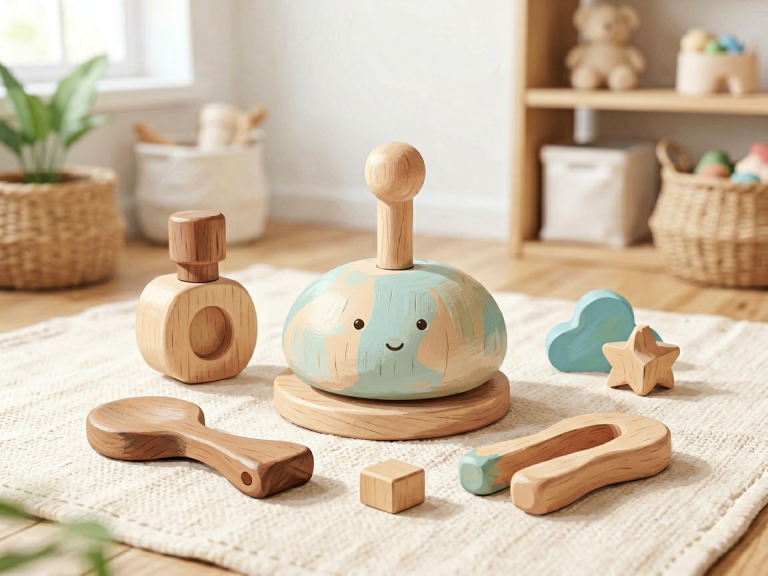
Are wooden blocks worth the investment? Financially, a good set of hardwood blocks (like those from brands such as Grimm’s, Kapla, or Haba) can be expensive, often costing $50–$150 for a substantial set. However, they are extremely durable. Unlike plastic toys that may break or become obsolete, wooden blocks can last for decades and be passed down to younger siblings or even the next generation. For an 8-year-old, a set with a variety of shapes—rectangles, squares, triangles, cylinders, arches, and half-circles—offers the most versatility. Avoid sets with painted or varnished surfaces that might chip, or those with choking hazards for younger children (though at age eight, choking is less a concern). Also consider storage: blocks are heavy and take up space, but they can be stored in a cloth bag or a wooden crate, which also serves as a visual reminder to play.
Another important factor is the child’s existing interests. An 8-year-old who already loves construction toys, building kits, or engineering challenges will almost certainly enjoy wooden blocks. A child who prefers purely narrative play (e.g., dolls, costumes) might initially need encouragement, but once they discover that blocks can become a setting for their stories, they often warm up. Parents can facilitate this by sitting down and building with the child, asking open-ended questions (“What do you think would happen if we put this block here?”) and modeling creative use.
Potential Drawbacks and How to Mitigate Them
No toy is perfect. Some 8-year-olds may find wooden blocks too “babyish” compared to flashy electronic gadgets. This perception can be overcome by presenting blocks as a serious building material, akin to a construction set. Show them photos of famous architectural landmarks built from blocks, or challenge them to replicate a simple machine (like a pulley or a ramp). Another drawback is the lack of immediate reward: a child used to the instant gratification of a video game might lose interest quickly if their first tower falls. This is actually an opportunity to teach resilience. Parents can praise the effort and the learning, not just the final product. Additionally, blocks can be messy, with pieces scattering across the floor. Setting up a designated play area (a rug or a low table) can contain the chaos.
Conclusion: Worth It, With the Right Mindset
So, are wooden blocks worth it for an 8-year-old? The evidence points to a resounding yes—but with important caveats. They are not a magic bullet; they will not replace all other toys or guarantee a brilliant future. However, as a tool for cognitive, social, and emotional development, they offer unique benefits that few modern toys can replicate. In a world that increasingly pushes children toward passive screen consumption and structured extracurriculars, wooden blocks provide a rare space for unstructured, imaginative, and physically engaging play. They teach patience, spatial reasoning, creativity, and collaboration—all skills that are essential for success in school and life. Moreover, they foster a sense of calm and presence that is sorely needed in our fast-paced digital culture.
The key is to present them not as a “toddler toy” but as a sophisticated building material. Combine them with other resources—books about architecture, a ruler for measuring, a camera for documenting creations—and watch how an 8-year-old’s play deepens. Ultimately, the worth of wooden blocks lies not in the blocks themselves, but in the experiences they enable. For a child who is ready to explore, build, and dream, they are priceless.