Beyond the Label: The Science and Significance of BPA-Free Plastic in Toys for Babies
Introduction: A Tiny Number, a Giant Concern
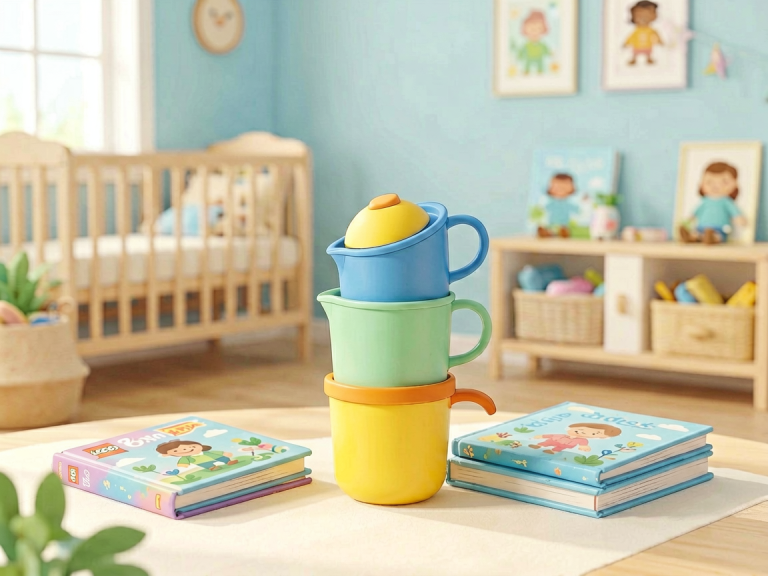
Every parent knows the scene: a baby’s mouth explores the world, and the world often tastes like plastic. From teething rings to stacking cups, rattles to bath toys, plastic is omnipresent in the nursery. Yet for decades, a quiet chemical controversy has simmered beneath the surface of these colorful objects. Bisphenol A (BPA) – a compound used in polycarbonate plastics and epoxy resins – has been linked to endocrine disruption, particularly in developing infants. The market’s response has been swift: “BPA-free” labels now adorn countless baby products. But what does this promise actually mean? Is BPA-free plastic truly safer? And how can parents decode the chemistry of safety when the science is still evolving? This article delves into the molecular world of plastics, the biology of infant vulnerability, and the regulatory landscape to offer a comprehensive guide to choosing BPA-free plastic toys for babies.
1. The Chemistry of Concern: Why BPA Matters for Babies
To understand why BPA-free became a rallying cry, one must first appreciate BPA’s biochemical behavior. BPA is a synthetic estrogen mimic – it binds to estrogen receptors in the human body, albeit with weaker affinity than natural hormones. However, "weaker" does not mean "harmless." During critical windows of development – fetal growth, infancy, and early childhood – even subtle hormonal interference can alter gene expression, neural circuitry, and metabolic programming.
Infants are uniquely vulnerable for several reasons:
- Higher exposure per body weight: A baby chews, sucks, and mouths toys for extended periods. Leaching rates of BPA from polycarbonate increase with heat, friction, and acidic saliva. A 2011 study in *Environmental Health Perspectives* found that infants could ingest BPA levels exceeding the European Food Safety Authority’s temporary tolerable daily intake when using polycarbonate bottles.
- Immature detoxification systems: The liver and kidneys of newborns metabolize and excrete chemicals less efficiently. BPA accumulates, and its metabolites may persist longer.
- Developmental plasticity: The endocrine system orchestrates brain development, immune maturation, and reproductive organ formation. Low-dose BPA exposure in animal models has been correlated with altered behavior, early puberty, and mammary gland anomalies.
The precautionary principle – act to prevent harm even without absolute proof – drove consumer demand. By the early 2010s, major retailers and toy manufacturers transitioned to BPA-free formulations. But the story does not end there.
2. The “BPA-Free” Paradox: Substitution or Solution?
When manufacturers remove BPA, they do not remove plastic; they replace it with alternative monomers or additives. The most common substitutes in infant toys include:
- Bisphenol S (BPS) and Bisphenol F (BPF) – structurally similar to BPA. Research from the Endocrine Society (2020) shows that BPS and BPF exhibit estrogenic activity comparable to or even greater than BPA in some cell-based assays. They also leach from “BPA-free” products.
- Polyethylene (PE), Polypropylene (PP) – these thermoplastics do not contain bisphenols. PE and PP are generally considered low-risk because they lack the aromatic ring structure that confers estrogenic activity. They are widely used in food containers, but not all toys are made from them.
- Polyester, polyurethane – often used in flexible teethers. Some may contain phthalates or other plasticizers that raise separate endocrine concerns.
A landmark study published in *Environmental Science & Technology* (2018) tested 30 “BPA-free” baby bottles and found that nearly all leached chemicals with estrogenic activity, even when labeled BPA-free. The culprit? Not BPA itself, but other bisphenols or manufacturing residues. Thus, the term “BPA-free” is not synonymous with “endocrine-disruptor-free.” It is a marketing term, not a safety guarantee.
3. Regulatory Frameworks: What Safety Standards Exist?
Different jurisdictions have taken different approaches to BPA in toys:
- European Union: The EU has banned BPA in baby bottles since 2011 and extended restrictions to infant feeding cups and certain toys under the Toy Safety Directive. However, limits on BPS or BPF are not explicitly set, though the European Chemicals Agency (ECHA) is evaluating them as Substances of Very High Concern.
- United States: The FDA banned BPA in baby bottles and sippy cups in 2012 but does not restrict it in toys. The Consumer Product Safety Commission (CPSC) has no specific BPA limits for toys. Many manufacturers voluntarily comply with BPA-free labels, but enforcement is minimal.
- China and other markets: Regulations vary widely. Export-oriented manufacturers often comply with the strictest standards to access Western markets.
For parents, the takeaway is clear: a regulatory label is only as strong as the testing that backs it. Certification schemes like OEKO-TEX Standard 100 or the European Toy Safety mark (CE) offer more comprehensive chemical screening, including bisphenols, phthalates, and heavy metals.
4. Practical Guidance for Parents: Choosing Safer Plastic Toys
Given the complexity, how can a parent make an informed choice? Here is a prioritized decision tree:
Step 1: Understand the recycling code.
- #1 PET – used in clear bottles, less common in teethers. May leach antimony.
- #2 HDPE – opaque, used for some stacking toys. Generally low leaching.
- #4 LDPE – soft, flexible toys. Good safety profile.
- #5 PP – hard, heat-resistant. The safest of common plastics for infants.
- #7 Other – includes polycarbonate (which often contains BPA) and bioplastics. Avoid unless certified BPA-free *and* tested for total estrogenic activity.
Step 2: Prefer established non-bisphenol polymers.
- Toys made from PP (#5) or PE (#2, #4) are the safest bets. Major brands like Munchkin, Fisher-Price, and Green Toys use PP or recycled HDPE.
Step 3: Demand transparency.
- Look for brands that publish third-party testing results. E.g., “BPA-free, BPS-free, phthalate-free, lead-free” is common. Some companies, like Begin Again Toys or Hape, list the exact plastics used on packaging.
Step 4: Avoid heat and wear.
- Never boil plastic toys, dishwash them (unless explicitly recommended), or leave them in direct sunlight. Heat accelerates chemical leaching. Replace chewed, cracked, or worn toys.
Step 5: Consider non-plastic alternatives.
- Silicone (food-grade, platinum-cured) is inert and does not leach bisphenols. Wood (with non-toxic finishes) and natural rubber are excellent for teething. Cotton or wool fabric toys offer tactile variety without plastic.
5. The Broader Picture: Sustainability and Systemic Risk
The BPA-free movement has an unintended consequence: it shifts the chemical burden from one compound to another without solving the underlying issue of endocrine-disrupting chemical regulation. Every plastic toy eventually becomes waste. Microplastics – tiny fragments shed during chewing or washing – are now found in human blood, placenta, and breast milk. They carry endocrine-disrupting chemicals adsorbed from the environment.
Thus, the healthiest choice for a baby may not be a “better plastic” but a reduction in plastic use overall. The principle of substitution – replacing a hazardous chemical with a less hazardous one – is necessary but insufficient. A precautionary, preventive approach calls for minimizing exposure to all synthetic chemicals during critical developmental windows, especially when safer alternatives exist.
Conclusion: Informed Vigilance, Not Panic
The modern parent navigates a sea of chemical acronyms and conflicting studies. The BPA-free label is a start, not an end. True safety requires understanding that not all plastics are equal, that substitutes can be just as concerning, and that the best toy for a baby is one that supports play without introducing unnecessary chemical risk. By choosing materials like PP, silicone, wood, and natural rubber, by washing toys gently, and by supporting companies that prioritize transparency, families can reduce exposure without sacrificing the joy of discovery. The science of BPA-free plastic is still being written – but with vigilance and knowledge, we can ensure that every toy a baby puts in their mouth is a step toward health, not harm.
*Word count: ~1,380*