Are Montessori Toys Worth It? A Deliberate Evaluation of Educational Investment
Introduction
In recent years, Montessori toys have surged in popularity among parents who seek more than mere entertainment for their children. Advertised as tools that foster independence, concentration, and a love for learning, these often minimalist, natural-material toys come with a premium price tag. Yet many families find themselves asking: *Are Montessori toys truly worth the investment, or are they simply a marketing-driven trend?* This question does not have a one-size-fits-all answer. To evaluate their worth, we must first understand the pedagogical principles behind them, examine their practical benefits and limitations, and consider how they fit into a child’s developmental journey.
—
1. Understanding Montessori Philosophy and Toy Design
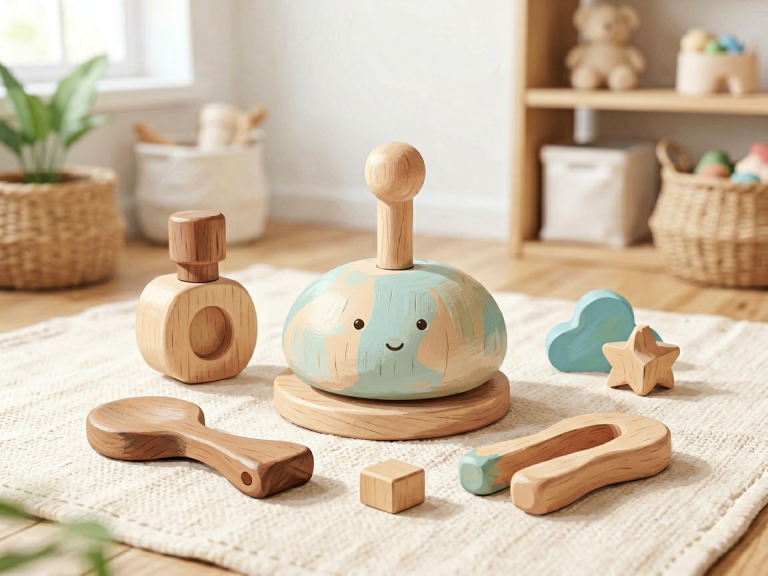
The Montessori method, developed by Dr. Maria Montessori in the early 1900s, is grounded in the belief that children are naturally curious and capable of self-directed learning. In a Montessori classroom, toys (or “materials”) are carefully designed to serve specific developmental purposes. They are often made of wood, metal, or fabric rather than plastic, and they emphasize one clear concept at a time—such as size discrimination, color matching, or fine motor control.
Montessori toys are intentionally simple. A classic example is the “pink tower,” a set of graduated wooden cubes that a child stacks in order of size. There are no flashing lights, sounds, or electronic components. The activity itself provides immediate feedback: if the tower is assembled incorrectly, it topples. This self-correcting feature encourages children to experiment and problem-solve without adult intervention.
The philosophy behind these toys rejects the idea of passive entertainment. Instead, Montessori materials invite active engagement, repetition, and concentration. They are designed to be used in a prepared environment where the child has freedom of choice within boundaries. This design principle—form follows function—explains why many Montessori toys look stark or even boring compared to a flashy battery-operated toy.
—
2. The Pedagogical Advantages: What Makes Montessori Toys Unique?
Promotion of Independent Learning
One of the strongest arguments for Montessori toys is that they cultivate independence. A well-designed Montessori material allows a child to work alone for extended periods, building self-confidence and perseverance. For example, a simple “puzzle with knobs” helps a toddler refine the pincer grasp while learning that mistakes are part of the process. There is no external reward or punishment; the satisfaction comes from mastery itself.
Sensorial and Cognitive Development
Montessori toys are often categorized as “sensorial materials” because they isolate specific qualities—texture, weight, sound, temperature, shape. This isolation helps children categorize sensory input and develop logical thinking. When a child sorts objects by weight using a “baric tablet” set, they are not just playing; they are constructing neural pathways related to comparison, estimation, and classification. Research in early childhood education supports the idea that hands-on, multi-sensory learning strengthens memory and understanding.
Deep Focus and Flow State
Unlike most conventional toys that promote quick, dopamine-driven play (press a button, get a sound), Montessori toys often require slow, careful manipulation. This can lead to a state of deep concentration—what psychologists call “flow.” A child may spend twenty minutes repeatedly transferring water from one pitcher to another using a sponge. To an adult, this seems repetitive, but for the child, it is a meaningful practice in self-control, coordination, and attention. This quality is increasingly valued in an age of constant digital distraction.
—
3. Potential Drawbacks: Cost, Accessibility, and Limitations
High Price Point
The most immediate barrier is cost. A single authentic Montessori material, handcrafted from sustainable wood, can cost $30 to $100 or more. A full set for a home environment can easily run into hundreds of dollars. Many parents wonder whether the premium is justified. Are these toys genuinely superior to high-quality, non-Montessori alternatives that cost a fraction of the price?
Limited Play Value for Some Children
Montessori toys are designed with a specific developmental purpose. While this focus is pedagogically sound, it can also mean that the toy has limited play scenarios. A child may master a puzzle in two days and then lose interest. Because Montessori philosophy discourages offering too many choices at once (to avoid overwhelm), parents often need to rotate toys frequently—which requires additional effort and organization.
Not a Silver Bullet for Every Parenting Style
Montessori toys are most effective when used within a Montessori-aligned environment: one that respects the child’s pace, offers freedom of movement, and minimizes adult interference. If a parent expects the toy alone to teach skills without adjusting their interaction style, they may be disappointed. The toy is only one part of a holistic approach; it cannot substitute for responsive caregiving or a supportive routine.
Over-Commercialization and “Montessori-Washing”
The term “Montessori” is not trademarked, so many manufacturers label any toy made of wood as “Montessori” to command a higher price. In reality, many of these products lack the pedagogical thought behind genuine Montessori materials. A wooden shape sorter may be aesthetically pleasing, but if it does not isolate a single concept or offer self-correction, it is simply a nicely made toy—not a Montessori material. Parents must become savvy consumers to avoid overpaying for branding.
—
4. Comparing Montessori Toys with Conventional Playthings
To determine worth, we should contrast Montessori toys with high-quality conventional toys, such as Lego Duplo, wooden train sets, or open-ended art supplies.
Open-Ended vs. Closed-Ended
Montessori materials are often “closed-ended” – they have a built-in correct way to use them. For instance, the “cylinder blocks” require placing each cylinder in its correctly sized hole. This teaches precision but may limit creativity. Conversely, Lego blocks are open-ended; they can become a castle, a spaceship, or a dinosaur. Both types have value. Some children thrive on structure, while others need unbounded imagination.
Skill Isolation vs. Integrated Play
A conventional toy like a play kitchen integrates multiple skills (role-playing, social interaction, language) simultaneously. A Montessori “practical life” activity like pouring beans isolates one motor skill. Neither is inherently superior; they serve different cognitive functions. A balanced play diet includes both isolated practice and integrated play.
Durability and Environmental Impact
Montessori toys are typically made from sustainable materials and built to last for years, even generations. High-end conventional toys can also be durable, but many budget options are flimsy. However, the initial cost of a Montessori toy is often higher. Over a long period, a single well-made Montessori item may outlast several cheaper toys, potentially making it more economical and environmentally friendly.
—
5. Factors to Consider Before Investing
Child’s Age and Developmental Stage
Montessori toys are most valuable during sensitive periods—typically from birth to age six. A toddler who is obsessed with stacking objects will benefit enormously from a set of nesting blocks. An older child who already has strong fine motor skills may need more complex challenges that Montessori materials alone cannot provide.
Parental Engagement and Philosophy
If a parent is willing to read about Montessori principles, prepare the environment, and allow the child to work without interruption, the investment is more likely to pay off. Conversely, if the toys will be dumped into a toy box alongside flashing plastic gadgets, the intended benefits may be diluted.
Budget and Priorities
Families on a tight budget need not despair. Many Montessori activities can be recreated with household items: transferring rice between bowls, threading pasta on a string, sorting buttons by color. The *method* is more important than the product. Purchasing two or three high-quality Montessori materials that target specific skills may be more worthwhile than buying a dozen cheap imitations.
Quality over Quantity
A single well-designed Montessori toy that a child returns to again and again over months is likely a better investment than a collection of toys that are used once. Experts recommend observing your child: what activities do they naturally gravitate toward? If they love matching, a “color tablet” set may be perfect. If they ignore it, the toy is not worth any price.
—
6. Conclusion: Are They Worth It?
The answer, ultimately, is that Montessori toys can be worth the investment—but only under the right conditions. They are not magical objects that transform a child’s development by their mere presence. Their value emerges when they are part of a thoughtful environment: one that respects the child’s autonomy, offers minimal distraction, and provides appropriate challenges.
For families who embrace the underlying philosophy, Montessori toys can foster deep concentration, independence, and joy in learning. They also excel in durability and aesthetic appeal. For families who prioritize free, open-ended play or have a limited budget, high-quality conventional toys and DIY materials can achieve similar developmental outcomes.
The most important factor is not the toy itself, but the adult’s intention and the child’s readiness. A simple cardboard box, when offered with trust and space, can be as educational as the most expensive wooden puzzle. Montessori toys are a tool, not a guarantee. When used wisely, they can enrich a child’s early years. When bought mindlessly, they become another source of clutter and consumer guilt.
So, are Montessori toys worth it? They are worth it if they align with your parenting values, your child’s needs, and your budget. But they are never worth sacrificing financial security or your own nurturing relationship with your child. In the end, the greatest educational investment we can make is our presence, patience, and belief in a child’s innate ability to learn—with or without a wooden toy.