Should I Buy Building Blocks for My 2-Year-Old? A Comprehensive Guide for Thoughtful Parents
—
Introduction
Every parent of a toddler has faced the same dilemma while browsing the toy aisle: should I buy building blocks for my two-year-old? The shelves are crammed with flashy electronic toys, plush animals, and brightly colored contraptions, yet the humble building block remains a staple in early childhood catalogs. At first glance, a set of wooden or plastic blocks seems simple—almost too simple—to hold a child's attention. But behind that simplicity lies a wealth of developmental science. This article will explore the multifaceted question of whether building blocks are a wise purchase for a two-year-old, examining cognitive, physical, social, and emotional benefits, alongside safety considerations and practical buying advice. By the end, you will have the evidence you need to decide if those blocks deserve a spot in your child's playroom.
—
The Cognitive Benefits of Building Blocks
1. Stimulating Problem-Solving and Spatial Awareness
At age two, a child's brain is undergoing explosive growth in neural connections. Building blocks offer one of the most natural ways to nurture early problem-solving skills. When a toddler tries to stack a cube on top of another, they are engaging in trial and error: “Will this fit? What happens if I place it at an angle?” These small experiments teach cause and effect, balance, and spatial reasoning. Research in developmental psychology has consistently shown that block play correlates with improved mathematical abilities later in life because it introduces concepts like symmetry, proportion, and geometry in a concrete, hands-on manner.
2. Encouraging Symbolic Thinking and Creativity
Two-year-olds are just beginning to engage in pretend play. A single block can become a car, a phone, a piece of cake, or a building in a city. This symbolic transformation is a critical cognitive milestone. By giving your child open-ended blocks, you are providing a blank canvas for imagination. Unlike a toy that only does one thing (e.g., a plastic fire truck that only moves forward), blocks invite infinite possibilities. As the child builds a tower and then knocks it down, they are also learning about the concept of construction and destruction—a fundamental understanding of cause and effect that will serve them well in science and engineering down the road.
3. Language Development Through Descriptive Play
Block play naturally encourages language. When you sit with your toddler and talk about what they are building—“You put the red block on top of the blue one. Wow, your tower is very tall!”—you are modeling descriptive vocabulary, prepositions (on, under, behind), and comparative adjectives (taller, bigger). The child will soon begin to imitate these words, expanding their expressive language. Furthermore, the collaborative aspect of building with a parent or sibling creates a rich conversational context where the child learns to negotiate, request, and explain their intentions.
—
Physical Development and Motor Skills
1. Fine Motor Mastery
Handling building blocks requires precise finger movements. A two-year-old's fine motor skills are still developing: they are learning to grasp with a pincer grip, to release objects deliberately, and to coordinate their hands with what their eyes see. Blocks of various sizes—especially those large enough to hold but small enough to manipulate—provide the perfect challenge. Picking up a block, rotating it to align with another, and then placing it without toppling the structure demands hand-eye coordination and finger strength. Over time, these repeated actions strengthen the small muscles in the hands and wrists, preparing the child for later tasks like holding a pencil or using scissors.
2. Gross Motor Integration
While fine motor skills are obvious, blocks also promote gross motor development. Many two-year-olds are still unsteady on their feet. When they squat to pick up a fallen block, stand up to place it on a high tower, or walk around the room gathering scattered pieces, they are engaging their legs, core, and balance. Some parents set up block-building activities on the floor, which encourages crawling, kneeling, and stretching. As the child grows and the structures become more ambitious, they may even stand on tiptoes to reach the top—a wonderful full-body workout disguised as play.
3. Bilateral Coordination
Using both hands simultaneously—one to hold a block, the other to steady a tower—is a complex skill that blocks naturally teach. This bilateral coordination is essential for future activities such as riding a bicycle, typing, or playing a musical instrument. Two-year-olds who regularly play with blocks tend to show earlier mastery of tasks that require both sides of the body to work together.
—
Social and Emotional Growth Through Play
1. Fostering Patience and Frustration Tolerance
Every parent knows that two-year-olds can have explosive emotions. Building blocks provide a safe arena for learning emotional regulation. When a tower collapses, the child experiences disappointment or frustration. With gentle adult guidance, they can learn to take a deep breath, try again, or ask for help. Overcoming these small setbacks builds resilience. Unlike many electronic toys that offer instant satisfaction, blocks require effort and persistence, teaching the valuable lesson that failure is a stepping stone to success.
2. Encouraging Cooperative Play
While two-year-olds are primarily in the parallel play stage (playing alongside but not directly with others), blocks can gently nudge them toward interaction. A shared bucket of blocks invites siblings or playmates to collaborate on a single creation. “Can you hand me the blue one?” and “Let’s build a castle together!” are early social scripts. These interactions lay the foundation for turn-taking, sharing, and verbal negotiation. Even solitary block play is valuable: it helps the child develop focus and independence, knowing they can entertain themselves creatively without constant external stimulation.
3. Building Confidence and Self-Esteem
There is a unique joy on a toddler’s face when they successfully stack three blocks and shout, “Look, Mama!” Each small achievement—a balanced tower, a recognizable shape—fuels their sense of competence. Blocks give children control over their environment. In a world where they are often told what to do, block play offers complete autonomy: they decide what to build, how high to go, and when to knock it down. This autonomy is crucial for developing a healthy sense of self.
—
Safety Considerations for Toddlers
1. Size and Choking Hazards
The most critical safety factor when buying blocks for a two-year-old is size. According to the American Academy of Pediatrics, any toy that can fit entirely inside a toilet paper tube (roughly 1.75 inches in diameter) poses a choking risk. Therefore, blocks for this age group should be at least 2 inches in any dimension. Many manufacturers produce “jumbo” blocks specifically for toddlers. Avoid sets with small accessories, such as tiny animal figures or loose pegs, as these can become lodged in a child’s airway.
2. Material Quality and Toxicity
Wooden blocks are classic, but ensure they are made from solid, sustainably sourced wood (like beech or maple) and finished with non-toxic, water-based paints or stains. Some cheap plywood blocks may splinter or contain formaldehyde-based glues. Plastic blocks should be BPA-free, phthalate-free, and durable enough not to crack into sharp pieces. Always check for safety certifications such as ASTM (American Society for Testing and Materials) or EN71 (European standard). Additionally, avoid blocks with magnetic parts, as small magnets can be extremely dangerous if swallowed.
3. Weight and Impact
A two-year-old might throw a block in a moment of excitement or frustration. Heavy wooden blocks can cause injury, while lightweight foam or plastic blocks are safer. Some parents prefer soft fabric blocks or silicone blocks for initial introductions, saving heavier wooden sets for supervised play when the child is older. Also, consider the edges: blocks should be rounded and smooth to prevent scratches or bruises.
—
How to Choose the Right Building Blocks for a 2-Year-Old
1. Types of Blocks to Consider
- Soft Blocks (Fabric or Foam): Ideal for the youngest two-year-olds or for play near furniture and hard floors. They are safe, quiet, and often come in bright colors with textured surfaces. However, they may not provide the same satisfaction of a “solid” stack.
- Large Wooden Blocks: A timeless choice. Look for sets that include rectangles, squares, triangles, and arches. The varied shapes introduce geometric concepts. Choose finished edges and non-toxic paint.
- Plastic Interlocking Blocks (e.g., DUPLO): These are larger versions of classic building bricks. They allow for more complex constructions because pieces lock together. DUPLO sets often come with themed elements like wheels or windows, which can spark imaginative play but might also limit open-endedness.
- Magnetic Tiles: For a slightly older two-year-old (closer to 3), magnetic tiles can be wonderful. They are easy to connect and create stunning 3D structures. But the magnets must be securely encased, and some sets have small magnets that can detach—supervision is essential.
2. Number and Variety
A set of 30 to 50 blocks is a good starting point for a two-year-old. Too many can be overwhelming, while too few may limit creative possibilities. Diversity in shape and color adds visual interest and learning opportunities. Avoid themed sets (e.g., only castle pieces) unless you plan to supplement with basic blocks; open-ended sets offer greater long-term value.
3. Storage and Portability
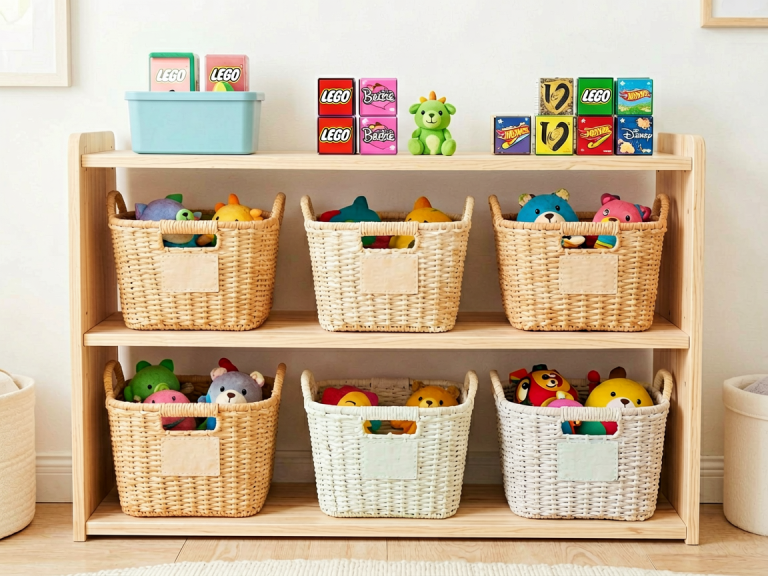
As a parent, you will appreciate a storage solution that is easy to tidy. Many block sets come with a canvas bag, a bucket, or a wooden crate. At age two, children can begin learning to put their toys away. A lightweight container that the child can carry encourages cleanup as part of the play routine.
—
Potential Drawbacks and Alternatives
1. Mess and Cleanup
Blocks are notorious for ending up all over the floor—under couches, behind radiators, and in corners. Parents with limited space may feel frustrated by the constant picking up. One solution is to designate a play mat or rug as the “building zone” and teach the child that blocks stay on the mat. Another is to rotate toys, keeping only one block set accessible at a time.
2. Risk of Boredom
Some children lose interest in blocks quickly if they are not guided. A two-year-old may stack a few blocks, knock them down, and then walk away. This is normal—their attention span is short. To sustain engagement, parents can model building (e.g., “Let me show you how to make a bridge!”), introduce challenges (e.g., “Can you build a tower as tall as your teddy?”), or incorporate other toys (e.g., placing a toy car on top of a block ramp). Over time, the child’s independent play will lengthen.
3. Alternatives Worth Considering
If your child already has a block set or if you are still unsure, consider these alternatives:
- Stacking cups or rings – excellent for fine motor and sorting.
- Puzzle mats (foam interlocking pieces) – combine building with soft flooring.
- Cardboard block sets – lightweight, cheap, and recyclable, but less durable.
- Play dough and shape cutters – similar spatial and creative benefits.
None of these replace the versatility of building blocks, but they can complement your child’s developmental journey.
—
Conclusion: Making an Informed Decision
So, should you buy building blocks for your two-year-old? The overwhelming evidence from child development research, pediatric occupational therapy, and practical parenting experience points to a resounding yes—with a few caveats. Building blocks are not just toys; they are tools for cognitive, physical, social, and emotional growth. They teach patience, creativity, and problem-solving in ways that few other playthings can. However, the purchase must be informed by safety: choose age-appropriate, non-toxic, and sufficiently large blocks. Invest in a set that grows with your child, from simple stacking at age two to complex architectural designs at age five.
If you are willing to embrace the occasional mess, guide your child through moments of frustration, and spend quality time building alongside them, then a set of high-quality building blocks will be one of the best purchases you make. In a world of ever-shortening attention spans and screen-dominated play, blocks offer a tactile, slow, and deeply satisfying experience. They remind us that the most profound learning often comes from the simplest objects. So go ahead—buy the blocks. Your two-year-old is ready to build, not just a tower, but a foundation for a lifetime of learning.