How to Choose Toys for Babies to Foster Social Skills: A Comprehensive Guide
Introduction
From the moment they are born, babies are wired for connection. Social interaction is not merely a pleasant addition to their lives; it is the bedrock upon which their emotional, cognitive, and linguistic development is built. While many parents focus on motor skills or sensory stimulation when selecting toys, the profound impact of playthings on a baby’s social competence is often overlooked. The right toys can serve as powerful catalysts for eye contact, turn-taking, imitation, empathy, and cooperative play. Conversely, poorly chosen toys—especially those that are overly solitary or passive—may inadvertently hinder early social development. This article offers a thorough, evidence-based guide on how to choose toys that actively nurture a baby’s social skills, from the first months of life through the toddler years. We will explore developmental stages, key selection principles, recommended toy categories, and practical tips for caregivers, ensuring that every play session becomes a steppingstone toward healthy human connection.
Understanding the Stages of Social Development in Infants
To choose toys effectively, one must first understand the typical trajectory of social growth during infancy. Social development is not a single event but a series of milestones that unfold in predictable sequences.
0–3 Months: The Foundation of Bonding
Newborns are primarily oriented toward faces and voices. Their earliest social interactions are one-on-one with caregivers. During this stage, babies begin to respond to smiles, imitate simple facial expressions, and show interest in human gaze. Toys that encourage face-to-face interaction—such as black-and-white contrast cards held near the caregiver’s face, soft mobiles with gentle expressions, and mirrors that are safe and unbreakable—help reinforce the baby’s awareness of other people. High-contrast cloth books with simple human faces also support this emerging social focus.
4–6 Months: The Dawn of Reciprocity
Around four months, babies start to engage in “serve and return” interactions. They coo, babble, and expect a response. They also begin to grasp objects and bring them to their mouths. Toys that facilitate two-way communication are ideal. Rattles that produce sound when shaken invite the caregiver to shake back, creating a conversational rhythm. Soft dolls or stuffed animals with simple faces can be used by the adult to “talk” to the baby, modeling turn-taking. Additionally, activity gyms with dangling toys encourage the baby to reach and bat, prompting the caregiver to react and narrate, thereby reinforcing social reciprocity.
7–9 Months: Intentionality and Joint Attention
By seven to nine months, babies develop the ability to follow another person’s gaze and point toward objects. This skill, known as joint attention, is a crucial precursor to language and social understanding. Toys that naturally encourage pointing, showing, and sharing are invaluable. For example, a pop-up toy that requires pressing buttons to make characters appear invites the baby to look at the caregiver for confirmation or excitement. Simple stacking rings or nesting cups allow the caregiver to demonstrate stacking, then hand a ring to the baby, who may offer it back—a rudimentary form of sharing. Picture books with large, clear images of familiar objects (animals, people) encourage the caregiver to point and label, while the baby learns to follow the gesture.
10–12 Months: Imitation and Simple Social Games
Around the first birthday, babies become active imitators. They mimic sounds, gestures, and actions. They also enjoy games like peek-a-boo and pat-a-cake. Toys that support these imitative behaviors are essential. Hand puppets allow the caregiver to act out emotions and movements, which the baby will try to copy. Musical instruments like simple drums or maracas can be used in call-and-response play: the adult taps a rhythm, the baby taps back. Soft balls that can be rolled back and forth introduce the concept of cooperative exchange. At this stage, electronic toys that talk or sing on their own are less beneficial because they do not require a human partner; instead, they can replace the interactive loop.
12–18 Months: Parallel Play and Emergent Cooperation
Toddlers begin to engage in parallel play—playing alongside peers without direct interaction—but they also start to understand the rudiments of taking turns. Toys that work well with two or more children (or an adult and child) are ideal. Large building blocks, push-and-pull toys, and sorting shape boxes encourage a child to watch another, wait for a turn, and occasionally hand over a piece. Simple puzzles with large knobs can be done together: the adult holds the board, the child places the pieces. Dolls and stuffed animals become proxies for social role-play; a baby can “feed” a doll, “comfort” it, or “put it to bed,” mirroring caregiver behaviors. These actions build empathy and understanding of others’ needs.
18–24 Months: Cooperative Play and Emotional Regulation
By two years, children begin to engage in brief cooperative play, such as building a tower together or pretending to cook in a play kitchen. They also experience a wider range of emotions and may struggle with sharing. Toys that explicitly require collaboration are powerful tools. A two-person seesaw or a large wagon that needs to be pulled together encourages teamwork. Toy telephones facilitate pretend conversations. Dress-up costumes and props (hats, scarves, simple masks) allow enactment of social roles (doctor, firefighter, parent). Play dough with rolling pins and cookie cutters can be used side by side, teaching negotiation over tools and space. Board books about feelings—like “The Way I Feel” or “Baby Faces”—help toddlers label emotions and discuss them during play.
Key Principles for Choosing Toys to Foster Social Skills
With the developmental stages in mind, certain universal principles can guide toy selection. These principles ensure that the toys you choose are not only safe and engaging but also intentionally social.
Prioritize Open-Ended Toys Over Passive Electronics
Open-ended toys, such as blocks, nesting bowls, scarves, and simple dolls, have no fixed purpose. They invite creativity and, crucially, require input from a play partner. A set of wooden blocks can be used to build a tower together, knock it down with a shared laugh, or sort by size—each activity generating conversation and cooperation. In contrast, battery-operated toys that light up and play music at the push of a button often demand solitary attention and reduce the need for a human interaction partner. While not all electronic toys are harmful, the overwhelming emphasis should be on toys that provoke dialogue, not monologue.
Look for Toys That Encourage Turn-Taking
Turn-taking is the foundational grammar of social interaction. Toys that naturally create a back-and-forth rhythm are gold. Examples include:
- Rolling a ball back and forth
- Simple board games adapted for toddlers (like “roll the dice and move a figure” with a caregiver)
- Musical instruments played in call-and-response
- Stacking cups where you stack one, then the baby stacks one
Even a simple cardboard tube can be used as a “telephone” for turn-taking speech.
Choose Toys That Feature Faces and Emotions
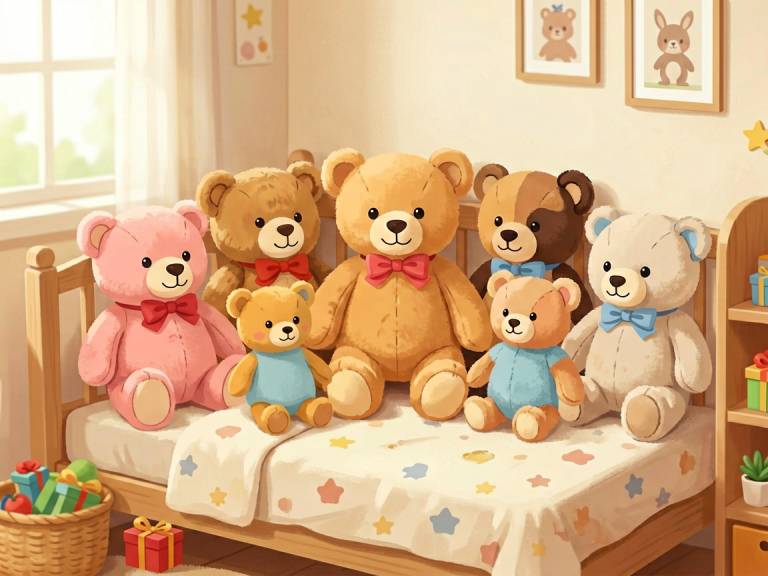
From the earliest months, babies are drawn to faces. Toys with clear, friendly, or expressive faces—such as dolls, stuffed animals, or finger puppets—help infants practice reading and responding to emotions. Look for toys that show a range of expressions (happy, surprised, sad). When you play with these toys, you can narrate the emotion: “Look, the bear is sad. Let’s give him a hug.” This builds emotional vocabulary and empathy. Avoiding screens with cartoon faces is also advisable; real-time, three-dimensional interaction is more neurologically beneficial.
Select Toys That Facilitate Imitation
Imitation is a powerful social learning tool. Toys that model everyday actions—like a toy phone, a play kitchen, a doctor’s kit, or a tool bench—allow babies to copy what they see adults do. This not only builds understanding of social roles but also fosters a sense of connection as the child “acts like” their caregiver. Choose toys that are proportionate to the baby’s hands and safe for mouthing at earlier stages.
Ensure the Toys Are Age-Appropriate and Safe
Safety is non-negotiable, but it also directly affects social play. If a toy is too advanced, a baby may become frustrated and disengage; if too simple, they may lose interest. Toys should be free of small choking hazards, non-toxic, and durable. For social play to happen, the baby must feel comfortable and secure. Also, consider that multiple children may handle the same toy; easy-to-clean materials (wood, silicone, machine-washable fabric) are practical.
Recommended Toy Types for Different Social Milestones
0–6 Months: Bonding and Sensory Connection
- Unbreakable mirrors (attach to crib or play mat)
- High-contrast cloth books with human faces
- Soft rattles and teethers with different textures (use with caregiver shaking and responding)
- Activity gyms with dangly toys that force baby to bat and engage caregiver
- Musical toys that require caregiver activation (like a wind-up music box)
6–12 Months: Turning Toward Others
- Stacking cups or rings (for turn-taking and joint attention)
- Simple pop-up toys with buttons (for pointing and shared excitement)
- Soft balls (for rolling back and forth)
- Hand puppets (for imitation and emotion-play)
- Board books with photographs of real babies making expressions
12–18 Months: Parallel and Early Cooperative Play
- Large wooden blocks (for side-by-side building)
- Shape sorters (for turn-taking and guiding)
- Push-and-pull toys (for walking together with a caregiver)
- Simple puzzles with knobs (for collaborative completion)
- Pretend play items: toy telephone, plastic cups for “tea party”
18–24 Months: Cooperative Role-Play and Emotional Skills
- Play kitchen and food set (for collaborative cooking)
- Dolls or stuffed animals with changeable clothes (for empathy-building)
- Dress-up accessories (hats, bags, goggles)
- Large cardboard blocks or foam blocks (for cooperative building)
- Board games with simple mechanics (e.g., a memory matching game with two people)
Practical Tips for Parents and Caregivers
Even the best toys are only as effective as the play that surrounds them. Here are actionable strategies to maximize the social benefits of any toy.
Play Together Actively
Refrain from handing a toy to a baby and walking away. Instead, sit on the floor, engage in the play, and narrate what you are doing. Use the toy as a bridge for conversation: “You have the red block. I have the blue block. Let’s put them together.” Your presence and responsiveness teach the baby that play is a shared experience.
Follow the Baby’s Lead
Observe which toys capture the baby’s interest and use that to initiate interaction. If the baby is fascinated by a spinning top, don’t force them to play with blocks. Instead, spin the top and then look at the baby expectantly, encouraging them to try or to look back at you. This builds joint attention.
Create Opportunities for Peer Play
When possible, arrange playdates with other babies of similar age even from early months. Choose toys that are duplicates (two identical balls, two rattles) to reduce conflict and encourage parallel play. As toddlers grow, introduce toys that require two people, like a tunnel to crawl through together or a large blanket for “peek-a-boo city.”
Model Emotional Language
While playing, label emotions explicitly. “You dropped the toy. Oops! You look surprised. Let’s pick it up together.” “The dolly is crying. She feels sad. Can you pat her back?” This practice helps babies connect feelings with actions and builds a foundation for empathy.
Limit Overstimulation
Too many toys can be overwhelming and actually reduce social engagement. A clutter-free play space encourages focus on one activity with one partner. Rotate toys periodically to maintain interest while keeping the selection small.
Avoid Overusing Screens or Electronic Toys
Studies indicate that excessive screen time in infancy can delay social milestones such as eye contact and joint attention. Even supposedly “educational” tablet games for babies replace the human interaction that is essential for social development. Reserve electronic toys for occasional, supervised use, and prioritize interactive, analog play.
Conclusion
Choosing toys for a baby is a profound responsibility that goes far beyond entertainment. The toys we provide shape not only fine motor skills and sensory experiences but also the very blueprint for how our children will relate to others. By understanding the stages of social development—from the newborn’s gaze to the toddler’s first cooperative game—and by applying principles such as open-endedness, turn-taking, imitation, and emotional modeling, we can intentionally select playthings that build the social brain. Remember that the most powerful “toy” in a baby’s world is a responsive, loving human being. Yet a thoughtfully chosen rattle, block, or doll can become the perfect partner in a dance of connection. As you shop for toys, ask yourself not just “Will my baby like this?” but “Will this toy help my baby reach out, share a smile, and learn the joy of being with others?” In answering that question, you will be investing in a lifetime of healthy relationships.