Are Building Blocks Good Birthday Gifts?
Introduction: The Timeless Appeal of Building Blocks
When the birthday season arrives, the perennial question resurfaces: what gift should one choose that is both meaningful and delightful? Among the endless aisles of toys, electronic gadgets, and novelty items, building blocks stand out as a classic, almost archetypal choice. From the wooden cubes of the early 20th century to the sophisticated interlocking plastic bricks of today, building blocks have remained a staple in children’s playrooms across cultures. But are they truly good birthday gifts? This article explores the multifaceted value of building blocks as presents, examining their educational benefits, developmental impact, social potential, and practical considerations. By the end, you will have a comprehensive understanding of why building blocks are not just good birthday gifts—they are often exceptional ones.
The Educational and Cognitive Benefits
One of the strongest arguments in favor of building blocks as birthday gifts lies in their profound educational and cognitive benefits. Unlike passive toys that merely entertain, building blocks actively engage a child’s mind. They introduce fundamental concepts of physics, geometry, and engineering in a hands-on, intuitive way. When a child stacks blocks, they learn about balance, gravity, and stability. When they experiment with different shapes, they grasp spatial awareness and symmetry. Research in developmental psychology has consistently shown that block play enhances problem-solving skills, logical thinking, and mathematical reasoning. For instance, a simple task like building a tower requires planning, estimation, and adjustment—skills that directly translate to academic success in STEM fields.
Moreover, building blocks foster creativity and divergent thinking. A set of blocks is not limited to a single use; it can become a castle, a spaceship, a zoo, or an abstract sculpture. This open-ended nature encourages children to generate original ideas and to persist through trial and error. In an age dominated by screen-based entertainment, building blocks provide a tactile, three-dimensional experience that strengthens fine motor skills and hand-eye coordination. Picking up small pieces, aligning them, and pressing them together require dexterity and control, which are crucial for writing and other manual tasks later in life.
Age-Appropriate Considerations
Are building blocks suitable for every age? The answer is nuanced. For toddlers (ages 1–3), large, chunky wooden or plastic blocks are excellent introduction to cause and effect, stacking, and basic recognition of colors and shapes. They are safe, easy to grasp, and help develop early motor skills. However, parents must ensure that the blocks are large enough to prevent choking hazards and are made from non-toxic materials. For this age group, building blocks are absolutely wonderful birthday gifts, as they provide hours of safe, exploratory play.
For preschoolers (ages 3–5), interlocking blocks like LEGO Duplo or similar systems offer a step up in complexity. Children at this stage begin to engage in pretend play, constructing houses, vehicles, and simple structures. These blocks encourage narrative thinking and social play when shared with siblings or friends. Building blocks for this age group support language development as children describe their creations and negotiate roles. They also introduce early engineering concepts, such as the need for a solid foundation.
For school-age children (ages 6–12), more advanced sets with smaller pieces, specialized themes (e.g., cityscapes, castles, space stations), and even motorized components become appropriate. These building blocks can be used to follow complex instructions, teaching children to read diagrams, follow sequences, and develop patience. They also enable independent or collaborative projects that can last for days. For teenagers and even adults, building blocks have evolved into a sophisticated hobby—themed sets for architecture, art, and robotics are popular among all ages. Thus, building blocks are remarkably versatile across the lifespan, making them a gift that can grow with the recipient.
Social and Emotional Development
Beyond cognitive gains, building blocks contribute significantly to social and emotional development. When children play with blocks together, they learn to share, take turns, communicate ideas, and resolve conflicts. Building a collaborative structure—such as a giant tower or a city—requires negotiation and compromise. These interactions are microcosms of real-world social dynamics. Furthermore, block play can be a powerful tool for emotional regulation. The act of building can be calming and meditative, allowing children to express feelings through creation. A child who is upset might channel that energy into constructing a fortress, then feel a sense of accomplishment. And when a tower falls, the child learns to handle frustration and try again—an essential resilience skill.
Building blocks also foster a sense of achievement and self-confidence. Completing a design—whether a simple cube or a intricate castle—provides a tangible reward that boosts self-esteem. Unlike many electronic toys that provide instant gratification, block building requires effort and patience, making the success more meaningful. This effect is especially valuable for children who struggle with abstract academic tasks but excel in hands-on activities. In this sense, building blocks validate different types of intelligence.
Potential Drawbacks to Consider
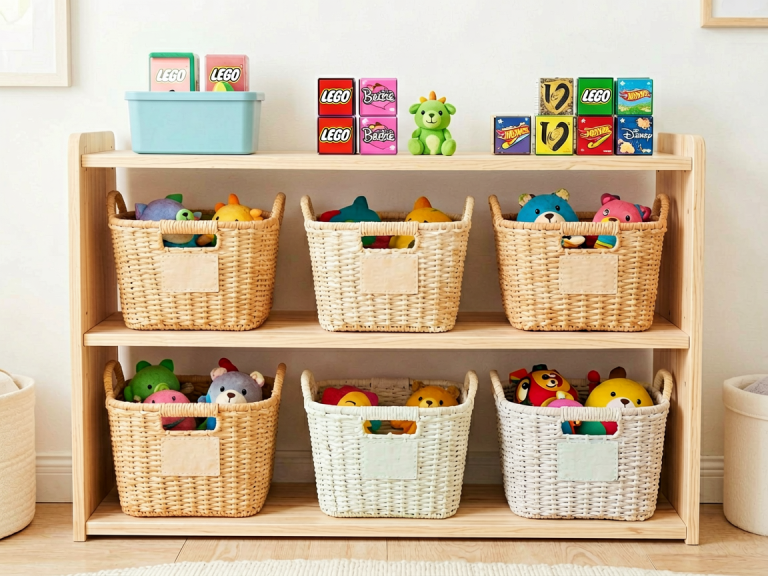
No gift is perfect for everyone, and building blocks have their limitations. One primary concern is safety: small blocks can pose choking hazards for children under three. Even for older children, small pieces can be lost, creating clutter and tripping hazards. Parents or gift-givers must always check age recommendations and supervise younger children. Another drawback is the potential for mess and spatial demands. A large collection of building blocks can occupy considerable floor space, and without proper storage, they can become overwhelming. However, these issues are easily mitigated with storage bins, play mats, and clear rules about cleanup.
Cost is another factor. High-quality building block sets, especially licensed themes from brands like LEGO, can be expensive. A single large set may cost as much as a video game console. However, the value per play hour is generally high—blocks are used repeatedly in different ways, unlike many single-use toys. Additionally, less expensive alternatives (e.g., generic interlocking blocks, wooden unit blocks) are widely available. Finally, some children may simply prefer different types of play—those who are not construction-oriented might find building blocks boring. It is important to know the recipient’s personality and interests. For a child who loves stories and art, a set of magnetic tiles or storybook-themed blocks might be a better choice than a standard brick set.
Creativity, Imagination, and Longevity
One of the greatest strengths of building blocks as birthday gifts is their longevity. A well-made set can last for years, passed down from sibling to sibling, or even to the next generation. Unlike trendy toys that are quickly forgotten, building blocks remain relevant as the child grows. A toddler’s simple stacking becomes a kindergartner’s miniature city, which becomes a tween’s architectural model. This adaptability ensures that the gift does not lose its appeal after a few weeks. Moreover, building blocks encourage imaginative play that transcends screens. In an era of passive entertainment, blocks empower children to become creators rather than consumers.
Building blocks also support cross-generational play. Grandparents, parents, and children can all engage in block building together, sharing ideas and memories. This social bonding is a precious gift in itself. Finally, building blocks can be integrated with other interests—some sets tie into movies, books, or science topics, making them a gateway to deeper learning. For example, a child who builds a model of the solar system may become curious about astronomy.
Conclusion: Do Building Blocks Make Good Birthday Gifts?
After considering educational benefits, developmental appropriateness, social-emotional growth, and practical aspects, the answer is a resounding yes—building blocks are exceptional birthday gifts, provided they are matched to the recipient’s age and interests. They offer a unique combination of fun, learning, creativity, and durability that few other toys can match. While potential drawbacks such as safety, mess, and cost exist, these are easily managed with thoughtful selection and simple household solutions. The best building block gift is one that challenges without frustrating, inspires without overwhelming, and brings joy that lasts far beyond the birthday party. So the next time you are hunting for a birthday present, consider a set of building blocks—it might just be the most constructive choice you make.