The Paradox of Progress: Why Buying Toys Too Advanced for Toddlers Undermines Their Development
—
Introduction: The Allure of the "Next Level" Toy
Walk into any toy store or scroll through an online marketplace, and you will be bombarded with shelves of robotic kits, coding games, and "educational" tablets—all marketed for children as young as two or three. Parents, driven by a deep desire to give their toddlers a head start in a competitive world, often fall into the trap of purchasing toys that are developmentally inappropriate. The logic seems sound: expose a child to advanced concepts early, and they will absorb them like a sponge. However, the reality is far more nuanced. Buying toys that are too advanced for toddlers—those that require fine motor skills, abstract reasoning, or sustained attention far beyond what a typical one-to-three-year-old possesses—can actually hinder, rather than help, their natural growth. This article explores the reasons behind this common parenting pitfall, the developmental consequences, and offers guidance for choosing age-appropriate playthings that truly nurture a child’s mind.
—
The Psychology Behind the Purchase: Parental Aspirations vs. Child’s Reality
The “Head Start” Mentality
One of the strongest drivers of advanced-toy purchases is the modern obsession with early academic achievement. Parents are bombarded with messages that a child’s brain is most malleable in the first three years, and that every moment not filled with “learning” is a wasted opportunity. This has given rise to a booming market for toys that claim to teach STEM concepts, foreign languages, or complex problem-solving before a child can even tie their shoes. A parent might buy a multi-piece magnetic construction set labeled for ages 4+ for their 18-month-old, believing that early exposure will spark an engineering mindset. In truth, the toddler lacks the hand-eye coordination to connect the magnets and the cognitive schema to understand cause-and-effect in such a structured way. The result is not learning, but frustration—both for the child and the parent.
Social Comparison and Peer Pressure
Another powerful factor is social comparison. When a parent sees their friend’s two-year-old playing with a tablet app that teaches phonics, they may feel compelled to buy something similar for their own child, fearing that they are falling behind. Birthday parties and playgroups become showcases of advanced toys, creating an unspoken competition. Parents may even feel judged if their child is content with simple wooden blocks while another child is “coding” with a robot. This peer-driven pressure masks a crucial truth: that normal toddler development is characterized by process-oriented play, not outcome-oriented tasks. A child who is happily pushing a toy car back and forth is engaging in vital sensorimotor learning, while a child forced to manipulate a complex remote-control car is likely just pressing buttons randomly, absorbing little.
Misunderstanding “Educational” Marketing
The toy industry is a master of marketing words like “STEM,” “cognitive,” “brain-building,” and “advanced.” But these terms are often meaningless without context. A toy that is labeled “educational” can be entirely unsuitable for a toddler’s developmental stage. For instance, a set of flashcards with complex math problems might be marketed as a “preschool readiness” tool, but a toddler lacks the symbolic thinking to connect the abstract numbers with quantities. Similarly, a “coding robot” for ages 3+ typically requires a child to understand sequencing—a skill that develops around age 4 or 5. Marketers prey on parental anxiety, and the result is a nursery filled with toys that the child cannot use properly, leading to disinterest or misuse.
—
Developmental Consequences: What Advanced Toys Actually Do to Toddlers
Stifling Creativity and Open-Ended Play
The most profound cost of advanced toys is the suppression of creative, open-ended play. Toddlers learn best through exploration, repetition, and imagination. A simple wooden block can become a car, a house, a mountain, or a phone—the possibilities are infinite. In contrast, a toy that is too advanced—say, a battery-operated robot that only performs pre-programmed actions—offers limited interaction. The child watches the robot move, but cannot alter its behavior. This type of “closed-ended” play does not encourage experimentation or divergent thinking. Instead, it teaches passivity. The child becomes a spectator rather than an active creator of their own play narrative. Over time, children who are provided exclusively with complex, single-use toys may struggle to engage in imaginative play, which is foundational for later problem-solving and social skills.
Frustration, Aggression, and Learned Helplessness
When a toy is beyond a child’s current abilities, it is no longer a tool for joy; it becomes a source of stress. A toddler who repeatedly fails to press the correct button sequence on a talking toy, or who cannot fit the irregular puzzle pieces into the correct slots, may feel a sense of incompetence. Because toddlers have limited emotional regulation, this frustration often manifests as crying, throwing the toy, or aggressive behavior. Worse, if the child’s attempts are met with constant failure, they may develop a sense of learned helplessness—the belief that they are not capable of mastering new challenges. This is the exact opposite of the growth mindset that parents hope to cultivate. A simple, age-appropriate toy allows for success and failure in safe proportions. A toddler can stack a block, watch it fall, and try again. That iterative process builds resilience. An advanced toy that is impossible to use correctly does not offer that same learning loop.
Delaying Mastery of Foundational Skills
Child development is sequential. A toddler must first learn to grasp, then to manipulate, then to combine objects. They must understand object permanence, cause-and-effect (in simple forms like “I push the ball, it rolls”), and basic symbolic representation before they can engage in conditional logic or multi-step planning. Advanced toys often bypass these foundational stages. For example, a touch-screen tablet game that requires a child to drag and drop shapes into specific outlines may be too abstract for a two-year-old who is still learning that objects have weight and texture. By skipping sensory-rich experiences, the child misses crucial opportunities to develop fine motor strength, spatial awareness, and tactile discrimination. Later, this can manifest as difficulty with handwriting, coordination, or even social skills, because the child has not had enough practice with physical manipulation and real-world cause-and-effect.
Reducing Parent-Child Interaction
Many advanced toys are designed to be “self-teaching”—they talk, sing, or flash lights, removing the need for a parent to explain or interact. While this can be convenient for a busy caregiver, it robs the toddler of vital social learning. The most important “toy” for a young child is a responsive adult. When a parent sits on the floor and builds a block tower together, they are not just playing—they are modeling language, turn-taking, problem-solving, and emotional connection. An advanced toy that replaces that back-and-forth interaction can impede language development and social-emotional growth. The toy does not respond to a child’s unique questions, facial expressions, or pace of learning. It is a one-way street, whereas human interaction is a dynamic dialogue.
—
How to Choose Age-Appropriate Toys: A Practical Guide
Focus on Process, Not Product
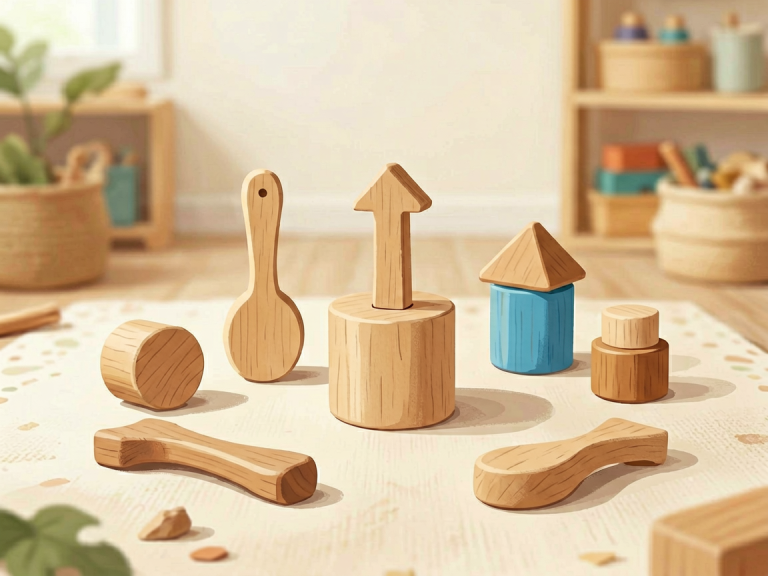
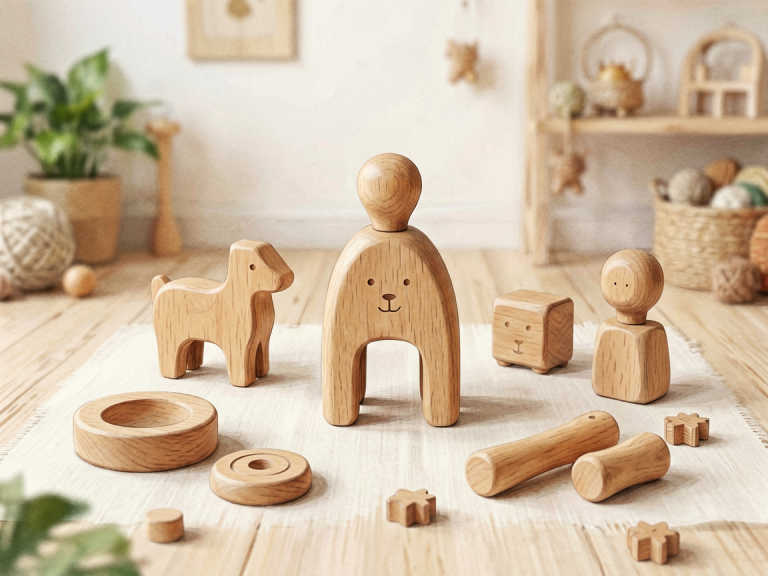
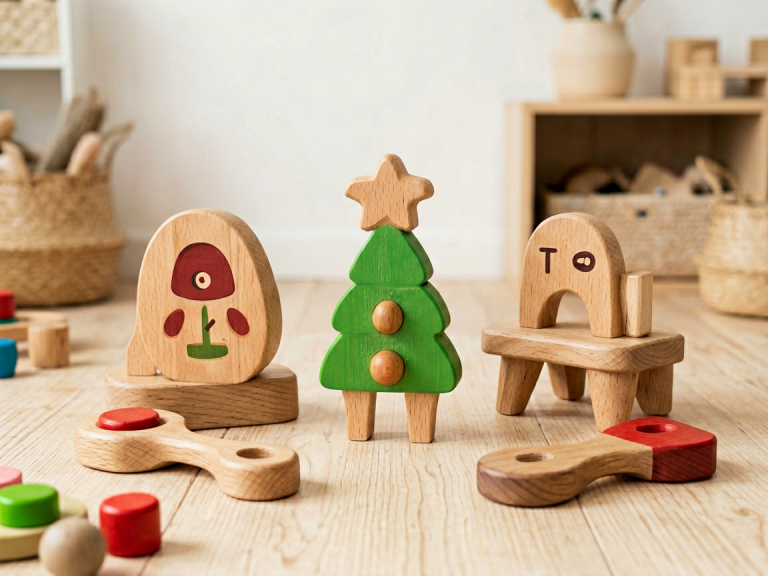
The best toys for toddlers are those that emphasize the act of playing rather than a predetermined outcome. Look for open-ended materials: wooden blocks, nesting cups, sand, water, play dough, crayons (supervised), simple puzzles with large knobs, push-and-pull toys, balls, and stuffed animals. These allow the child to create their own rules and explore according to their current developmental stage. A child using a set of stacking rings may not be “learning math” in the way a parent imagines, but they are learning concepts like size, sequence, and balance through trial and error—far more valuable than memorizing numbers.
Consider the “Zone of Proximal Development”
Psychologist Lev Vygotsky introduced the idea of the zone of proximal development—the sweet spot where a child can do something with help but not alone. An age-appropriate toy is one that is slightly challenging but achievable with a little guidance. For example, a simple shape-sorter with three or four large shapes is perfect for a 12–18-month-old; they may need help rotating the shape, but they can eventually succeed. In contrast, a shape-sorter with ten tiny, irregular shapes is too advanced for the same child. When shopping, ignore the age label on the box (often driven by marketing) and observe the child’s current skills. Can they pick up the toy easily? Does it require two hands to operate in a coordinated way? Can they understand the basic cause-and-effect? If the answer is no to any of these, it is likely too advanced.
Emphasize Sensory and Motor Development
Toddlers are in the sensorimotor stage of development (according to Piaget). They learn by touching, tasting, shaking, dropping, and throwing. The most beneficial toys are those that engage multiple senses. Wooden blocks have different textures and weights; a set of plastic keys rattles; a water table offers endless sensory exploration. Electronic toys that beep and flash may seem stimulating, but they often overpower the child’s own sensory input. The child becomes a passive receiver of stimuli rather than an active explorer. A simple fabric ball that the child can squeeze, roll, and chew provides far richer sensory feedback.
Limit Screen-Based and Battery-Operated Toys
While some interactive electronic toys have educational value for older preschoolers, for toddlers under three, they are generally not advisable. The American Academy of Pediatrics recommends avoiding digital media (except video chatting) for children under 18 months, and for toddlers 18–24 months, high-quality programming should be co-watched with a parent to facilitate learning. A toy that automatically responds with lights and sounds does not encourage the child to initiate interaction, problem-solve, or use their imagination. Instead, choose quiet toys that invite the child to experiment without prescribed outcomes. A simple xylophone where the child discovers that hitting a key makes a sound is far more educational than a toy that plays a song when a button is pressed.
Observe the Child’s Response
Finally, the best judge of age-appropriateness is the child themselves. If a toy is consistently ignored, or if it causes frustration and crying, put it away for a few months. Children grow rapidly, and a toy that is too advanced today may become perfect in six months. Similarly, if a child is deeply engaged with a simple toy for long periods, that is a sign that the toy matches their developmental needs. Do not be swayed by the belief that expensive, flashy, or “smart” toys are better. Often, the most valuable toy is the one that allows the child to be the leader of their own play.
—
Conclusion: Let Toddlers Be Toddlers
In a culture that constantly pushes children toward early achievement, the simple act of buying a toy can become a high-stakes decision. But the science of child development offers a clear message: toddlers do not need advanced toys to thrive. They need age-appropriate, open-ended, sensorially rich playthings that support their natural curiosity and gradual acquisition of skills. The parent who resists the glamour of the “next level” toy and instead provides a cardboard box, a set of blocks, and a loving presence is giving their child the most powerful educational gift possible—the freedom to learn at their own pace, through their own hands. So the next time you are tempted to buy that coding robot for your two-year-old, remember: the most advanced toy for a toddler is one that invites them to explore, fail, try again, and imagine—not one that claims to teach them what they are not yet ready to learn.