Are Building Blocks Worth It? A Comprehensive Look at Their Value
For decades, building blocks have been a staple in toy boxes and classrooms around the world. From simple wooden cubes to intricate plastic interlocking systems like LEGO, these seemingly basic toys have sparked the imagination of generations. Yet, as parents and educators face an overwhelming array of digital distractions and expensive educational gadgets, a pressing question emerges: are building blocks worth it? This article dives deep into the cognitive, social, creative, and financial aspects of building blocks to help you decide whether they deserve a place in your home or classroom.
Cognitive and Educational Benefits
One of the strongest arguments in favor of building blocks is their profound impact on cognitive development. When a child picks up a block, they are not merely stacking or connecting pieces—they are engaging in a complex problem-solving process. Research consistently shows that block play enhances spatial awareness, which is a foundational skill for mathematics, engineering, and even art. For instance, a child trying to build a stable tower must intuitively understand concepts like balance, symmetry, and weight distribution. These are not abstract lessons; they are hands-on, trial-and-error experiences that build neural pathways.
Moreover, building blocks introduce early concepts of counting, sorting, and pattern recognition. A toddler separating red blocks from blue ones, or a preschooler counting how many blocks are needed to complete a wall, is building early numeracy skills without a worksheet in sight. Studies published in journals like *Early Childhood Research Quarterly* have found that children who engage regularly in block play tend to perform better on spatial reasoning tests and later in STEM subjects. For example, a 2017 study by the University of Delaware indicated that children who played with blocks at age four showed stronger math skills in fifth grade. While correlation is not causation, the evidence is compelling.
Additionally, building blocks foster executive function skills such as planning, focus, and self-control. A child attempting to replicate a complex structure must follow a sequence of steps, adjust when things collapse, and persist through frustration. This resilience is a life skill that extends far beyond playtime. In an era where instant gratification is the norm, the slow, deliberate process of constructing with blocks teaches patience and delayed reward.
Creativity and Problem-Solving
Unlike many modern toys that prescribe a specific narrative or outcome—think of a pre-programmed robot or a puzzle with one correct solution—building blocks are open-ended. This open-endedness is their greatest asset. A set of blocks can become a castle one day, a spaceship the next, and a pet dinosaur pen the day after. This flexibility encourages divergent thinking, the ability to generate multiple solutions to a single problem. Psychologists often cite divergent thinking as a key component of creativity, and block play is one of the purest forms of it.
Consider a classic challenge: “Build the tallest tower possible with only twenty blocks.” A child might start with a wide base, then try a narrow one, or experiment with interlocking techniques. Each attempt is a mini-scientific experiment. If the tower falls, the child asks, “Why did that happen? What can I change?” This iterative process mirrors the design thinking used by engineers and architects. In fact, many professional design studios use LEGO Serious Play workshops to stimulate innovation in teams. The same blocks that entertain a six-year-old are used in boardrooms to solve real-world problems.
Furthermore, building blocks encourage narrative thinking. A child constructing a city will inevitably create stories about the people who live there, the traffic jams, and the emergencies. This fusion of construction and storytelling develops language skills and emotional intelligence. When children play together with blocks, they must negotiate roles, share resources, and resolve conflicts—all of which are critical social abilities.
Social and Emotional Development
The social dimension of block play is often underestimated. While solo block building is valuable, group block play amplifies the benefits. In a childcare setting or at home with siblings, children must communicate their ideas, listen to others, and collaborate. For instance, two children building a bridge might disagree on the design. One wants a drawbridge, the other a suspension bridge. Through discussion, compromise, and perhaps a trial run, they learn to work as a team. These are not trivial skills; they are the foundations of interpersonal competence.
Emotionally, blocks provide a safe space for failure. A block tower that collapses can be rebuilt. A LEGO spaceship that breaks apart can be reassembled. In a world where children often feel pressure to succeed immediately, block play teaches that failure is not final—it is a step toward a better design. This mindset, often called a “growth mindset,” is associated with greater academic achievement and mental resilience. Dr. Carol Dweck’s research at Stanford University highlights how praising effort rather than outcome fosters this mindset, and blocks naturally reward effort because they respond only to the child’s actions, not their inherent ability.
Moreover, building blocks can be therapeutic. For children with anxiety or attention challenges, the repetitive, tactile nature of stacking and connecting can be calming. Occupational therapists frequently use blocks to improve fine motor skills, hand-eye coordination, and sensory integration. The simple act of pushing a block into place provides proprioceptive feedback that can ground a restless child. For typically developing children, the sense of pride after completing a complex structure boosts self-esteem. That moment of “I built this myself!” is priceless.
The Financial Consideration
Now we come to the elephant in the room: cost. High-quality building blocks, especially branded interlocking systems like LEGO, can be expensive. A single themed set (e.g., a Harry Potter castle or a Star Wars starship) can cost over a hundred dollars, and the pieces often require additional purchases to create something truly large. Parents may wonder if the investment is justified compared to cheaper alternatives like plain wooden blocks or digital building games on a tablet.
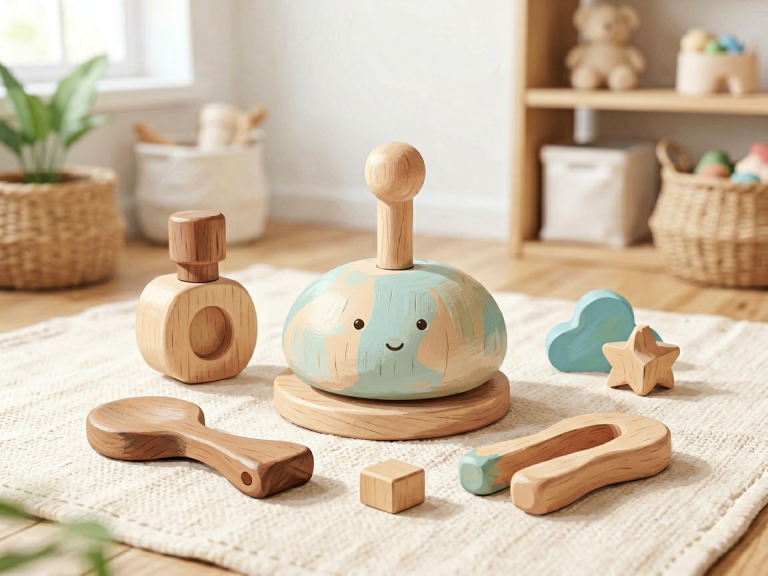
Let’s break it down. Plain wooden unit blocks, such as those made by companies like Melissa & Doug, are moderately priced and incredibly durable. A basic starter set costs around $30–$50 and can last for years, spanning multiple children. These blocks are the gold standard for early childhood education because they are large, easy to grasp, and free from complicated connectors. They encourage pure creativity without instructions. On the other hand, LEGO and similar systems offer precision, interlocking capability, and endless specialized pieces. While more expensive per piece, they allow for more complex engineering feats like moving gears, axles, and hinges.
The key is to consider the cost per hour of play. A $100 LEGO set might be used for hundreds of hours over several years, especially if the child enjoys rebuilding and combining sets. Compare that to a $50 video game that might offer 20 hours of story mode. The building block wins in longevity. Additionally, blocks have resale value; second-hand LEGO often retains 50% or more of its original value. Some families even treat them as an investment, selling sets years later. Moreover, blocks do not require batteries, subscriptions, or internet access, making them a one-time cost with zero recurring fees.
However, a financial caveat exists: not all blocks are created equal. Cheap, generic brands may have poor clutch power (the ability to stay connected), leading to frustration. They may contain harmful chemicals (e.g., phthalates) if not certified non-toxic. Spending a little more on reputable brands ensures safety and durability. Therefore, the answer to “are building blocks worth it” financially depends on the quality you choose and how you use them. A single high-quality set that grows with the child is often a better investment than a dozen cheap, disposable toys.
Long-Term Value and Versatility
One of the most compelling arguments for building blocks is their ability to grow with a child—and even with an adult. A toddler can simply stack two blocks; a kindergartener can build a house; a preteen can follow complex instructions to build a motorized robot; and a teenager or adult can engage in competitive building challenges or stop-motion animation. This age-range versatility is rare among toys. The same set of basic bricks used by a two-year-old can later become part of a sophisticated architectural model designed by a college student.
Furthermore, building blocks transcend cultural and linguistic barriers. They are used in Montessori classrooms in Italy, in STEM programs in Japan, and in early childhood centers in Kenya. Their universal language of creation makes them a wonderful tool for cross-cultural play and learning. In multilingual households, building blocks provide a shared activity where words may fail but collaboration succeeds.
The long-term value also extends to the environment. Unlike electronic toys that become obsolete within a year due to new software or batteries, building blocks are permanently relevant. They do not contribute to e-waste. Many families pass sets down through generations, creating heirlooms of creativity. My own childhood wooden blocks now occupy a corner of my niece’s playroom, and they are as vibrant and functional as they were thirty years ago. That kind of durability is rare in consumer goods.
Potential Drawbacks to Consider
Of course, no toy is perfect. Building blocks have some drawbacks that even the most enthusiastic advocate must acknowledge. First, they take up space. A large bucket of blocks can clutter a living room, and an ambitious LEGO city-building project may require a dedicated table. For families in small apartments, storage can be a challenge. Second, they can be noisy. Hardwood blocks clattering onto a floor can be disruptive, and stepping on a stray LEGO piece barefoot is a painful rite of passage. Third, some children may initially prefer more passive entertainment like videos or video games. Blocks require active engagement, and not every child gravitates toward them naturally. Parents may need to model block play or invite friends over to spark interest.
Additionally, the “instruction follower” aspect of some building sets can be a double-edged sword. While following a detailed manual teaches reading comprehension and patience, it can also limit creativity if the child only builds the prescribed model. The best approach is to balance guided sets with free building. Many educators recommend buying a mix: a few themed sets for inspiration and a large box of basic bricks for open-ended creation.
Conclusion: Are Building Blocks Worth It?
After examining the cognitive, creative, social, financial, and long-term aspects, the overwhelming evidence suggests that yes, building blocks are worth it—provided you choose them wisely and use them intentionally. They are not a magic bullet for child development, and they do require investment in terms of both money and parental involvement. However, their benefits far outweigh their drawbacks. They nurture skills that are fundamental to success in school, career, and life: perseverance, creativity, collaboration, and logical thinking.
In a world increasingly dominated by screens and passive consumption, building blocks offer a tactile, active, and profoundly human experience. They remind us that learning can be hands-on, that failure is part of growth, and that the best toys are those that let us create our own worlds. So, the next time you see a pile of colorful blocks on a store shelf, do not hesitate. Pick them up. They are not just toys; they are tiny engines of intellectual and emotional growth. And that, without question, is worth every penny.