The Pitfall of Premature Complexity: Why Buying Toys Too Advanced for One-Year-Olds Misses the Mark
Introduction
Walk into any toy store or browse online marketplaces, and you will find an overwhelming array of bright, flashy, and technologically sophisticated playthings marketed for infants. From electronic tablets that claim to teach Mandarin to robotic animals that respond to voice commands, the modern toy industry has blurred the lines between age-appropriate stimulation and adult-like gadgetry. Yet one of the most common—and counterproductive—mistakes parents and gift-givers make is buying toys that are far too advanced for one-year-olds. Driven by a mix of aspirational parenting, marketing hype, and a genuine desire to boost a child’s development, adults often overlook the fundamental principles of early childhood cognition and motor skill progression. The result is not only wasted money but also missed opportunities for meaningful learning, increased frustration for the child, and even potential harm to the natural developmental trajectory. This article explores why toys that are too advanced for one-year-olds fail to serve their intended purpose, the psychological and neurological reasons behind their inappropriateness, and what truly supports a baby’s growth during this critical stage.
The Developmental Reality of a One-Year-Old
At twelve months, the human brain is a marvel of rapid change, but it is still far from ready for abstract reasoning, complex rules, or fine motor precision. A one-year-old is typically in the sensorimotor stage of cognitive development (Piaget’s first stage), where learning occurs through direct sensory experiences and physical interactions with the immediate environment. They explore by mouthing, banging, shaking, dropping, and stacking. Their attention span is measured in seconds, and their ability to understand cause-and-effect is limited to very simple, immediate sequences: “I push this button, and a sound happens.”
Advanced toys—such as multi-step puzzles, electronic devices with dozens of buttons, or board games that require turn-taking and rule-following—demand cognitive skills that simply do not exist in the one-year-old brain. For instance, a toy that asks the child to match shapes by color and size simultaneously may overwhelm a toddler who has just begun to understand object permanence. Moreover, one-year-olds are still developing hand-eye coordination and pincer grasp. A toy with small movable parts or fine switches that require precise finger movements can lead to frustration rather than accomplishment. The American Academy of Pediatrics emphasizes that play for infants should be open-ended, repetitive, and rooted in the child’s own actions. When toys dictate a complex sequence that the child cannot control, the child passively watches or becomes agitated, learning very little in the process.
Why Parents Fall into the Trap
Understanding why well-meaning adults purchase overly advanced toys for one-year-olds requires a look at several psychological and social factors. First, there is the pervasive myth of the “early genius.” In a culture that prizes cognitive acceleration—flash cards for newborns, language apps for toddlers—many parents believe that the earlier a child is exposed to advanced concepts, the smarter they will become. This “brain-building” anxiety is fueled by marketing that promises to give a child a head start in a competitive world. A toy labeled “for ages 3+” but purchased for a one-year-old is often seen as an investment in future intelligence, ignoring the fact that the brain develops hierarchically: skipping steps does not speed up the process; it creates gaps.
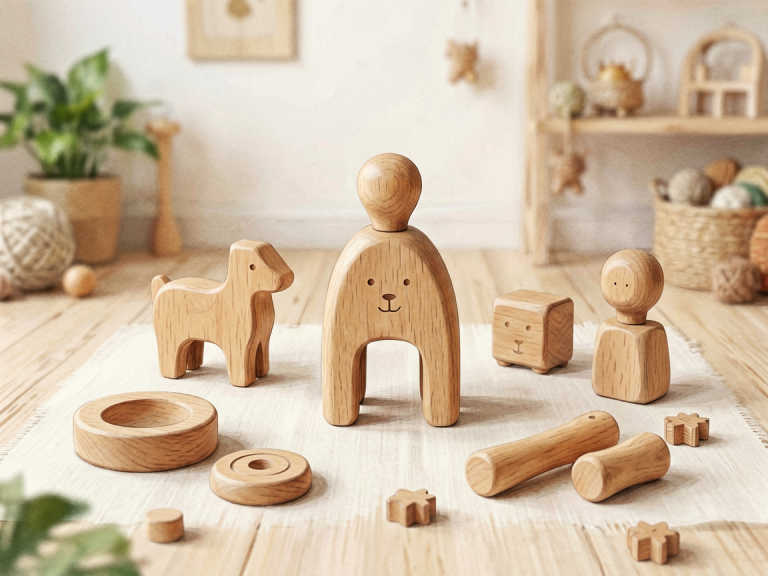
Second, social comparison plays a major role. A parent sees a friend’s baby happily tapping on a pretend smartphone and worries that their own child is falling behind. Or grandparents, eager to impress, buy the most expensive, feature-packed toy on the shelf, equating complexity with quality. Gift-givers often choose toys that look “grown-up” because they associate sophistication with being generous. Yet, for a one-year-old, the most sophisticated toy is often the simplest: a wooden block, a soft ball, or a set of nesting cups.
Third, there is a misunderstanding of what “educational” means. Many advanced toys come with bold claims of “teaching STEM concepts” or “building cognitive skills.” But research in developmental psychology shows that learning in infancy is primarily about developing foundational sensorimotor schemas, not absorbing academic content. A baby who repeatedly drops a spoon from a high chair is learning gravity, spatial relationships, and cause-and-effect far more effectively than a baby who watches a flashing screen demonstrate the solar system.
The Unintended Consequences
When a one-year-old is given a toy that is too advanced, several negative outcomes can occur. The first is frustration and loss of interest. If a child cannot make a toy do what it is supposed to do, they will often push it away, cry, or engage in repetitive, non-constructive behaviors like banging it aimlessly. This is not a sign of defiance but of cognitive overload. Over time, repeated frustration can dampen a child’s natural curiosity and intrinsic motivation to explore. Instead of feeling like a competent learner, the child may learn to avoid challenging situations—a pattern that can influence later learning attitudes.
Second, safety risks increase. Toys designed for older children often contain small parts that pose choking hazards for one-year-olds, who explore everything with their mouths. Batteries can be ingested if compartments are not secured, and electronic components can overheat or break. In fact, many injury reports involving toys in the under-two age group come from products not intended for that age. Parents who ignore age labels out of a desire to provide “advanced” play may inadvertently expose their child to harm.
Third, advanced toys often limit the type of social interaction that is most beneficial at this age. One-year-olds learn best through face-to-face interaction with caregivers: peek-a-boo, singing, talking, and simple turn-taking games. A complex toy that beeps and flashes on its own can become a one-way distraction, reducing the amount of back-and-forth communication between parent and child. The toy becomes a babysitter rather than a vehicle for relationship-building. Studies show that language development in infancy is directly correlated with the amount of responsive, contingent conversation a child receives, not with the number of electronic gadgets in the room.
What to Look for Instead: Age-Appropriate Play
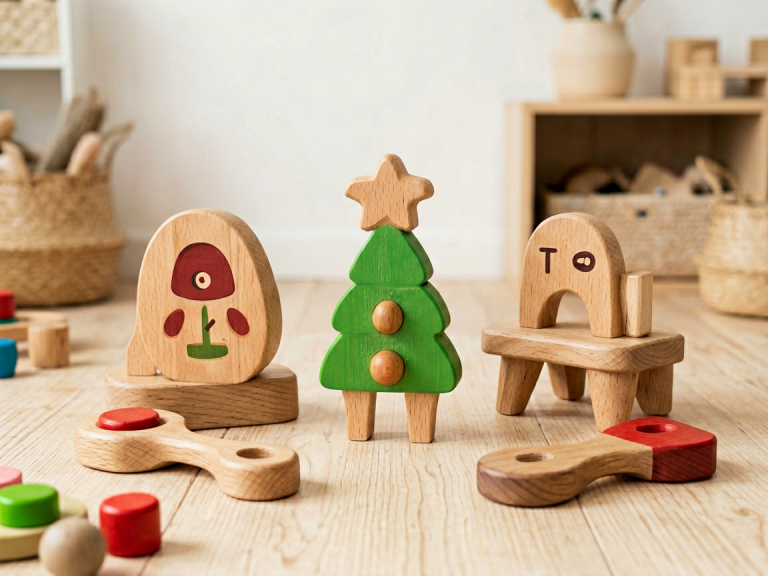
So, what should one purchase for a one-year-old? The answer is deceptively simple: toys that allow the child to be an active agent in their own play. At this age, the best toys are those that respond predictably to the child’s actions and encourage repetition and exploration. Examples include stackable rings, soft blocks, shape sorters with large pieces, balls of different textures, push-and-pull toys, and simple cause-and-effect items like a jack-in-the-box. Musical instruments like drums or maracas (with no small parts) are excellent because they give immediate auditory feedback.
Open-ended materials are especially valuable. A set of wooden blocks can be stacked, knocked down, sorted, mouthed, or carried around—there is no single right way to play. Similarly, nesting cups can be used for pouring, stacking, hiding, or making noise. These toys grow with the child; a one-year-old may simply bang them together, while an eighteen-month-old may begin to stack them by size. This adaptability is far more beneficial than a single-function electronic toy that becomes obsolete once the novelty wears off.
Furthermore, the most powerful “toy” for a one-year-old is a caring adult. Simple games like rolling a ball back and forth, reading sturdy board books with bright pictures, or mimicking animal sounds provide rich developmental stimulation without any purchase at all. Parents and caregivers should prioritize interactive, responsive play over passive consumption. When selecting a toy, ask: Does this require the child to do something, or does it do something to the child? The former is almost always preferable.
Conclusion
Buying toys too advanced for one-year-olds is a well-intentioned but misguided practice that reflects societal pressures and misunderstandings of early development. The most profound learning at this age does not come from screens, complex electronics, or multi-step challenges—it comes from embodied, repetitive, and socially embedded exploration. By choosing age-appropriate, simple, and open-ended toys, parents can foster not only cognitive and motor skills but also a lifelong love of learning. Next time you are tempted to purchase a gadget that promises to turn your baby into a prodigy, remember: a cardboard box, a set of wooden blocks, and your undivided attention are the most advanced tools you can offer a one-year-old. They don’t need to be pushed ahead; they need the space and support to unfold at their own pace. In a world obsessed with acceleration, the most radical gift we can give a baby is the freedom to play simply.